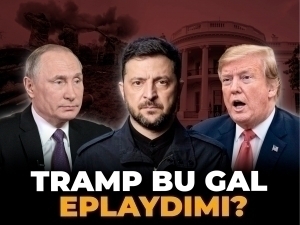
Russian drone violates NATO border, Netanyahu attacks Qatar, US loses world control, Nepal kids overthrow government – Midweek
Review
−
11 September 4155 10 minutes
Qatar vows to retaliate against Tel Aviv for the attack on its capital; Netanyahu issues threats to Qatar.
Russia denies firing a drone at NATO member Poland, insisting the device was targeting Ukraine. Meanwhile, NATO’s response mechanisms appear to be struggling.
Against this backdrop, Vladimir Putin and Benjamin Netanyahu have strengthened the position of US President Donald Trump. The current White House appears unusually weak on issues it would normally be expected to manage or oversee.
Another ’’spring’’ in Asia: in Nepal, young people have reportedly toppled the government. Even the military is reportedly seeking an understanding with men and women aged 18–25.
Read the details of the major events that unfolded worldwide through midweek in QALAMPIR.UZ’s Midweek program.
Netanyahu threatened Qatar
Israel’s strike on Hamas leaders in Doha on September 9 risks triggering prolonged tensions and complications. The situation has escalated beyond targeting individual militants: the attack undermined Qatar’s sovereignty and territorial integrity. There is no other plausible explanation for an assault on the capital of another state. Doha has signalled it will not leave the move unanswered. This is the second attack affecting Qatar this year that was linked to wider regional conflicts. The first incident targeted the Al Udeid air base in Qatar following a US strike on Iranian nuclear facilities during the Israel–Iran war at the end of June. Viewed together, these incidents have raised questions about the security implications of the US presence at Al Udeid. How much the military complex has benefited Qatar is unclear; what is evident is the damage the country has suffered.
Qatari officials, however, say they will respond to the Israeli action. Prime Minister Jassim Al Thani announced that Qatar will not tolerate any violation of its sovereignty and vowed retaliatory measures against those responsible. He said Doha will respond in multiple ways and work to prevent similar attacks in the future. A special committee led by diplomat Mohammed bin Abdulaziz Al-Khulayfi has been formed to develop legal measures. Doha has already reached out to friendly states and intends to announce countermeasures soon.
Initial response options may include sanctions, among other measures. Qatar has adopted a sharply critical rhetorical stance toward Netanyahu, accusing him of flouting international law, provoking regional instability, and undermining peace efforts. Doha described the attempt on mediators’ lives in a negotiating state as “immoral and treasonous.”
There is a key distinction in how Iran and Israel have framed recent incidents involving Qatar. When Iran struck a US base in Qatar earlier this year, its representatives sought to de-escalate by saying the attack targeted a US military facility rather than the people of a friendly country. Israel’s approach has been markedly different: after the Doha strike, Prime Minister Netanyahu publicly issued an ultimatum to Qatar. Speaking on the anniversary of the September 11, 2001, attacks, he demanded that countries sheltering Hamas expel the group or face action from Israel.
“I say to Qatar and all the countries that harbor terrorists: expel them or hold them accountable. If you do not do this, we will do it ourselves,” Netanyahu said.
NATO and Russia were so close to war?
On the night of September 10, Russian military aircraft struck the Ivano-Frankivsk, Khmelnytskyi, and Zhytomyr regions, as well as the cities of Vinnytsia and Lviv. However, a critical targeting error occurred. Reports indicated that more than 10 drones had fallen not on targets in Ukraine, but on the territory of Poland, a NATO member, causing widespread confusion. Polish forces opened fire on drones that violated its airspace during the Russian strikes in western Ukraine. The Polish army described the incident as an “act of aggression.” The operational command of the Polish Armed Forces reported that several drones entering its territory had been destroyed. Prime Minister Donald Tusk confirmed the drones belonged to Russia, stating that they posed a “direct threat.” On September 10, Russia’s chargé d’affaires in Warsaw, Andrei Ordash, was summoned to the Polish Foreign Ministry. He dismissed the accusations, claiming Poland had provided no proof that the drones were Russian.
In this case, NATO aircraft confronted potential threats in the alliance’s airspace for the first time. The operation involved Polish F-16 fighter jets, Dutch F-35s, and Italian reconnaissance aircraft. Patriot air defense systems tracked the drones but were not activated.
Since Poland is a NATO member, an external attack on its territory could trigger collective mobilization. While the drones were deemed dangerous and aggressive, NATO stopped short of declaring the incident a direct attack.
Prime Minister Tusk said he was in constant contact with NATO allies and Secretary General Mark Rutte. French President Emmanuel Macron accused Russia of violating Polish airspace, while European diplomat Kaja Kallas said it was unlikely the drones entered Polish skies “by accident.”
The Russian Defense Ministry denied any such targeting, claiming the drones used had a maximum range of 700 kilometers. Moscow said it was prepared to hold consultations with the Polish Defense Ministry. Kremlin spokesperson Dmitry Peskov dismissed the accusations as routine provocations, insisting no formal requests had been received from Warsaw.
Trump is becoming a ”nobody”
The violation of Polish airspace and the Israeli strike on Qatar have further undermined President Donald Trump’s foreign policy image. Analysts say the Israeli attack, carried out without regard for US interests, marked another humiliation for Washington. Trump could do little more than voice his dissatisfaction, underscoring what many see as the White House’s declining global influence.
While the Middle East crisis may not heavily damage Trump’s domestic standing, the attack in Doha is expected to weaken his image as a “tough leader.” The strike directly violated the sovereignty of Qatar, a key US ally that was mediating a Gaza ceasefire plan at Washington’s request.
Observers say this was not only a personal insult to Trump but also proof that Israeli Prime Minister Benjamin Netanyahu’s goals were being prioritized over US security interests. CNN reported that frustration grew in the White House after it emerged that Netanyahu’s adviser Ron Dermer had met with Trump’s ambassador Steve Witkoff on September 8, but had not mentioned the planned strike.
The attack on Qatar also threatens to derail efforts for a political resolution to the Gaza conflict and may endanger remaining Israeli hostages.
Experts warn of serious consequences for US diplomacy. The strike could undermine Trump’s credibility as a “neutral mediator” and push Qatar to withdraw from negotiations. Qatar’s prime minister labeled the Israeli attack “terrorism,” a strong signal of worsening relations. Given Qatar’s longstanding role in supporting US diplomacy, the attack may be perceived as a betrayal.
The fallout could extend to broader US interests in the Middle East. Plans to expand the Abraham Accords may collapse. Regional states could begin questioning Washington’s security guarantees: “If Israel can do this in Qatar, will we be next?” The failure of the US to prevent the attack, despite hosting its largest regional base at Al-Udeid in Qatar, has intensified doubts. Analysts suggest this situation will not only weaken Trump’s personal and political influence but also erode trust in US commitments among Gulf states and allies worldwide.
Asia's youth awakens
This week, Nepal, a poor Himalayan nation, has been thrust into the global spotlight after its prime minister resigned following a wave of Generation Z protests against the government.
Many who witnessed the burning ruins of political institutions in Kathmandu described the unrest as the beginning of a Generation Z uprising. The roots of this bloody, revolutionary movement are traced back to a fiery speech delivered six months earlier in a school auditorium by 16-year-old Avishkar Raut. In a speech compared to Hitler’s in tone, Raut blamed the country’s unemployment and economic woes on political party manipulation. What began as an annual address became a defining moment in Nepal’s political awakening.
Protests erupted in early September as young Nepalis, long angered by the sight of politicians’ children flaunting designer goods and luxury trips on social media while ordinary citizens struggled to survive, took to the streets. Years of frustration over rising unemployment, widening inequality, and lack of opportunity fueled the unrest.
According to the World Bank, the unemployment rate among Nepalis aged 15–24 stood at 20.8 percent in 2024, forcing many to work abroad. Remittances account for 33.1 percent of Nepal’s gross domestic product.
Calls for protests spread quickly in the Himalayan country of 30 million. The government’s decision to ban Instagram, Facebook, WhatsApp, and more than two dozen other social media platforms last week only deepened public anger. On September 8, thousands of young people, some still in school uniforms, gathered near parliament in central Kathmandu, at the Maithrigarh Mandala monument. Clashes quickly broke out as protesters scaled the parliament gates. Police responded with live ammunition, water cannons, and tear gas. At least 19 people were killed and hundreds were wounded in the clashes, according to officials.
The violence forced the resignation of the interior minister and several senior officials. On September 9, protests intensified. Citizens of all ages defied curfews and continued to resist the government crackdown. Demonstrators smashed shop windows, torched government buildings, and shut down the country’s main international airport. The Supreme Court and Singha Durbar, the sprawling government complex that houses ministries, were also set ablaze. Photos of protesters waving the Nepalese flag above Singha Durbar went viral, evoking memories of the student movement that toppled Bangladesh’s government last year. Netizens have begun referring to the wave of uprisings across Asia as the “Asian Spring.”
In Kathmandu, protesters stormed Prime Minister Sharma Oli’s private residence, destroying furniture before setting the house on fire. Oli resigned on September 9, citing the “unusual situation in the country” in a statement posted by his aide.
As smoke filled the streets and soldiers stood guard with machine guns, uncertainty loomed. President Ramchandra Paudel called for dialogue and invited youth protesters to talks. The army also urged demonstrators to negotiate. But the Generation Z movement lacks centralized leadership, leaving unclear who the authorities could engage with.
Nepal’s 2015 constitution requires a new prime minister to be appointed by the party with a parliamentary majority. If no party holds a majority, the president must appoint a candidate supported by the majority, who must then secure a confidence vote within 30 days. If this fails, parliament is dissolved and elections are held. However, protesters have largely rejected existing party leaders, many of whom have gone into hiding.
The constitution does not allow for an interim government. Yet experts suggest temporarily setting aside constitutional rules to form a government acceptable to protesters. Two names have gained traction among young demonstrators. The first is 35-year-old rapper Balendra Shah, elected mayor of Kathmandu in 2022 and admired for his urban reform efforts. The second is former television journalist Rabi Lamichhane, who founded the Rashtriya Swatantra Party in 2022. On September 9, protesters freed him from prison, where he was serving time for financial misconduct charges.
According to media reports, demonstrators are also demanding a rewritten constitution. Nepal abolished its monarchy in 2008 and adopted a new charter in 2015, which was met with protests even then. While the constitution allows amendments, they must be approved by parliament. According to Nepal’s Ministry of Health, 30 people were killed and 1,033 were injured in the protests of September 11.

Live
All