Uzbekistan without Karimov: a path to Syria? Or a nation still trapped in corruption and corrupt officials
Review
−
06 September 2025 17187 17 minutes
Do you know which universities in Uzbekistan account for most of the crimes committed among students? If not, then take note! The “top five” include Tashkent State Transport University, the National University of Uzbekistan, Tashkent State Technical University, Tashkent University of Information Technologies, and Tashkent State University of Economics. Ironically, the rector of Tashkent State University of Economics, Teshaboyev, was recently awarded the Order of the 2nd Degree “For a Healthy Generation”. So, which other higher education institutions do you think are plagued by corruption and crime? Share your thoughts in the comments, hit the like button, and send this program to your friends. We’ll continue discussing this topic throughout the broadcast. In front of the cameras, with another edition of the Weekly analysis of events, I’m Qamariddin Shaykhov. Assalomu alaykum.
Lola Tillayeva remembers her father
This year marks the ninth anniversary of the death of Islam Karimov, the First President of Uzbekistan. As is tradition, on September 2, members of Parliament, representatives of the Presidential Administration, government officials, and the public of Tashkent gathered at the Oqsaroy residence—now the Islam Karimov Scientific and Educational Complex—to honor his memory. For the first time, this year’s ceremony was held without the presence of President Shavkat Mirziyoyev, who was on a visit to China. Prime Minister Abdulla Aripov and Senate Chairperson Tanzila Norbaeva were also absent from the memorial event. As in previous years, Karimov’s widow, Tatyana Karimova, attended on behalf of the family.
It is known that Karimov’s elder daughter, Gulnara Karimova, remains in prison, while his younger daughter, Lola Karimova-Tillyaeva, left Uzbekistan after her father’s death and has since settled in the United States. Known for her luxurious lifestyle, Lola once again commemorated her father on the anniversary of his passing, emphasizing that thanks to his wise policies, Uzbekistan was spared the tragedies that befell Syria.
“Looking at the world today, I understand even more clearly how right he was in many of his decisions. I believe many would agree with me. At the same time, I also see attempts to belittle his policies and his legacy. But I can say with absolute conviction: our First President protected Uzbekistan from civil wars and violent clashes. The tragedies that struck certain countries in the Middle East, such as Syria, and some of our neighbors, did not affect Uzbekistan precisely because of his wisdom and strong leadership. For that, we have every reason to be grateful to him. And I believe this is not only my opinion”, said Lola Karimova-Tillyaeva.
According to her, commissioned interviews, fabricated conversations, and the activity of various “trolls” attempting to tarnish Islam Karimov’s name appear laughable and insignificant. In her view, the late President can be evaluated from different perspectives, but the most important fact remains that his work paved the way for Uzbekistan’s current development.
Lola Karimova does not comment publicly on her family, private life, her daughter, or other information circulating about her online. She restricts her public remarks to remembering her father. For instance, in April of this year, international media reported that suspicious funds linked to Lola Tillyaeva had been discovered in a Swiss bank. In 2024, her approximately 4,450-square-meter “Le Palais” mansion in Beverly Hills was sold for $36 million, sparking controversy over how she had acquired the property. However, the Karimovs continue to avoid addressing such questions.
Governor Caught Taking Bribe
Despite constant claims about fighting corruption, both corruption itself and its sources continue to grow. At the same time, the Anti-Corruption Agency has remained silent, while the long-discussed law requiring public servants to declare their incomes has yet to be adopted. For several years now, there has been no progress; it is unclear in what state the draft law is or on which shelf of which office it is gathering dust.
Meanwhile, the ranks of bribe-takers continue to expand. The public is informed only about those exposed, but what about the ones that remain hidden? This past week, the mayor of Namangan city, Anvar Otakhodjaev, was caught by State Security Service officers while accepting a bribe of $60,000.
According to reports, the Namangan mayor and the head of a shoe manufacturing company colluded to demand $60,000 from a citizen in exchange for securing the right to build a multi-storey residential building on a 35-are plot of land within the city, as well as arranging financing.
The head of the LLC was caught red-handed with material evidence at the time of receiving the money. The city mayor, meanwhile, was apprehended through his trusted associate, the head of the mayor’s office administration, when receiving $60,000 from the LLC director, thereby putting an end to his unlawful actions.
Anvar Otakhodjayev was stripped of his parliamentary immunity. The Investigation Department of the State Security Service for the Namangan region opened a criminal case against him and the office administration chief under Article 210 (Receiving a bribe), part 3, paragraph “a” of the Criminal Code. The LLC director was charged under Article 168 (Fraud), part 4, paragraph “a,” and Articles 28 and 211 (Giving a bribe), part 3, paragraph “a” of the Criminal Code. He was placed under pre-trial detention. The investigation will also assess the legality of other actions committed by the mayor.
In addition, this week, the chief specialist of the agriculture department of Zangiota district, Tashkent region, demanded $40,000 from a resident in exchange for formalizing eight sotok (0.08 hectares) of state-owned land adjacent to the resident’s home for entrepreneurial activity through a district administration working group. He was arrested while receiving $20,000 as part of the agreed sum.
At present, a criminal case has been initiated against him under Article 168 (Fraud), Part 4, Paragraph “a,” and Articles 28 and 211 (Giving a bribe), part 3, paragraph “a” of the Criminal Code, and he has been placed in pre-trial detention.
Meanwhile, a senior investigator of the Investigation department of the Angren City department of Internal Affairs, Tashkent region, demanded $10,000 from a citizen in exchange for not opening a criminal case and for refraining from taking appropriate legal measures during the pre-investigation process. The investigator was apprehended with material evidence at the time of receiving half of the requested amount.
A criminal case has been opened against the investigator under Article 210 (Receiving a bribe), part 2, paragraph “b” of the Criminal Code, and he has been placed in pre-trial detention.
As the saying goes, “one’s bribe is in the thousands, another’s in the districts”, these are just a drop in the ocean of corruption cases uncovered in the country this week. For example, in Fergana region, an individual received $50,000 in exchange for allocating land on hospital premises for the construction of a pharmacy. In Surkhandarya, a state tax inspector was caught accepting a bribe. In Kashkadarya and Samarkand, individuals who promised jobs in the State Security Service were detained.
As can be seen, such examples are far from ending, and perhaps will not end at all. Only when punishment for corruption and corrupt officials becomes truly strict will results be achieved.
At a time when corruption is rampant and even mayors are being caught with bribes, the issue was also at the center of discussions in the Senate this week. However, the debates in the Senate seemed detached from real life. Senators continue to insist that the main areas of corruption are in the healthcare and education systems. Yet before reaching healthcare and education, funds are already being lost within the financial institutions of the republic, cities, and districts. The Anti-Corruption Agency and senators have grown accustomed to looking for corruption only in schools and clinics. Would it not be worth straining the neck, looking higher, and balancing the examination of governance, so that the Namangan mayor’s case does not appear as a one-off incident?
At the tenth plenary session of the Senate of the Oliy Majlis held this week, Senator Oral Ataniyazova stated that the Ministry of Health has turned into a ministry not for safeguarding the health of the people, but for providing paid services to the public. Indeed, there is truth in her words. A senator with 41 years of medical experience, she lamented the maternal and child mortality rates, attributing them to the negligence and indifference of certain doctors at the local level.
Senate chairwoman Tanzila Norboeva also shared Oral Ataniyazova’s views on maternal mortality and petty corruption in medical institutions. However, the Deputy Minister of Health responsible for maternal and child health, Elmira Basithonova, also presented responses supported by facts.
It was noted in the Senate that in 2024, the number of corruption-related crimes increased in the Andijan, Namangan, Tashkent, Kashkadarya, and Samarkand regions. The greatest damage to state interests as a result of corruption crimes was recorded in the Andijan, Tashkent, Namangan, and Syrdarya regions.
The majority of individuals convicted for bribery were employees of the Ministry of Preschool and School Education, the Ministry of Health, commercial banks, and the employment system. However, to be frank, if corruption is only exposed at the level of nurses, doctors, teachers, or at best school principals, while the misdeeds of higher-ranking officials, as mentioned earlier, remain concealed, then this is not a genuine effort to eradicate corruption at its roots. Rather, it is an attempt to fulfill assigned tasks and demonstrate superficial results. After all, if small fish are caught while the sharks continue to roam freely, what benefit can such “justice” bring to anyone?
“You are a slave of the Russians”: Uzbekistan sends note to Russia
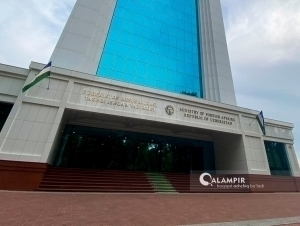
Last week, in the city of Khimki, Moscow region, a resident insulted and threatened a migrant from Uzbekistan near the Solnechnaya Sistema residential complex. Pointing a knife at him, the man shouted: “You are a slave of the Russians.” It was later confirmed that the victim was indeed an Uzbek citizen. Following a wave of protests, the Ministry of Foreign Affairs of Uzbekistan sent a note to the Ministry of Foreign Affairs of Russia.
On the same day Tashkent sent the note, a video began circulating on social media, claiming that in Moscow a man was beaten near the Embassy of Uzbekistan by employees of the diplomatic mission.
According to a report published by the Telegram channel Readovka, the man had been walking his dog when he noticed a car improperly parked near the embassy.
The Embassy of Uzbekistan in Moscow responded to the allegations, refuting the reports.
It stated that the vehicle and the offenders shown in the leaked footage had no connection to the Embassy of Uzbekistan. The car in question, which carried diplomatic plates, actually belonged to the diplomatic mission of another country.
The embassy emphasized that any attempts to hold it accountable for the incident were unfounded and unacceptable. It called on the public and the media not to spread unverified information.
Major brutally beats civilian in Namangan
In Namangan, the city mayor was detained for bribery this week, while it was also revealed that a city prevention inspector subjected a citizen to torture. According to initial reports circulating on social media, three police officers allegedly used batons and an electric shock device to torture the victim. As a result, the citizen was hospitalized with broken ribs, and one of his spleens was rendered non-functional.
The Namangan regional department of Internal Affairs investigated the case and confirmed that on August 14, 2024, a resident, born in 1991, identified as U.A., was taken to the police department following a domestic dispute.
He was subjected to a preventive interview and released the same day. Two days later, on August 16, the man sought medical assistance due to deteriorating health.
The regional representative of the Ombudsman reviewed the case and spoke directly with the victim. Based on the findings, a formal notice was sent to the Namangan regional department of Internal Affairs and the Namangan city Prosecutor’s Office.
According to the Ombudsman’s office, Major D.B., a prevention inspector with the Chust district department of Internal Affairs, neglected his official duties, failed to appear in his service area without justification, and grossly violated the code of professional and service discipline of law enforcement officers. As a result, he was dismissed from his post. In addition, the Namangan city Prosecutor’s Office has initiated criminal proceedings under Article 104, Part 1 of the Criminal Code (Intentional infliction of serious bodily harm).
This is not the only torture-related case observed within law enforcement this year, and it is unlikely to be the last. Despite repeated calls from the country’s leadership since 2018 regarding torture and inhumane treatment in detention facilities and penitentiary institutions, and even discussions about creating a special investigative body, tangible results have yet to be achieved.
Man in Surkhandarya kept wife and child locked in Barn
Violence, aggression, pressure, torture, and threats to one of the most fundamental human rights, the right to life, seem to have become ingrained in some parts of society. When domestic violence spills over into the very institutions meant to protect rights, it sets a dangerous example, normalizing abuse and cruelty within families. The line between crime and law appears blurred. In the Uzun district of Surkhandarya region, a man was found to have kept his wife and newborn child locked in a barn for five months. The woman’s condition was reported as critical.
On August 26, police received a report that an unidentified woman was being held in unsanitary conditions in a barn by members of her household. A neighborhood prevention inspector arrived at the scene and, despite resistance from the family, forced open the barn door. Inside, it was discovered that Sh.A., born in 1981, had been keeping his wife, H.G., born in 1997, along with their 5-month-old child, in harsh conditions against their will. The victims were immediately transferred to a medical facility.
Investigations revealed that the perpetrator, in collusion with his mother and other relatives living in the household, exploited his wife’s health condition; she reportedly had speech difficulties and struggled to express herself clearly, subjecting her to months of pressure and abuse, and forcibly keeping her hidden in the barn.
Currently, the woman has been placed in the surgical department of the Uzun district medical association, while the child has been admitted to the maternity ward for treatment. Their health is under special supervision by officials from the regional department of social protection.
The Investigation department of Uzun district police has opened a criminal case under Article 126-1 (Domestic violence), part 7, subparagraphs “a” and “e” of the Criminal Code. The suspect has been taken into custody in accordance with procedural law. Other members of the household involved in the case have also been brought in for questioning, and one individual has been declared wanted.
Donald Trump to visit Uzbekistan?
At the end of last week and the beginning of this week, rumors circulated among Uzbeks claiming that U.S. President Donald Trump had passed away. However, this week, Trump and the President of Uzbekistan, Shavkat Mirziyoyev, held a telephone conversation. The discussion took place following Mirziyoyev’s return from the Shanghai Cooperation Organization summit and the parade marking the 80th anniversary of the end of World War II.
According to the Press Service of the President of Uzbekistan, the talks focused on practical aspects of strengthening the strategic partnership between the two countries and expanding mutually beneficial cooperation. At the start of the call, the U.S. President highly praised and supported Uzbekistan’s irreversible reforms in recent years aimed at modernizing the economy and improving the welfare of its people.
Mirziyoyev, in turn, congratulated Trump on the significant results achieved by the U.S. administration in both domestic and foreign policy. He also highlighted America’s efforts and contributions to resolving international and regional conflicts peacefully, as well as to ensuring global security and stability.
The leaders discussed economic investments, mutual trade, promising cooperation projects, and issues related to security, the fight against terrorism, extremism, and illegal migration.
They also addressed the deepening of regional cooperation between Central Asian countries and the United States within the “C5+1” format. Finally, the Uzbek President invited Trump to pay an official visit to Uzbekistan at a convenient time.
Shooting in Uzbek-Kyrgyz border
On August 15, two Kyrgyz citizens were killed as a result of gunfire by Uzbek border guards at the Kyrgyzstan–Uzbekistan border.
On the day of the incident, two unidentified individuals were spotted moving in the border area near the Ugam-Chatkal nature reserve in the Bostanlyk district of the Tashkent region. Acting within their authority, the border patrol ordered them to stop, but the individuals attempted to flee. As a result, several warning shots were fired into the air. However, the unidentified persons ignored the patrol’s orders and continued moving toward the state border. Consequently, as a last resort, firearms were used against them.
Both individuals were wounded and, despite first aid provided by the servicemen, died at the scene. During the inspection of the area, authorities discovered a tent, three horses, food supplies, and traces of a third person who managed to escape.
The border services of Kyrgyzstan and Kazakhstan were immediately notified of the incident.
According to the Border Troops Press Service, on August 31, it was confirmed that the deceased were Kyrgyz nationals, and their bodies were handed over to their relatives. Based on an agreement between the heads of the Uzbek and Kyrgyz border services, a joint inspection of the site was conducted on September 2–3.
The investigation concluded that the actions of the border patrol were carried out in accordance with Uzbek law, that the Kyrgyz citizens had illegally crossed the state border, and that a third individual had managed to return to Kyrgyz territory and evade capture. Both sides agreed to work together to establish his identity and take appropriate measures.
Sale of AI-80 fuel suspended
The sale of AI-80 gasoline, long criticized as one of the main pollutants of air in Uzbekistan, has finally been suspended after years of delays. On September 2, Uzbekneftegaz JSC announced that it had ceased selling AI-80 fuel through exchange trading.
Following this decision, the volume of AI-92 gasoline offered on the exchange has been increased. Previously, 1,000 tons of AI-92 were put up for sale, while the figure has now risen to 1,720 tons. Depending on domestic demand, these volumes may be further expanded.
However, Uzbekneftegaz noted that AI-80 fuel purchased by entrepreneurs and consumers in August will still be delivered in September within the framework of existing contracts and available reserves.
Surge in student-related crimes reported
In the first six months of 2025, 307 students from 102 higher education institutions in Uzbekistan committed crimes, according to information presented at the recent session of the Senate of the Oliy Majlis.
The majority of these offenses included traffic accidents, theft, infliction of bodily harm, hooliganism, and fraud. By region, most cases were recorded in Tashkent city, as well as in the Tashkent, Bukhara, Namangan, Andijan, Samarkand, Fergana, and Surkhandarya regions.
In terms of universities, the largest share of offenses was attributed to students of Tashkent State Transport University, the National University of Uzbekistan, Tashkent State Technical University, Tashkent University of Information Technologies, and Tashkent State University of Economics.
It was noted that in some higher education institutions, poor monitoring of the educational process and insufficient oversight of student attendance contributed to crimes being committed during class hours, between 08:00 and 16:00. Oversight of students’ dormitory access, living conditions, and nighttime activities was also reported to be inadequate.
Additionally, several criminal cases were initiated in the sector concerning corruption among officials.
Following the discussion, the Senate adopted a resolution to send a parliamentary inquiry to the Minister of Higher Education, Science, and Innovation, Qongirotboy Sharipov, on measures to prevent crime among students.