Russian media calls for attack on Azerbaijan
Review
−
21 July 2025 15617 10 minutes
Azerbaijani President Ilham Aliyev has become a serious challenge for Vladimir Putin. The persecution of the Azerbaijani diaspora, the detention of each other’s citizens, and renewed tensions over the AZAL plane crash are just some of the ongoing points of friction between the two countries. Most notably, Aliyev is now openly offering rhetorical support to Ukraine. On July 19, during the Third Shusha International Media Forum in Khankendi, the Azerbaijani President made several strong statements. He urged Ukraine not to surrender and to firmly reject any annexation attempts. Aliyev also revisited the unresolved issue of the Azerbaijan Airlines (AZAL) plane crash, stating that Baku is still awaiting Russia’s response to its official demands. Alongside these political messages, the forum also highlighted other topics of symbolic importance—particularly Uzbekistan’s gesture of presenting the first gift to Azerbaijan following what was described as the restoration of historical justice in Karabakh. In today’s piece, we will examine in detail the messages Aliyev sent to Russia and other key themes raised at the forum, which has become the center of intense public discussion.
Warning signal to Russia
Ilham Aliyev has turned Khankendi into Azerbaijan’s new political hub this year. On July 4, the city hosted the summit of the Economic Cooperation Organization (ECO), a major event that took place at a time when Azerbaijan is striving to position itself as an equal competitor to Russia. With the attendance of multiple heads of state, the summit carried substantial weight for official Baku. On July 19, the Shusha International Media Forum was again held in Khankendi, where Aliyev appeared as a prominent figure on the international stage. The forum was marked by sharp criticism of Russia and warm acknowledgments toward Uzbekistan. One major issue Aliyev addressed was the crash of the Azerbaijan Airlines Embraer 190 aircraft in Kazakhstan in December 2024. He criticized Moscow for failing to take meaningful steps in the aftermath and announced that Azerbaijan is preparing to file a lawsuit against Russia in international courts. Aliyev noted that over the past seven months, Azerbaijan has not received a single concrete response from Russia. According to him, the Azerbaijani Prosecutor General has repeatedly submitted official requests to the Russian Investigative Committee, but the only reply has been the vague assurance that “the investigation is ongoing.” Aliyev described this stance as “ineffective.”
“We know what happened, and we can prove it. We know that the Russian authorities are also aware of what happened. Why are they not doing what any neighbor would do in such a situation?” Aliyev asked.
The Azerbaijani leader reiterated his country’s demands: that Russia accept responsibility, compensate the families of the victims, and reimburse the damages suffered by the airline. These are not new demands; in fact, this list is shorter than his original conditions. Last year, Aliyev had also demanded a formal apology from Russia. Following a phone call with Putin, Aliyev unexpectedly claimed that the apology had been delivered—implying that the Russian leader had personally expressed regret. This time, Aliyev emphasized that Azerbaijan would wait as long as necessary to achieve justice over the crash, citing the example of Malaysia Airlines Flight 17, which was shot down over Donetsk in 2014. The investigation into that incident lasted more than a decade. For context, the European Court of Human Rights concluded the case in July of this year, holding separatist forces under the control of Russia-backed entities in eastern Ukraine responsible for the tragedy.
Calling on Ukraine not to surrender
Prominent Ukrainian journalist Dmitry Gordon once again took the stage at the forum, where he highlighted Azerbaijani President Ilham Aliyev’s support for Ukraine. Gordon began his remarks by praising Aliyev and posed a pointed question: what advice would Aliyev, as the leader of a nation that restored its territorial integrity after thirty years, offer to Ukrainians?
“Dear Mr. President, we watched with amazement as Azerbaijan, under your leadership, regained its land and territory. This is a truly inspiring example for us. Ukrainians are sincerely grateful to you for your consistent and open support of Ukraine’s state sovereignty and territorial integrity—something we will never forget. We have now lived for years in the midst of a brutal war, with the very existence of our state at stake. What advice can you, as the leader of a victorious nation, give to Ukraine and Ukrainians?” Gordon asked.
In response, Aliyev said his answer remained the same as when asked a similar question years ago. Drawing parallels with Azerbaijan’s conflict over Nagorno-Karabakh, he urged Ukrainians never to surrender or accept occupation by Russia.
“I believe this aligns with the will of the Ukrainian people. Never accept occupation. That is my main advice. We did it,” Aliyev said.
Aliyev went on to reflect on Azerbaijan’s own painful history. At first glance, his remarks appeared intended to encourage Ukraine, which, like Azerbaijan once did, is experiencing the most challenging period in its modern history. Alongside his advice, Aliyev shared Azerbaijan’s experience resisting foreign aggression. He recalled that the First Karabakh War was a tragic and devastating time, resulting in significant loss of life. Even after the conflict ended, conditions remained dire. Azerbaijan had a population of just 8 million, and it had one of the highest numbers of refugees per capita. The national budget was depleted, and the country received little to no external assistance or international support.
“Economically, we had one million people deprived of their livelihoods—over 700,000 from Karabakh and other regions of Azerbaijan, and 250,000 Azerbaijanis expelled from Armenia,” Aliyev said.
He credited his late father, former President Heydar Aliyev, with stabilizing the country during this difficult period. When he came to power, the country was bankrupt. Inflation stood at 1,000 percent, unemployment and poverty were near total, and no significant international help arrived. Despite being 70 years old and in poor health, Heydar Aliyev managed to restore order and guide the nation forward.
Although international dynamics were stacked against Azerbaijan, the country gradually began to reclaim its territory. The OSCE Minsk Group and other influential powers supported Armenia, trying to maintain a frozen conflict and uphold the status quo indefinitely. But in 2020, Azerbaijan rejected these constraints, making an independent decision to recover its historical lands—step by step.
Aliyev, who has expressed skepticism about international justice, argued that justice can only be restored by force. Returning to the journalist’s original question, he concluded by once again urging Ukrainians not to surrender. However, his remarks carried a degree of contradiction. Just a few months ago, when ties between Baku and Moscow were less strained, Aliyev had taken a different tone. At the time, commenting on the war in Ukraine, he stated that wars end only “when one party signs a surrender document.” He added, “If there’s a way to end this war, I don’t know anything about international relations.”
But more recently, particularly after the Yekaterinburg incident, Aliyev has changed his messaging—emphasizing the idea that justice can be achieved through strength. This raises the question: was his message to Ukraine sincere, or was it a veiled warning to Russia, delivered through Kyiv? Regardless of his intent, on that day Aliyev repeatedly called on Ukraine to stand firm and resist. Ukrainian journalist Elena Kurbanova even presented the Azerbaijani President with military insignia from Ukraine, which he accepted with deep gratitude. In that moment, Aliyev delivered a clear message to Ukraine and its people: “This struggle must continue.”
Thank you, Mirziyoyev!
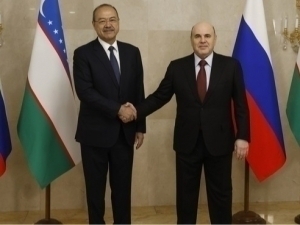
At a forum that openly questioned Russia’s role in the region, Azerbaijani President Ilham Aliyev expressed special gratitude to Uzbekistan and its President Shavkat Mirziyoyev. He thanked Uzbekistan for its active involvement in the reconstruction of Karabakh and Mirziyoyev for his unwavering fraternal support. According to Aliyev, Uzbekistan was the first country to contribute to the reconstruction efforts with concrete actions. He highlighted that the Uzbek government had built a school in the city of Fuzuli named after Mirzo Ulugbek, designed to accommodate 960 students. Interestingly, it had previously been announced that graduates of this school would be eligible for admission to higher education institutions in Uzbekistan without entrance exams. Aliyev noted that large-scale reconstruction efforts are ongoing throughout Karabakh and emphasized that Uzbekistan’s contributions deserve special recognition among international partners.
It’s worth mentioning that, following Uzbekistan’s lead, Kazakhstan and Kyrgyzstan have also initiated projects to build educational institutions—particularly schools—in Azerbaijan.
Where does Aliyev get his strength?
Among all post-Soviet leaders—excluding those from the Baltic states—none have dared to openly call on Kyiv to confront Russia. The only leader to take such a bold stance is Ilham Aliyev, and now he has done just that. The question arises: why does he seem unafraid of challenging Putin and sending such a strong message?
The answer likely lies in years of strategic preparation and political will, which culminated in the 2020 war that Azerbaijan views as the restoration of historical justice. Despite being Armenia's ally in the Collective Security Treaty Organization (CSTO), Russia did not intervene during the Second Karabakh War. Moscow neither fought alongside Yerevan nor provided it with significant military support. Instead, Russia stood aside as Turkish Bayraktar drones shifted the balance of power in Azerbaijan’s favor. Putin’s decision not to confront Turkey or its allies—even in a region as historically sensitive as the Caucasus—signaled a tectonic shift. As a result, Russia lost both its influence over Armenia and its leverage over Azerbaijan. That moment, likely more than any other, forged the confident stance Aliyev exhibits today. The events of 2020 fundamentally reshaped the political landscape across the post-Soviet space. Russia, willingly or not, ceded its dominance over the South Caucasus to Turkey. Two years later, the Kremlin took another gamble—invading Ukraine—which triggered widespread disapproval across Central Asia. Unlike in 2014, when the annexation of Crimea met relative silence, this time citizens, especially in Uzbekistan, saw through the aggression. The region now increasingly views Moscow's actions not as protection, but as provocation.
Calls for war against Azerbaijan
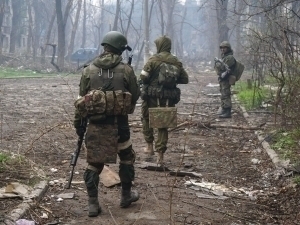
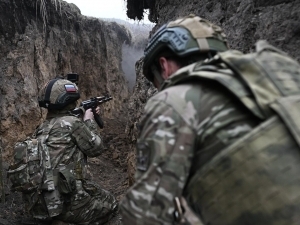
In the wake of Aliyev’s statements, Russian Telegram channels and pro-war bloggers have begun calling on the Kremlin to launch military action against Azerbaijan. While such voices don’t carry official weight, they often echo the undercurrents within Russia’s power structures. Some warn that “the Caspian Sea will become the next theater of war,” while others argue that preparations should already be underway. There are even calls for bombing Baku using Russia’s “Oreshnik” missiles, with critics accusing Azerbaijan of becoming a NATO outpost. Prominent Russian war blogger Yuri Podolyaka has declared Azerbaijan a “hostile state” and demanded it be subdued by force. He even proposed that the Russian Foreign Ministry be sidelined in favor of direct military handling by the Defense Ministry.
Live
All