Allowance to be introduced for caregivers of adults with severe intellectual disabilities
Local
−
17 April 5630 4 minutes
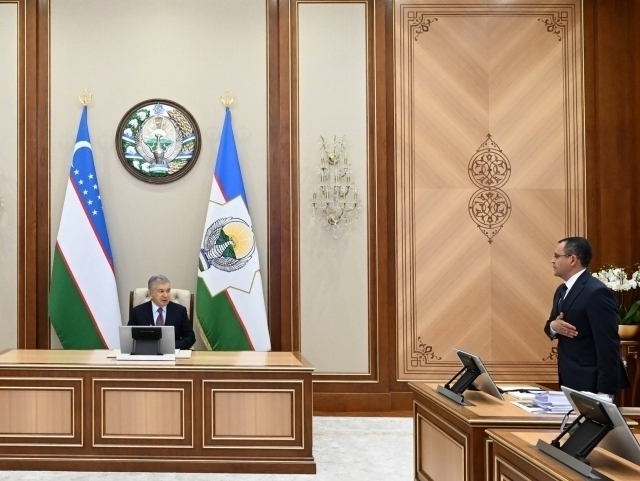
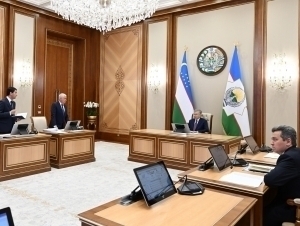
An allowance will be introduced in Uzbekistan for caregivers of individuals over the age of 18 with severe intellectual disabilities. This was announced on April 17 during a presentation reviewed by President Shavkat Mirziyoyev on proposals aimed at supporting the population—especially socially vulnerable groups—expanding the coverage and quality of social services, and further improving the legal framework in this area.
According to the report, the presentation focused on fundamentally improving the system of social services for persons with disabilities who have mental health conditions. The main goal is to ensure their full participation in society, provide comprehensive services in conditions close to a family environment, and support families engaged in caregiving.
In particular, by June 1, 2026, an “Early Intervention” service will be introduced for the first time on a phased basis for children aged 0–3 with developmental disorders. Under this service, children will receive corrective pedagogical assistance, as well as speech and physical development sessions, with the involvement of specialized educators and physical therapy instructors. The service will be organized by non-governmental organizations based on a special electronic registry. In addition, the costs of additional medical examinations and surgeries for children born with anatomical defects will be covered by the State Medical Insurance Fund.
New social services will also be introduced gradually throughout 2026 for persons with Group I and II disabilities related to mental health conditions. These include the “Yangi Kun” daytime care service, home-based care services, small-scale “Madad” home services, and the “Social Leave” short-term placement service. These services aim to support families by providing care and supervision, developing daily living skills, teaching household tasks, and improving vocational and financial literacy skills.
These new services will be delivered under public-private partnership arrangements by qualified non-governmental organizations that meet established requirements. In 2026, it is planned to cover 8,300 individuals with mental health conditions through these services and involve up to 600 NGOs and individual entrepreneurs in social service provision. Costs associated with accessing these services will be subsidized through the State Social Protection Fund.
At the same time, starting from September 1, 2026, a new monthly caregiving allowance will be introduced for legal guardians caring for individuals over the age of 18 diagnosed with severe intellectual disabilities.
The powers of the “Inson” social service centers will also be expanded. Beginning June 1, 2026, their staff will be included in guardianship and trusteeship commissions under district and city administrations. In addition, the fulfillment of obligations by appointed guardians and trustees, the protection of the rights and lawful interests of individuals with mental health conditions, the safeguarding of their property, and the prevention of abuse and violence against them will be regularly monitored.
Special attention is also being given to the transformation of institutional care facilities. According to the proposals, “Muruvvat” residential institutions will be gradually transformed into “G‘amxo‘rlik” centers. These institutions will shift from a primarily medical-social model to a more socially oriented approach focused on integrating individuals into society. Residents will be engaged in sports, creative activities, ergotherapy, labor, and socio-spiritual therapy. Plans also include developing independent living skills under supervision and establishing small-scale housing units that replicate a family environment.
The presentation also discussed new initiatives to further improve legislation in the field of social protection. These include strengthening liability for discrimination based on disability, ensuring court decisions are presented in accessible formats for persons with disabilities, and targeting social services and guarantees through a unified Social Registry.
The development of daytime care services was also highlighted as a key priority. Parents of children aged 3–18 with disabilities who use such services will be allowed to deduct up to 3 million soums per month from their taxable income. Entrepreneurs providing daytime care services to children with disabilities under public-private partnership arrangements will be exempt from taxes until 2030. Currently, 396 entrepreneurs provide such services to more than 4,400 children with disabilities.
The issue of expanding categories eligible for free use of urban public transport was also considered. In particular, it is proposed to extend this right to persons with Group I disabilities and one accompanying individual, as well as to persons equated with veterans disabled during World War II (1941–1945).
The presentation also addressed new mechanisms aimed at ensuring the economic independence of women affected by harassment and violence. Specifically, it is planned to register them as job seekers without requiring a separate application, based on referrals from “Inson” social service centers, and to introduce a system for rapid information exchange on employment outcomes.
The head of state approved the proposed mechanisms and initiatives in the field of social protection and signed the relevant legal documents.

Live
All