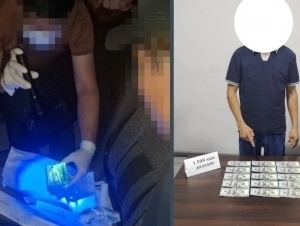
Officials who embezzle budget funds may now face up to 10 years in prison (video)
Local
−
13 June 3817 2 minutes

Fraud committed using an official position in Uzbekistan is being transferred to the category of especially serious crimes, with punishment of up to 10 years in prison provided for such acts. This is stated in the law “On amendments and additions to certain legislative acts of the Republic of Uzbekistan aimed at increasing the effectiveness of the fight against corruption and ensuring the inevitability of liability for corruption-related crimes,” which was discussed today, June 13, at the next plenary session of the Senate of the Oliy Majlis.
It was noted that the main purpose of the law is to fill existing gaps in criminal legislation, ensure stricter penalties for corruption-related crimes and implement international standards into national legislation.
The law introduces conceptual and principled amendments to the Criminal Code. In particular, a new term, “corruption-related crimes,” and a clear list of such crimes are being added to the eighth section of the code, eliminating terminological confusion. In addition, the use of parole will be prohibited for persons convicted of taking bribes, giving bribes or acting as intermediaries in bribery.
To eliminate contradictions in judicial practice, fraud committed using an official position has been moved to Article 168, Part 4 of the Criminal Code, which falls under the category of especially serious crimes. Punishment of up to 10 years in prison is provided for this offense.
At the same time, in order to prevent corruption in the private and non-governmental sectors, liability is being strengthened for bribing an employee of a non-governmental organization. In a number of articles of the Criminal Code, committing an act “for selfish motives” is being introduced as a new aggravating qualifying circumstance.
To prevent duplication of functions in the public administration system, amendments have been made to the law “On the Accounts Chamber of the Republic of Uzbekistan,” and the task of overseeing the implementation of internal anti-corruption control, or compliance control, has been abolished. The Code of Administrative Liability also strengthens sanctions for violations in public procurement and the budget system.
According to senators, the implementation of this law will help strengthen an uncompromising attitude toward corruption in society and ensure the inevitability of punishment for crimes.
The senators approved the law.

Live
AllAQSh va Eron memorandum imzoladi
18 June