President signs a decree to support entrepreneurs
Local
−
20 August 7152 7 minutes
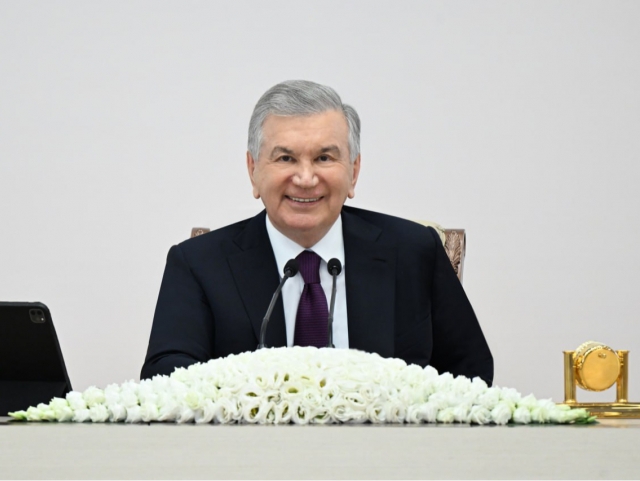
On August 20, the fifth open dialogue between the President of the Republic of Uzbekistan and entrepreneurs was held. Following the meeting, the head of state signed a decree on measures to implement the tasks set during the dialogue.
The decree aims to put into practice the proposals and initiatives addressing systemic problems raised in 15,000 appeals received during 20 meetings with entrepreneurs in 2025. It also outlines the priority tasks set during the open dialogue.
I. Financial resources
1. In 2026–2027, a total of 270 trillion soums will be allocated to support entrepreneurship and create the necessary financial and infrastructural conditions, including:
- 4 trillion soums from the state budget for the development of infrastructure in free economic and small industrial zones, as well as large production projects with direct foreign investment;
- 5 trillion soums for driver projects;
- 6 trillion soums for accelerated development programs in selected districts and cities;
- 250 trillion soums from commercial banks for small and medium-sized businesses, including 30 trillion soums under entrepreneurship programs;
- 4 trillion soums of financial support for at least 5,000 projects through the Entrepreneurship Development Company JSC.
2. From May 1, 2026, an alternative scoring system will be introduced to assess the solvency of businesses when allocating loans. This system will use data from state and private sector databases, including tax records, utility payments, transaction history, trade turnover, and export operations.
II. Foreign economic activity and tourism development
3. A moratorium is introduced until January 1, 2027, on fines for overdue receivables on foreign trade transactions by businesses without state participation. Fines imposed during the moratorium will be canceled once overdue receivables are settled.
4. From 2026, a Tourism Development Program will be implemented, providing for:
- (a) electronic auctions for at least 5,000 hectares of land for accommodation facilities between 2026 and 2028, including mechanisms for public-private partnerships and opportunities to sell the state share within 10 years;
- (b) loans from commercial banks for hotel construction, repayable over seven years:
- up to 30 billion soums for hotels in Tashkent, Nukus, regional centers, and tourism-specialized districts;
- up to 10 billion soums for other regions;
- (c) an annual competition with a prize fund of $1 million to reward accommodation facilities most recognized by tourists on international platforms.
5. In line with the program, the Entrepreneurship Development Company JSC will provide:
- (a) guarantees of up to 50 percent for loans of up to 30 billion soums, but not more than 10 billion soums;
- (b) coverage of part of loan interest exceeding the Central Bank’s key rate by 4–8 percentage points;
- (c) for loans up to 10 billion soums, 50 percent guarantees and coverage of interest exceeding the key rate by 4–10 percentage points;
- (d) compensation payments on a “2+3” basis, with initial support for two years and further support for three years if hotel revenues grow by at least 15 percent annually.
Funds for these measures will be allocated from the Loan Interest Compensation Fund in the state budget starting in 2026.
6. From January 1, 2026:
- (a) the tourist (hotel) fee will be abolished for accommodation facilities outside Tashkent, Nukus, regional centers, high-potential tourism districts, and zones approved by the Cabinet of Ministers;
- (b) the maximum number of visitors allowed in family guest houses will be doubled.
7. From January 1, 2026, state budget reimbursement of part of hotel construction and equipment costs will also apply to hotel expansions and conversions of existing buildings into hotels.
8. Within two months, Deputy Prime Minister Jamshid Kuchkarov will submit a draft resolution to:
- (a) establish unified state administration in sanitary, phytosanitary, and veterinary (SPS) areas, introduce control based on the “field to table” principle, register permits through a “single window” system with risk analysis, and digitize all processes;
- (b) reform the technical regulation sector by introducing international standards and creating conditions for international laboratories.
9. From 2026:
- (a) the minimum rent for state property will be based on the minimum market rate in each region;
- (b) lease terms for state property will be extended from three to five years.
III. Taxpayer incentives
10. From January 1, 2026, the following incentives will be applied to business entities switching from turnover tax to value-added tax (VAT) for the first time:
- (a) exemption from profit tax for one year;
- (b) exemption from financial penalties for violations related to VAT registration for one year;
- (c) deduction of accounting service expenses, not exceeding 3.5 times the minimum monthly wage, from tax liabilities for six months.
11. From January 1, 2026, a proactive procedure for fulfilling tax obligations will be introduced:
- (a) the preparation of tax reports on property tax and land tax for legal entities, income tax for individuals, and social tax will be transferred to tax authorities, relieving taxpayers of this obligation;
- (b) taxpayers will have the right to make corrections to tax reports prepared by tax authorities within five business days and submit a corrected version.
12. Additional measures include:
- (a) raising the threshold for mandatory monthly income tax installments from 10 billion soums to 20 billion soums;
- (b) allowing businesses that build and transfer social infrastructure networks at their own expense to deduct these costs from their income tax base;
- (c) from November 1, 2025, expanding the procedure for electronic registration of agricultural receipts to all business entities when purchasing products from individuals for cash;
- (d) extending the right to pay financial sanctions in equal installments over six months to penalties imposed following on-site tax inspections;
- (e) re-forming the list of more than 20,000 entities identified as high-risk through the “Tax Risk Identification, Analysis and Assessment” system as of August 1, 2025, with tax risks totaling 16 trillion soums, and giving them the chance to voluntarily eliminate violations;
- (f) from January 1, 2026, requiring mobile video cameras during mobile tax audits, with any audit conducted without such devices deemed invalid.
13. Within two months, the Tax Committee will submit a draft law to the Cabinet of Ministers providing for:
- (a) reducing administrative fines for late submission of tax reports from 10 to three times the basic calculation amount for small business officials, and from three to one time for citizens;
- (b) applying a single general fine when multiple types of tax reports are not submitted during the same reporting period;
- (c) exempting businesses that submitted reports on time for the last three months from fines if reports are delayed by up to five days.
14. From July 1, 2026, the Tax Committee and the Ministry of Economy and Finance will introduce a unified treasury account system for mutual accounting of tax payments, overpayments, and arrears.
15. By the end of 2025, the Supreme Court and the Business Ombudsman will draft a law enabling businesses to apply to economic and administrative courts extraterritorially.
IV. Organization, provision and control of the Decree
16. As part of implementing the outcomes of the fifth open dialogue with entrepreneurs, the following measures will be taken:
- (a) a list of draft legislative acts will be developed, as outlined in Appendix 1;
- (b) an action plan will be approved in line with Appendix 2.
17. According to these annexes:
- (a) heads of ministries and departments will bear personal responsibility for ensuring the quality, timely preparation, and adoption of draft legislation, as well as full implementation of measures;
- (b) incentive payments for officials who fail to fully implement, delay, or neglect instructions will be suspended until the measures are carried out.
18. A monitoring procedure will be established whereby:
- (a) the Ministry of Justice will submit weekly reports to the Accounts Chamber and Cabinet of Ministers on implementation progress, and notify ministries and departments of outstanding tasks;
- (b) the status of implementation will be reviewed monthly at Presidium meetings of the Cabinet of Ministers, with corrective measures applied where necessary;
- (c) the Accounts Chamber and Cabinet of Ministers will provide weekly updates to the Presidential Administration, along with proposals for resolving emerging issues.
19. State bodies must enforce the provisions of this decree immediately upon its entry into force, without waiting for subordinate regulations or departmental instructions.
20. Within two months, the Ministry of Economy and Finance, together with the Chamber of Commerce and Industry and other relevant bodies, will submit proposals on legislative amendments arising from this decree.
21. Deputy Prime Ministers Jamshid Kuchkarov and Jamshid Khojaev have been made personally responsible for effective implementation of the decree.
22. Prime Minister Abdulla Aripov has been tasked with overseeing implementation, coordinating the work of responsible bodies, and reviewing progress on a monthly basis.