Uzbekistan’s proposal leads to global recognition of earthquake victims
World
−
30 April 2025 6016 2 minutes
On April 29, the United Nations General Assembly unanimously adopted a resolution declaring April 29 as the International Earthquake Victims Memorial Day, following a proposal by Uzbekistan. The announcement was made by Uzbekistan’s Ministry of Foreign Affairs.
The resolution was co-authored by representatives from over 80 countries worldwide, demonstrating broad international support for commemorating earthquake victims and strengthening global cooperation in disaster response.
The resolution is based on an initiative by President Shavkat Mirziyoyev, emphasizing the importance of honoring earthquake victims and increasing international solidarity in disaster preparedness.
During the extraordinary summit of the Organization of Turkic States on March 16, 2023, Mirziyoyev stressed the need to enhance practical cooperation with international emergency response institutions.
The first official commemoration will take place on April 29, 2026, marking the 60th anniversary of the devastating 1966 Tashkent earthquake.
The resolution encourages UN member states, UN agencies, and international organizations to observe the day through public awareness campaigns, preparedness initiatives, and resilience-building programs.
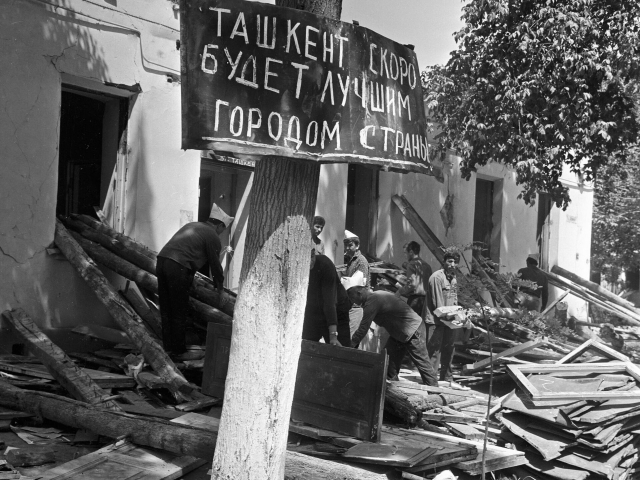
On April 26, 1966, Tashkent was struck by a massive earthquake that left the city in ruins. Before the tremors, a powerful explosion was observed in the outskirts, followed by an unusual glow in the sky. Scientists later determined that the earthquake’s epicenter, located 5-10 kilometers underground, had generated electrical energy, causing the visible atmospheric phenomenon.
The earthquake’s magnitude reached 5.3, with tremors exceeding 8 on the intensity scale. The most affected areas were Qashqar and Labzak neighborhoods, where destruction spanned 10-12 square kilometers. The ground shook intermittently for 10-12 minutes, with several aftershocks occurring in May and June 1966.
As a result, over 2 million square meters of residential space were destroyed, along with 236 administrative buildings, 700 businesses, 26 utility firms, 180 schools, and 185 medical facilities. Around 78,000 families—equating to 300,000 people—were left homeless. Reports differ regarding casualties, with some sources stating eight people died and 150 were injured, while others suggest higher figures.
The Soviet government immediately launched recovery efforts, deploying over 1,000 tents, establishing 600 temporary food supply points, and maintaining continuous water distribution to prevent outbreaks. Remarkably, sources report no incidents of looting, highlighting the community’s solidarity during the crisis. Support poured in from across the USSR, with countries sending aid to assist in rebuilding the devastated city.

Live
All