Low-voltage power grids in Uzbekistan to be transferred to the private sector
Local
−
14 January 2779 4 minutes
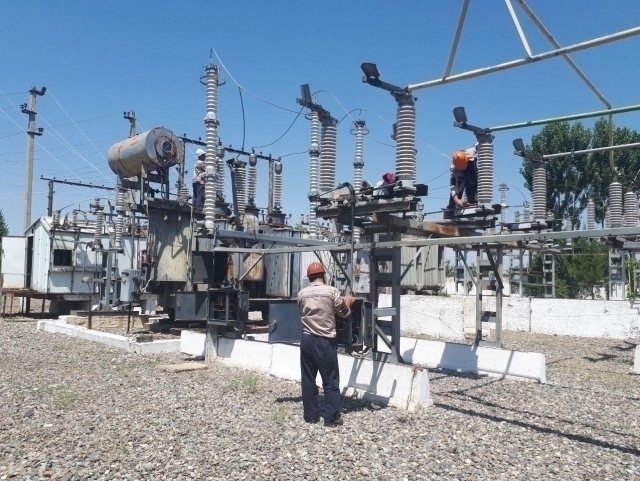
In Uzbekistan, the transfer of low-voltage power grids to the private sector will begin in the Samarkand Region and will later be expanded to Andijan, Jizzakh, Namangan, Syrdarya, Tashkent Region, and the city of Tashkent. The plan was discussed on January 14 during a presentation reviewed by President Shavkat Mirziyoyev on improving energy efficiency and introducing market mechanisms in electricity supply.
According to international experts, Uzbekistan ranks among the countries with the highest energy consumption. In particular, buildings account for nearly 50 percent of the country’s final energy consumption, while energy use per square meter is several times higher than in European countries.
For this reason, a separate agency was established last year to systematize reforms in the field of energy efficiency. The agency has been tasked with reducing energy consumption in the economy by at least 20 percent by 2030, and by 15 percent in government institutions and social facilities.
During the presentation, the agency’s activity plans for 2026 were reviewed.
A large share of buildings in the country were constructed in the 1960s and 1970s and continue to consume high levels of energy. As a result, large-scale efforts are planned to convert social facilities and residential buildings into energy-efficient facilities. This year, 150 billion soums will be allocated for subsidies and compensation to support these efforts.
It was emphasized that special attention should be paid to expanding the involvement of international financial institutions and private sector investment to improve energy efficiency at nearly 30,000 social facilities nationwide.
Under this year’s investment program, 770 social facilities will be modernized in line with energy efficiency standards, with $264 million to be attracted from international financial institutions.
At the same time, issues related to developing mechanisms to generate income through energy savings, including the expansion of energy service companies (ESCOs) and the formation of this market, were also discussed.
Information was presented on plans to widely apply digital technologies and artificial intelligence in conducting energy audits, as well as in designing and modeling buildings based on energy efficiency standards.
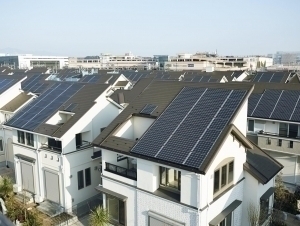
Specific plans were also outlined to improve energy efficiency in the industrial sector. In particular, solar panels are set to be installed at 142 textile enterprises this year, which is expected to save 722 million kilowatt-hours of electricity and reduce costs by 693 billion soums. In addition, 300 pumps in the drinking water supply system are planned to be upgraded.
Separate attention was given to existing problems in the centralized heating supply system. Currently, energy losses remain high due to the deterioration of some heating boilers and networks. To address this, plans for this year include modernizing heating boilers and systems, transitioning them to a “closed system,” installing 400 individual heating points, and upgrading at least 100 kilometers of heating networks.
Officials were instructed to develop effective regulations and energy efficiency standards for the construction, renovation, and reconstruction of buildings.
The presentation also discussed ongoing efforts to introduce competitive market mechanisms in the electricity sector. In particular, the transfer of low-voltage power grids to the private sector will begin in Samarkand Region and later expand to Andijan, Jizzakh, Namangan, Syrdarya, Tashkent Region, and Tashkent city. This measure is expected to significantly reduce losses by attracting investment to upgrade the networks.
Information was also provided on progress in forming a wholesale electricity market. To date, a list has been compiled of wholesale consumers that use more than 10 million kilowatt-hours of electricity per year. It was proposed to introduce a system allowing these enterprises to purchase electricity directly through contracts at hourly prices formed in the wholesale market.
Work is currently underway to establish separate regulators for the energy and utilities sectors. Based on international experience, a proposal was put forward to establish a single unified regulator in this area.
President Mirziyoyev supported these proposals, stressing the importance of improving energy efficiency, ensuring the rational use of resources, and creating a competitive environment in the energy market. He also issued relevant instructions to responsible officials.
Law enforcement and internal affairs bodies were tasked with ensuring strict compliance with legal requirements in the discussed sectors, guaranteeing the inevitability of accountability, and working closely with local authorities to ensure the full implementation of the planned measures.

Live
All