2026 state budget: who will receive how much?
Local
−
28 November 2025 9395 2 minutes

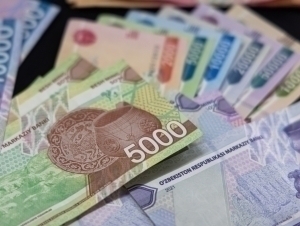
The Ministry of Economy and Finance has published the draft law “On the State Budget of the Republic of Uzbekistan for 2026” along with the budget estimates. Next year, GDP growth is projected at 6.6%, with inflation expected to fall to 7%. State budget expenditures are forecasted at 402.4 trillion UZS, 3.5% higher than the expected execution for 2025.
Key allocations to government bodies include:
- Ministry of Preschool and School Education – 63.69 trillion UZS (2025: 59.46 trillion)
- Ministry of Higher and Secondary Specialized Education, Science and Innovations – 6.36 trillion UZS (2025: 6.6 trillion)
- Ministry of Health – 6.80 trillion UZS (2025: 5.1 trillion)
- Ministry of Culture – 1.28 trillion UZS (2025: 1.172 trillion)
- Ministry of Sports – 1.22 trillion UZS (2025: 1.172 trillion)
- Ministry of Construction – 2.23 trillion UZS (2025: 1.992 trillion)
- Ministry of Agriculture – 2.27 trillion UZS (2025: 1.794 trillion)
- Ministry of Water Resources – 10.36 trillion UZS (2025: 10.4 trillion)
- Ministry of Energy – 110 billion UZS (2025: 123 billion)
- Ministry of Transport – 7.30 trillion UZS (2025: 6.7 trillion)
- Ministry of Ecology – 1.10 trillion UZS (2025: 927 billion)
- Ministry of Geology – 838 billion UZS (2025: 1 trillion)
Other significant allocations include:
- Presidential Administration – 3.05 trillion UZS (2025: 1.673 trillion)
- Cabinet of Ministers – 2.59 trillion UZS (2025: 2.184 trillion)
- Supreme Court – 1.99 trillion UZS (2025: 1.804 trillion)
- Prosecutor General’s Office – 3.008 trillion UZS (2025: 2.732 trillion)
- Ministry of Economy and Finance – 105.9 trillion UZS (2025: 95.5 trillion)
- National Social Protection Agency – 22.42 trillion UZS (2025: 21.139 trillion)
- Other organizations – 74.12 trillion UZS (2025: 49.989 trillion)
Additional allocations cover ministries, agencies, and state committees responsible for education, health, social protection, digital technologies, public administration, environmental protection, culture, youth policy, technical regulation, and more.
Overall, the 2026 budget reflects a continuation of socio-economic development priorities, with significant increases in social, education, health, and infrastructure spending compared to 2025.

Live
All