An intersection in Afghanistan named after Alisher Navoi; a 16-meter monument to be built
World
−
17 February 3171 3 minutes
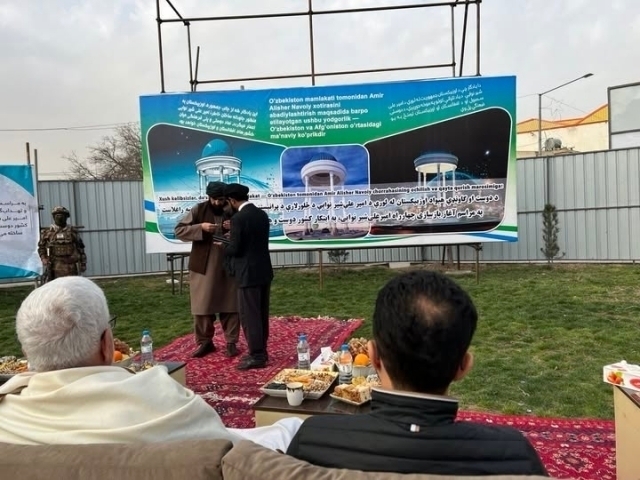
On February 16, an intersection in the city of Mazar-i-Sharif, Afghanistan, was named after Alisher Navoi, journalist Tolib Nasir reported on his Facebook page.
According to him, Uzbekistan will construct a 16-meter monument in the city. Uzbekistan’s Consul General in Mazar-i-Sharif participated in the ceremony of laying the foundation stone for the memorial.
The Dunyo news agency also reported that a ceremonial launch of the monument construction took place in the Chawk-i-Qalai-Ghaziyan area of Mazar-i-Sharif in honor of the great thinker Alisher Navoi.
The project aims to strengthen national identity among ethnic Uzbeks living in Afghanistan, promote a rich literary heritage, and develop friendly ties between the two nations.
The ceremony was attended by representatives of the local Uzbek community, professors and teachers from Balkh State University, Kamol Nabizoda, head of the Nabizoda Foundation, and staff from the Consulate of Uzbekistan.
Speakers at the event emphasized that Alisher Navoi holds a special place not only in the culture of Turkic peoples but also among all ethnic groups in Afghanistan. His ideas of humanism and tolerance remain relevant today. The construction of such a monument in Mazar-i-Sharif was described as an important historical event for Afghan Uzbeks.
Poet Abdulqodir Hamidiy and Muhammad Nabi, head of the Babur Foundation, noted that the project would strengthen national identity and help preserve history. The ceremony concluded with the official launch of construction. The cultural site is expected to become a new symbol of humanitarian cooperation between Uzbekistan and Afghanistan.
Earlier, reports circulated that the Taliban interim government in Afghanistan had demolished a statue of Alisher Navoi in Mazar-i-Sharif. Following this, Uzbekistan’s Ministry of Foreign Affairs contacted Taliban representatives to obtain an official explanation. Marshal Abdul Rashid Dostum and his daughter Rohila Dostum also criticized the Taliban over the incident.
At the time, Afghan authorities said the previous location of the statue was not suitable and promised to build a more memorial, but the promise had not yet been fulfilled.
In February 2023, the statue in Mazar-i-Sharif had also been partially damaged. Uzbekistan’s Foreign Ministry spokesperson Akhror Burkhanov described the incident as vandalism and said, citing Afghan representatives, that the damage had been caused by unknown individuals.
On January 2 this year, inscriptions in Uzbek and Persian were removed from the facade of a university in Samangan, where many Uzbeks live. Uzbekistan’s Foreign Ministry expressed concern over restrictions on the Uzbek language. After urgent contacts on January 6, the Taliban promised not to impose a ban on Uzbek. Following criticism, Uzbek language inscriptions were restored to the university facade on January 11.

Live
All