How did the legendary Maya civilization disappear?
Interesting
−
14 October 2025 21354 6 minutes

In the 1830s and 1840s, English explorers in the Yucatán Peninsula came across abandoned temples, pyramids, artworks, and even remnants of writing, but they did not know who had created them. Later research revealed that these monuments belonged to the Maya civilization, which once dominated much of Central America and built vast stone cities and pyramids. Today, much is known about their achievements. The Maya were among the first in the region to cultivate crops and domesticate wild animals, establish early cities, and create or refine nearly every aspect of modern civilization.

One of the murals adorning the walls of the “Temple of the Paintings,” located at a Maya archaeological site in the Mexican state of Chiapas.
The Maya script consisted of over 800 hieroglyphs, and the people even used the concept of zero. Thousands of years before the invention of the telescope, they observed the movements of the Sun, Moon, Venus, and other celestial bodies with remarkable precision. For instance, they accurately calculated Venus’s 584-day orbit, which nearly matches modern measurements. The Maya also made liquid chocolate from cocoa beans, calling it the “drink of the gods.” They wrote books, known as codices, on tree bark paper, though only four have survived to this day.
Between the 9th and 10th centuries AD, life in many Maya cities suddenly came to a halt, and the tribes mysteriously vanished. Still, some of the peoples living in Central America today are believed to be their descendants. Although they have preserved certain customs and traditions, much of the ancient Maya history remains shrouded in mystery.
The origins of the Maya civilization
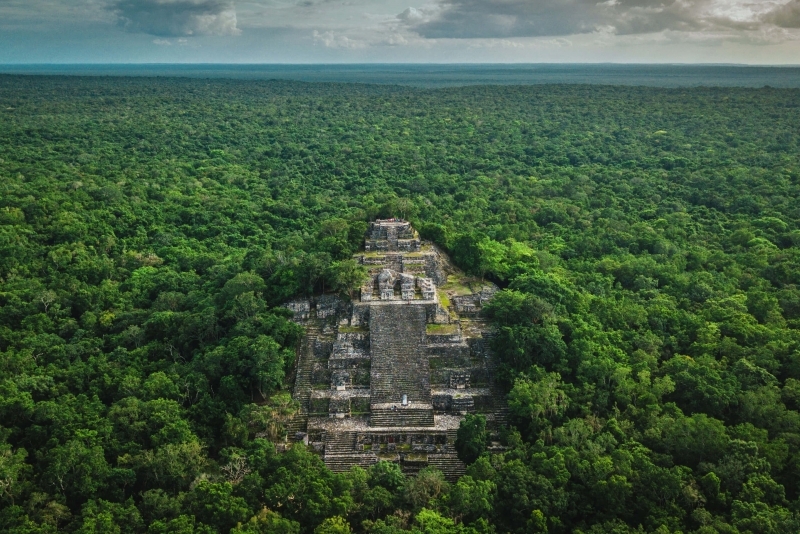
The exact origins of the Maya civilization are uncertain. However, it is believed that between 7000 and 2000 BC, nomadic hunter-gatherers began to abandon their mobile lifestyle and establish permanent settlements.
According to recent analyses, by around 4000 BC, maize had become the main food source for the population of South America. The people not only learned to cultivate maize but also to prepare it for consumption through a process known as “nixtamalization,” in which dried corn was soaked and cooked to become soft and digestible. The Maya later cultivated other essential crops such as squash and legumes.
Researchers note that this period also saw a rise in religious rituals. As Maya society advanced, it developed complex trade routes, sophisticated irrigation and water purification systems, agricultural techniques, as well as traditions in warfare, sports, writing, and an intricate calendar system. The elaborate Maya calendar consisted of three types of dates:
- For religious purposes
- For civic life
- For astronomical calculations, known as the “Long Count” calendar
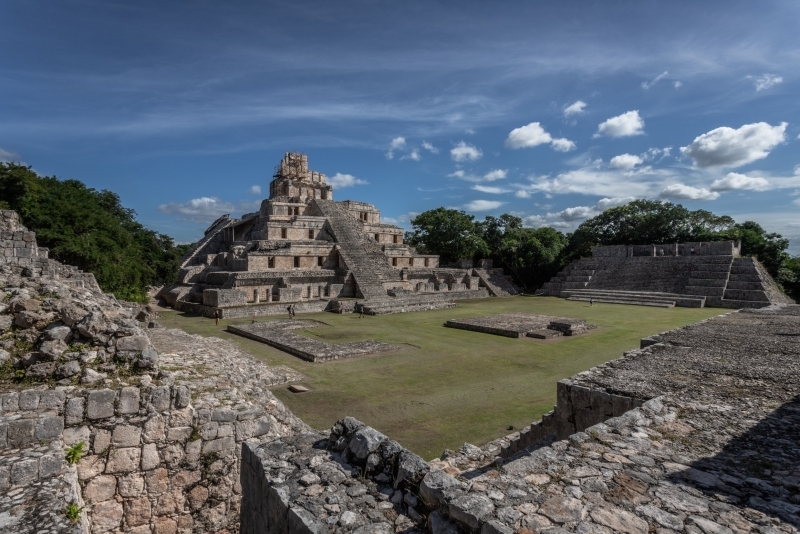
According to Maya mythology, the starting point of this third calendar corresponds to the date of human creation—August 11, 3114 BC. The Long Count calendar indicated that the cycle would end on December 21, 2012, which sparked rumors that “the world would end” on that day. However, Maya scholars explained that this misunderstanding arose from misinterpretation of ancient legends. In fact, the date simply marked the beginning of a new cycle.
Achievements of the Maya civilization

Between 200 and 900 AD, the Maya civilization flourished. Architecture reached its peak during this period, as the Maya perfected temple pyramids and grand buildings. Although these structures resembled palaces, it remains unclear whether they served as residences for nobles or had other functions. Palenque, Chichen Itza, Tikal, Copán, and Calakmul were among the most significant cities.
Maya architecture and art reflected deep religious beliefs. They considered divinity to be present in everything—even inanimate objects. Maize occupied a central place in their faith: one of their main deities, Hun Hunahpu, was the maize god. According to Maya belief, the gods first created humans from clay, then from wood, and finally from maize.

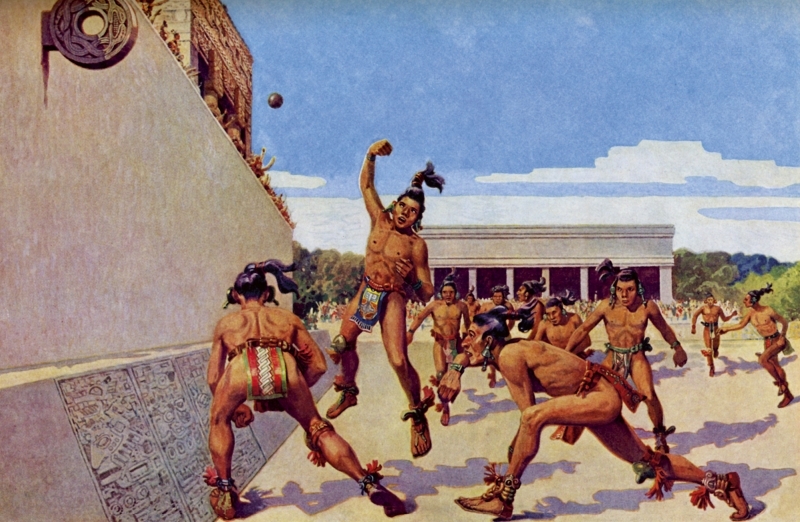
The Maya worshipped their gods through various rituals, including human sacrifice and bloodletting ceremonies. The sport known as “Pitz” (an early form of football) also carried religious significance. Researchers believe that, at times, those who lost in the game were sacrificed to the gods of the Sun and Moon.
The decline of the Maya civilization
While some northern cities continued to prosper, most Maya centers collapsed between the 9th and 10th centuries AD. Intercity relations deteriorated, wars intensified, trade declined, and mortality rates increased.
Theories explaining the civilization’s collapse vary. Climate-based hypotheses suggest that prolonged droughts, coupled with slash-and-burn agricultural methods that destroyed forests, brought devastation to the Maya.
Urban centers were abandoned and turned into ruins: some inhabitants perished, while others migrated southward to fertile, mountainous areas. Though segments of the Maya population survived, by the 1500s they faced the pressure of European colonization. By the time of the Spanish conquest in 1524, most of their major cities had already been deserted.
The Spanish explorers who arrived paid little attention to the ruins, focusing instead on seizing land and converting the local population to Christianity.
The Maya in the modern world
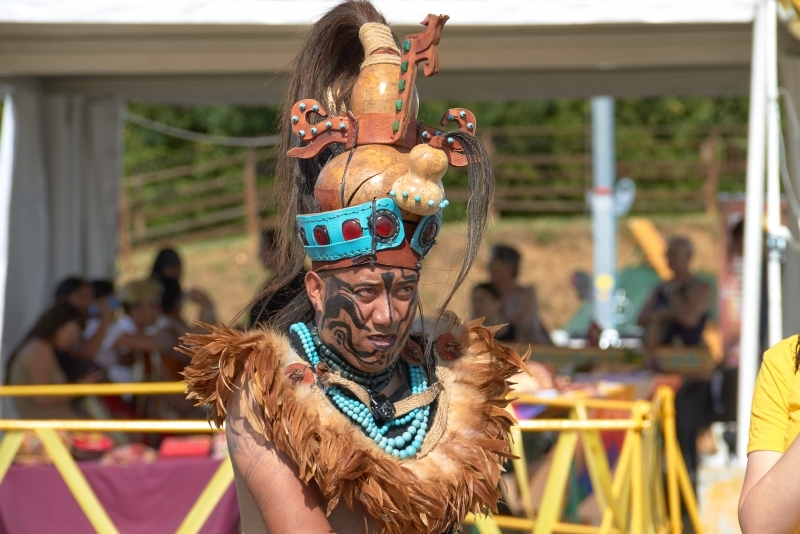
The Maya were rediscovered only in the 1840s, when researchers began to take an interest in ancient civilizations. Although ruins had long been known to exist, many Europeans had previously dismissed the idea that “the native peoples of Central America, being primitive and unintelligent, could have built such monuments.” Research has since proven this view entirely wrong.
Some explorers, while fascinated by the grandeur of the ancient Maya, also sought to profit from their discoveries—going so far as to purchase entire Maya cities and attempt to move them to museums in New York. Today, the field of “Maya archaeology” is thriving, with excavations uncovering ruins hidden in jungles and revealing ancient religious complexes.
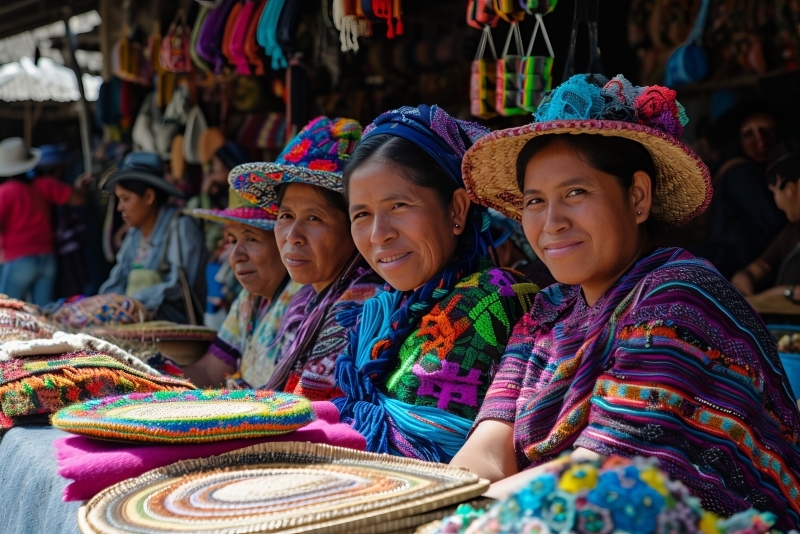
Although archaeological sites may be the only physical remnants of their past, the Maya people themselves still exist. More than six million Maya descendants live in modern Central America, speaking over 30 languages derived from the ancient Maya tongue.
These descendants have preserved many agricultural, religious, and land management traditions inherited from their ancestors—testament to the endurance and resilience of Maya culture in the face of centuries of challenges and change.

Live
All