Sexually abused donkeys, indebted citizens, dying Uzbeks – Weekly Analysis
Review
−
05 October 2025 18247 11 minutes
What are donkeys used for in Uzbekistan? It might sound like a trivial question, but behind it lies a series of tragic realities involving the mistreatment of these animals. Donkeys are exploited as beasts of burden, overworked, whipped, mutilated by having their ears or tails cut off, slaughtered for meat, and even subjected to sexual violence. Unfortunately, these acts do occur. For example, in Chirchiq, a donkey suffered this kind of abuse. According to the environmental organization “Ekolog,” on October 4, coinciding with World Animal Day, the donkey shown in a video had its ears cut off, was mercilessly beaten, and sexually abused. Such cruelty is common in Central Asia and Afghanistan but rarely reported. The question arises: if humans can commit such acts of brutality against animals, what other horrifying actions might they inflict upon people?
Man who murdered woman in Istanbul apprehended in Samarkand
Last week, we reported that a 36-year-old Uzbek woman, Halimahon Odilovna Ahmadova, was fatally stabbed in her home in the Fatih district of Istanbul, Turkey. The suspect in her murder turned out to be another Uzbek national. Turkish authorities obtained footage of 46-year-old Akmaljon Rustamovich leaving the woman’s residence after committing the crime and launched a search. Reports indicate that the man had already fled Turkey by air and returned to Uzbekistan. Turkish media confirmed that he was from Navoiy region and had been apprehended there by Uzbek law enforcement. Uzbekistan’s Prosecutor General’s Office spokesperson Hayot Shamsutdinov confirmed to QALAMPIR.UZ that the suspect, indeed from Navoiy, was arrested in Samarkand at the residence of an acquaintance.
Born in 1979, the suspect was previously convicted in 2002 under Article 97 of the Criminal Code (premeditated murder). Navoiy law enforcement discovered that after returning from Turkey, he was hiding in Samarkand at the home of an acquaintance and arrested him.
Ahmadova was not the only Uzbek woman’s body returned from Turkey last week. In Çankırı province, a 40-year-old Uzbek woman took her own life on September 30 while caring for an elderly couple. The Uzbek Consulate in Istanbul confirmed her death and reported that her body was sent to her relatives in Jizzakh with the assistance of the Migration Agency and the Uzbek Embassy in Ankara.
Incidents involving Uzbeks abroad, either as murder victims or through suicide, occur most frequently in Turkey. Reports arrive almost monthly of Uzbeks being killed or taking their own lives, most of them women. The government and the Migration Agency must urgently consider these recurring tragedies.
Issues concerning Uzbeks extend beyond employment to psychological well-being, protection of rights, and proper investigation of crimes against them. While suspects are held accountable, it would be incorrect to assume all Uzbeks are innocent, angelic, or harmless. For instance, last week in Istanbul, six Uzbeks were arrested on suspicion of involvement in illegal trafficking of drugs and psychotropic substances. They were placed in the Moltepe closed penal institution. Evidence collected during searches has been sent for expert analysis, and investigations are ongoing. The Istanbul Consulate has not clarified the suspects’ legal outcomes.
International drug trafficking network dismantled in Uzbekistan
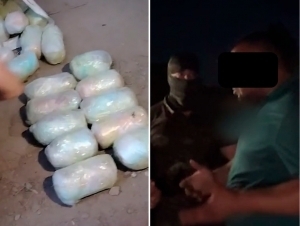
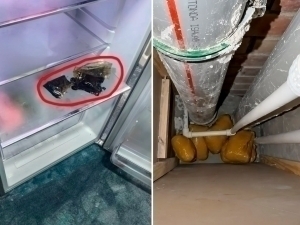
A joint operation by the State Security Service, Customs, and the Ministry of Internal Affairs seized 111 kilograms of narcotics entering Uzbekistan. The operation, conducted in September, targeted transnational organized crime groups.
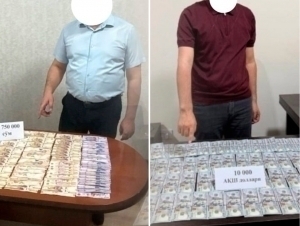
Six members of the network were arrested in Fergana, Andijan, and Tashkent regions. On September 13, a resident of Fergana was caught receiving narcotics. In Andijan, two members were apprehended while collecting 10 kilograms of hashish. Another two members were arrested purchasing one kilogram of opium for $6,000 at a local restaurant. In Angren, Tashkent region, a previously convicted individual was caught receiving five kilograms of opium.
The group had been operating for several years, distributing drugs across Andijan, Fergana, Tashkent regions, and Tashkent city. Criminal proceedings have been initiated, and investigations continue to apprehend the remaining members. Official reports did not specify the countries of origin or smuggling routes.
In the first half of this year alone, 4,195 people were arrested on suspicion of illegal trafficking of narcotics and psychotropic substances. Authorities seized 1,882 kilograms of narcotics and 894,225 potent pharmaceutical pills.
However, narcotics have already infiltrated state institutions. In April, social media reported that an official in the Department for Poverty Reduction and Employment Support in Andijan was smoking opium in his office. This led to the dismissal of the department head and deputy, but questions remain about how the drugs reached state facilities and from whom they were obtained.
Uzbekistan’s external debt exceeds $72 billion
Uzbekistan’s per capita external debt has risen above $1,900 and could surpass $2,000 by the end of the year. The Central Bank announced that, as of the first half of 2025, the country’s total external debt reached $72.2 billion.
Of this, $36.8 billion is government debt, while corporate debt accounts for $35.4 billion. According to the 2022 Law on Public Debt, government debt should not exceed 60% of GDP. Currently, total external debt stands at 62% of GDP, with government debt at 38%. For comparison, at the same time in 2024, total external debt was $56.6 billion—$31 billion in government debt and $25.6 billion in corporate debt.
The trade deficit has narrowed to $6.4 billion, 20% lower than the previous year, due to faster growth in exports than imports. Total exports increased by 29% to $16.6 billion, while imports rose by 10% to nearly $23 billion.
In the first half of 2025, net inflows of foreign direct investment rose by 42% from the same period in 2024, reaching $1.6 billion. Net portfolio investment, largely linked to international bond operations, totaled $3.1 billion. These factors resulted in a financial account deficit of $895.9 million by the end of the reporting period.
“Over the past three months, external debt increased by $3.8 billion, and over the past year by $15.6 billion. Government debt rose by $1 billion in the past three months and $5.8 billion over the year. Corporate debt, mostly from inefficient and loss-making state banks and companies, increased by $2.8 billion in the last three months and $9.8 billion over the year. Per capita external debt reached $1,907 as of July 1, 2025, up from $1,524 at the same time last year. It is highly likely that per capita debt will exceed $2,000 by year-end or even earlier,” said economist-blogger Otabek Bakirov.
Despite public concerns over the growing external debt, the government continues to promote borrowing as beneficial and urges citizens not to fear it.
At the end of 2024, Uzbekistan’s external debt stood at $33.7 billion, domestic debt at $6.5 billion, and total debt equaled 35% of GDP. With less than three months remaining in 2025, it remains to be seen how much total debt the country will have accumulated by year-end.
Ismoil Jorabekov passes away at 94
Ismoil Jorabekov, an advisor to President Islam Karimov, former Deputy Prime Minister, and Minister of Agriculture and Water Resources, passed away on September 29 at the age of 94. He was known as the “Gray Cardinal” of Uzbekistan.
Born on September 12, 1931, in Samarkand region, Jorabekov held senior positions in agriculture and water management, contributing significantly to national development. He earned respect in Uzbekistan’s political circles for his work in guiding the agro-industrial sector during difficult transition periods. From 1994 to 1998, he served as Minister of Agriculture and Water Resources, and from 2000 to 2004, as State Advisor to the President on agricultural issues and Deputy Prime Minister.
In his memoirs, Jorabekov recalled that he had been ordered by President Karimov to destroy a bridge linking Uzbekistan and Afghanistan, but he refused and preserved relations between the two nations.
He served as a deputy in the Supreme Soviet of the Uzbek SSR for the 9th to 11th convocations and received numerous awards, including the “For Outstanding Services” and “Friendship” Orders, as well as several high state honors from Tajikistan and the former USSR.
“In implementing our wide-ranging reforms aimed at building a New Uzbekistan, Ismoil Jo‘rabekov, despite his advanced age, actively served as an advisor to the Minister of Water Resources, contributing his extensive knowledge, experience, and valuable guidance to the development of the sector and the training of young professionals.
A prominent statesman and public figure, sincere and humble, and a caring mentor to youth, the memory of Ismoil Jo‘rabekov will always remain in our hearts,” the condolence message reads.
President Shavkat Mirziyoyev expressed condolences to Jorabekov’s family, highlighting his contributions as a mentor and his commitment to agriculture and water management, even at an advanced age. On the day of Jorabekov’s passing, Mirziyoyev went on a short-term work leave. It is not confirmed whether he attended the funeral. Next week, October 6–7, the 12th Summit of the Heads of State of the Organization of Turkic States will be held in Gabala, Azerbaijan, where Mirziyoyev is expected to participate.
50-year-old man dies by suicide from 10th floor in Tashkent
A 50-year-old man died after jumping from the 10th floor of the “Olmazor City” residential complex in Tashkent’s Olmazor district. According to Hayot Shamsutdinov, spokesperson for the Prosecutor General’s Office, preliminary investigations revealed that the man had been consuming alcohol and, after a quarrel with his spouse, jumped from his bedroom window.
Preliminary forensic examination indicates death resulted from severe chest, abdominal, and head injuries, including fractures to the ribs and skull, internal bleeding, and lung rupture.
Investigations are ongoing in Olmazor district. According to the World Health Organization, over 727,000 people die by suicide annually. Suicide is the third leading cause of death among individuals aged 15–29, with 73% of cases occurring in low- and middle-income countries.
In Uzbekistan, suicide cases are most common among women and adolescents. Previous studies ranked Uzbekistan third in Central Asia for suicide rates. Data regarding suicide are treated as highly sensitive, and public reports are only released after careful consideration. Among those who die by suicide, 45% exhibit mental health issues or negative behavioral traits. Family conflicts account for 13.7%, while poverty, substance abuse, unhealthy lifestyles, jealousy, workplace conflicts, and other personal or social issues account for 17.6%.
Currently, suicide prevention procedures are limited and often confined to family and local communities. Intervention typically occurs only after attempts or completed suicides, with religious condemnation prioritized over medical and psychological support.
Mother stabs husband following daughter’s death by electrocution
In May of this year, an 11-year-old girl in Tashkent’s Mirabad district died after touching an exposed electrical wire while retrieving her brother’s toy from the roof of a shop on Amir Temur Street.
Now, the girl’s mother has fatally stabbed her husband. The incident occurred on September 27. According to investigators, the 39-year-old woman inflicted chest injuries with a kitchen knife on her 35-year-old spouse following a domestic argument. The man died at the scene.
A criminal case has been initiated under Article 97, Part 1 of the Criminal Code (intentional murder), and the suspect was detained under Article 221 of the Criminal Procedure Code. Investigations are ongoing.
Separate license plates to be issued for “antique” vehicles in Uzbekistan
Uzbek citizens seeking unique license plates for special vehicles, such as classic cars, will now have the option to purchase them directly without an auction. Unallocated license plates of Categories 1 and 3 will be available for sale at a fixed price.
The cost of such plates is set at 17 times the base calculation rate (7,004,000 UZS) for individuals and 25 times the base calculation rate (10,300,000 UZS) for legal entities. Buyers can select the region, preferred plate number, format (horizontal or square), and engine type of their vehicle.
From October 1, the sale of license plates through the Republican Commodity Exchange has been canceled. Special license plates may now be issued for “antique” vehicles.
According to a draft resolution by the Ministry of Internal Affairs on amendments to certain government decisions aimed at road safety:
- From January 1, 2026, self-dumping trucks operating in open-pit quarries will be registered;
- Vehicles exceeding 44 tons (with cargo), classified as “N3” and “O4,” along with self-dumping trucks in quarries and “antique” vehicles, will receive special license plates;
- Motor vehicles over 50 years old will no longer be allowed for use, re-registration, and will be removed from the state register, except for “antique” vehicles.
Public discussion of the draft began on September 26 and will continue until October 11.
Additionally, starting November 1, vehicles equipped with gas cylinders will no longer require a new technical passport after installation. Technical inspection will be automatically verified when the vehicle enters a refueling station. Operators will be notified immediately if the inspection has expired, the fuel type is incompatible, or the cylinder is unregistered.
The story of the abused donkey we began covering earlier highlights the ongoing issue of animal cruelty in Uzbekistan. In Chirchiq, a donkey whose ears were cut and who suffered physical abuse was rescued by volunteer Alisa Tikhomirova from the “House of Kindness” animal shelter. The shelter currently cares for approximately 200 dogs and several rescued donkeys. Tikhomirova funds the care personally. “People are never satisfied with kindness—they take as much as you give and never feel full,” she said. “But animals will always appreciate and repay your compassion.”

Live
All