Is there an attempt to spark conflict between Russia and Uzbekistan?
Review
−
10 October 2025 35331 8 minutes
It has been exactly 20 years since Uzbekistan and Russia established the highest level of diplomatic relations. Since 2005, Tashkent and Moscow have been allies. Such an alliance needs no further elaboration, as it represents the closest form of partnership. However, at a time when chaos in the international arena has reached its peak, efforts to create tension between Moscow and Tashkent are unfortunately intensifying. The driving force behind these malicious attempts remains unclear. What is known so far is that provocations are mainly being spread by minor figures who seek to politicize ordinary legal disputes between citizens.
Currently, many Russian media outlets and certain provocateurs have misinterpreted the lawful detention of a pro-Soviet blogger. For a long time, this individual insulted citizens, including publicly respected figures, encouraged Uzbeks to participate in Russia’s invasion of Ukraine, supported aggression, and made statements intended to incite ethnic conflict. Until recently, despite his constant display of Soviet-era symbols on social media, no action was taken against him — a fact ignored by those spreading falsehoods, as the current legislation did not clearly define punishment for such actions. However, when the blogger known as “Comrade Aziz” — real name Aziz Hakimov — crossed legal boundaries protected by criminal law through his recent inappropriate behavior, his arrest became a convenient opportunity for a group of provocateurs.
What exactly triggered this situation? How far has it gone? By what means are attempts being made to turn Russia against Uzbekistan? This article seeks to answer these questions.
Nostalgia for conquest
Independence is a sacred concept, yet some fail to grasp its essence. Although Uzbekistan’s past was marked by violence, oppression, and discrimination under colonial rule, certain individuals remain indifferent to this. For instance, in a free and peaceful country, there are still those who, through their social media platforms followed by thousands, glorify the toxic atmosphere of the former Soviet Union, insult the nation’s historical and contemporary intellectuals, and attack those who promote national identity. Worse yet, some are actively working to pit the two countries against each other.
Some individuals continue to insult Uzbekistan’s sovereignty and its past, appear in public with Soviet symbols, express negative views about the rehabilitation of national figures once repressed under colonial rule, and justify Russia’s invasion of Ukraine. A glance at the posts of such people on popular social media channels reveals their desire to see all former Soviet republics reoccupied and the USSR restored. Their Telegram profiles, often featuring portraits of imperial Russian figures, make their mentality clear. These are the same individuals who urge Uzbeks to join Russia’s war in Ukraine and portray misguided participants as “heroes.”
Our observations show that such people rarely display the Uzbek flag or any other national symbol. Those nostalgic for colonial times frequently appear with Soviet flags. They operate their personal pages and channels online, spreading anti-sovereignty ideas and promoting propaganda against independence.
The provocateur’s trail
As you may recall, in August this year, Sherzodkhon Kudratkhodja, rector of the University of Journalism and Mass Communications of Uzbekistan, filed a lawsuit against blogger Aziz Hakimov, who claims to be a lawyer. The Uchtepa District Administrative Court fined the blogger 18.7 million soums for insulting Kudratkhodja and spreading false information about him. These persistent insults began after Kudratkhodja gave an interview in which he sharply criticized Russian politicians such as Smolin, Prilepin, and Zakharov, and expressed disapproval toward those living in Uzbekistan who refuse to learn the Uzbek language.
“One time I stayed silent — I thought it was freedom of speech. The second time — I thought it was tolerance. The third — I took it as debate. But as I kept silent, he mistook my restraint for cowardice, crossed the line of decency, called me a Nazi, a nationalist, a descendant of feudal lords, mocked my name, and insulted my decision to drop the ‘-ev’ ending from my surname. I endured much, but when he began glorifying Uzbeks fighting in foreign wars and publicly disrespecting our homeland, I could no longer remain silent,” Kudratkhodja wrote.
Yes, this was the same “Comrade Aziz” — a blogger nostalgic for the past. However, even after this court case, he did not stop. The fine only temporarily restrained him from further insults. Soon, he turned to more serious and dangerous actions on his page. After Kudratkhodja, he targeted journalist Nikita Makarenko, and this time, his case escalated from administrative to criminal prosecution. Hakimov called Makarenko “Bandera’s hand” — a phrase used in Russia to label Ukrainians as nationalists and justify anti-Ukrainian sentiment. Makarenko sued Hakimov for this insult, and several other citizens have also filed complaints about Hakimov’s long record of harassment and hate speech.
“This man has long opposed Uzbekistan’s sovereignty and supported the restoration of the USSR. He promoted war and encouraged our citizens to join foreign armed forces. He insulted many public figures with obscene language and spread misinformation and slander. Many of us filed dozens of complaints against him in 2023 and 2024, but they were ignored. I believe it was because someone within an organization was protecting his extremist activity. Thankfully, the law has now taken its course. We can finally defend our dignity within the framework of the law,” said Makarenko.
Makarenko also noted that Hakimov’s case is being politicized and wrongly portrayed as an example of “Russophobia” in Uzbekistan.
“Now, to defend himself, Hakimov is trying to present his case as political. He may even be receiving support from foreign organizations calling for interference in Uzbekistan’s internal affairs. But this case has nothing to do with politics. There is no ‘Russophobia’ in Uzbekistan. We are representatives of Russian culture and language here. No one has violated or oppressed our rights. We freely speak our language, study in Russian-language schools and universities, follow Russian media, and enjoy Russian films and theater. We, citizens of Uzbekistan, do not need any ‘defenders of the Russian language’ from abroad. However, we firmly oppose any propaganda against Uzbekistan’s sovereignty, the glorification of the communist regime, or attempts to restore colonial power. So if someone behaves that way, insults others, and crosses legal boundaries, they should not be surprised when held accountable,” Makarenko wrote.
Following his conflict with Makarenko, Hakimov crossed several red lines. In one of his Telegram videos, he was seen calling on Russian-speaking citizens to rise up.
Hakimov has now been charged under four articles of the Criminal Code. Two of them — Articles 139 and 140 — concern slander and insult, while the other two are more serious: Article 150 (promotion of war) and Article 156 (incitement of national, racial, ethnic, or religious hatred). Since September 26, his Telegram channel has been operated by his associates. His arrest occurred around the same time. His lawyer has stated that Hakimov is currently experiencing health and psychological issues.
Who is he?
There is little need for lengthy description. A single post from Hakimov’s page is enough to understand his mindset. His other writings carry the same tone: that the USSR was the most just and pure system, that today’s Russian aggression is justified, and that raids against Uzbek migrant workers in Russia are lawful.
For example, just days before his arrest, he defended a police raid at a concert by Uzbek singer Jaloliddin Ahmadaliyev in Krasnoyarsk, calling it “legal.” He has also criticized Uzbekistan’s Foreign Ministry and other institutions for supporting Ukraine and helping Ukrainian children affected by the war, framing these as “misguided” actions. Ironically, he even used the case of 13 Uzbeks enslaved in Kyiv to argue his point.
Judging by his posts glorifying Soviet leaders responsible for repression, it is not difficult to believe, as his lawyer claims, that Hakimov’s psychological issues began long before his arrest.
Efforts to turn the Kremlin against Tashkent
It is essential to understand the purpose behind these developments. Is the ongoing propaganda within Uzbekistan being conducted independently by Hakimov, or is there a larger force behind him? This is the core question. The sequence of events and subsequent commentary suggest that some groups may be interested in sowing discord between Russia and Uzbekistan and applying the “Ukraine scenario” to Central Asia.
In reality, the Hakimov case began as a civil matter. Uzbek citizens disagreed and took legal action within the boundaries of the law. Later, Hakimov was arrested for separate offenses, facing criminal charges under four articles. Everything is proceeding according to Uzbek law. Yet, certain external actors are deliberately misrepresenting this to serve their own agenda. Several Russian websites have described his arrest as “Russophobia” and claimed that pro-Russian figures are being persecuted in Uzbekistan, even alleging that “purges” are taking place. More concerningly, well-known Russian propagandist and TV host Ruslan Ostashko commented on the case on his Telegram channel, which has nearly half a million followers.
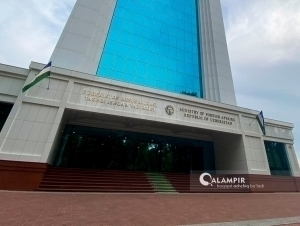
The troubling question remains: what is the true goal of these narratives? The foreign commentary surrounding the Hakimov case amounts to interference in Uzbekistan’s internal affairs. Notably, Russian Foreign Ministry spokesperson Maria Zakharova, who last year even commented on a minor school incident in Uzbekistan, has remained silent so far. Either she has not yet received the information — or the command button has not yet been pressed.
Live
All