Compulsory-voluntary: The school uniform debate
Review
−
28 August 2025 8554 8 minutes

As the new school year approaches, parents begin shopping for supplies and school uniforms for their children. For many families, this process can be challenging—especially when uniforms are mandatory. While Uzbekistan has not officially introduced a nationwide school uniform policy, students are often required to dress alike based on verbal instructions. Enforcement typically comes from school principals, who act on orders from higher authorities. In some cases, schools even pressure families to purchase uniforms from a specific store or have them made by a designated tailor, raising concerns about conflicts of interest and monopolistic practices. This brings us to the issue of compulsory school uniforms: Why are students forced to dress the same? Do uniforms truly reduce social divisions and promote discipline, as supporters claim, or do they create unnecessary financial burdens?
Pros and cons of wearing a uniform

One of the main arguments in favor of school uniforms is their role in fostering equality among students. When everyone wears the same clothes, visible differences in style and brand disappear, reducing the appearance of social divisions. Educators say wearing uniforms helps create a sense of unity within the student body.
Child psychologists also point out that children tend to identify with groups through shared symbols. Wearing a uniform can foster pride in belonging to a school community. This sense of group identity is particularly important during adolescence. A neutral dress code can encourage teamwork, discipline, communication, and mutual respect.
Another benefit is the simplicity uniforms offer. Students no longer face daily clothing choices, and uniforms are designed for comfort with seasonal variations for summer and winter. Supporters argue that this saves both time and money. Studies have also shown that classrooms where all students wear uniforms appear more orderly, students are less disruptive, and they focus better on lessons.
However, critics say that while uniforms may promote social cohesion, they do not eliminate inequality—it simply takes other forms. One major concern is cost. Uniforms can be expensive, and families often need more than one set to last the entire school year. For households with limited financial resources, this can be a heavy burden, especially when schools impose strict guidelines for each season’s attire.
Another criticism is that uniforms can reinforce gender stereotypes and restrict freedom of belief. In Japan, for example, the requirement for girls to wear skirts has drawn significant backlash. In many countries with strict dress codes, skirts remain mandatory for girls, limiting comfort and mobility. Responding to similar concerns, India introduced gender-neutral “unisex” uniforms in 2021, requiring trousers for both boys and girls. However, this change has sparked objections from some religious groups who view the policy as conflicting with their beliefs.
Perhaps the greatest drawback of school uniforms is their restriction on self-expression. Clothing is often a way for young people, especially teenagers, to express personality, emotions, and individuality. By forcing all students to dress the same, schools risk suppressing creativity and discouraging independent thinking.
In which countries are school uniforms mandatory?
Many countries require students in schools, colleges, and universities to wear uniforms, either through strict mandates or voluntary policies. While critics argue that compulsory school uniforms infringe on children’s rights, numerous nations—developed and developing alike—continue to enforce them. Countries such as the United Kingdom, Japan, Australia, China, Russia, and South Korea all maintain some form of school uniform tradition.
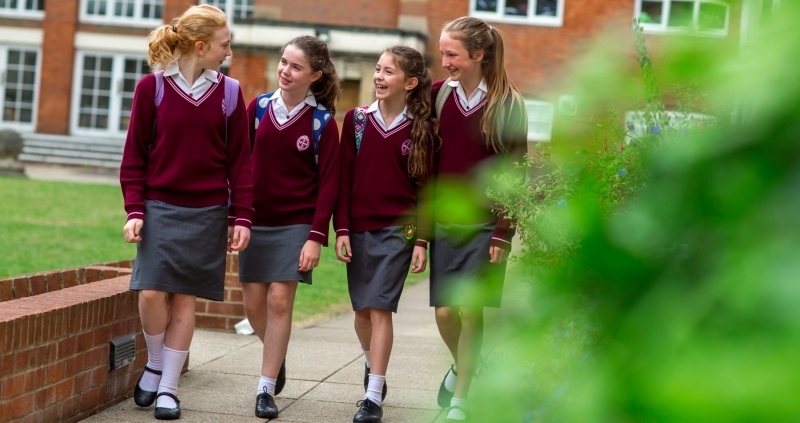
United Kingdom. School uniforms are common across the country, but there is no national law requiring them in England and Wales, Scotland, or Northern Ireland. Instead, decisions on uniforms and dress codes are left to individual schools, which set their own policies.
Japan. School uniforms were introduced in Japan in the late 19th century and are now standard across both public and private schools. Strict dress codes are also common, prohibiting makeup, excessive jewelry, unusual hairstyles, or unnatural hair colors. A modest and uniform appearance has become a cultural symbol of Japanese youth.

Australia. Australia is known for its strict approach to school uniforms, which are seen as a core part of the country’s education culture. While there is no federal law requiring them, most schools—particularly private and Catholic institutions—enforce detailed uniform policies that often include separate winter and summer outfits and restrictions on accessories. Public schools also require uniforms, though their policies are often more relaxed, with some schools allowing clothing that matches school colors and reflects personal style.

China. In China, school uniforms are compulsory nationwide and are considered a key element of the education system. They are viewed as a way to promote equality, discipline, and a sense of school identity. Today, Chinese uniforms often resemble sportswear, with light T-shirts for summer and warmer jackets for winter.

Russia. Uniforms were first introduced in the Russian Empire in the 19th century as a symbol of order and discipline. During the Soviet era, they were standardized and mandatory. After the Soviet Union collapsed, Russia relaxed dress requirements in schools, leading to a rise in branded clothing, increased inequality, and weakened discipline. In response, the government reinstated school uniforms in 2013. Schools now follow general uniform guidelines, though styles and colors are determined locally.
South Korea. Nearly all middle and high schools in South Korea require uniforms, with different styles for summer and winter. Blue, black, and gray are the most common colors. Uniforms are widely recognized as part of South Korean youth culture, popularized through TV dramas and music videos. However, the rule requiring skirts for girls has been widely criticized, leading many schools to allow trousers. Parents also frequently complain about high uniform costs.
CIS countries. In many former Soviet republics, uniforms have remained part of school life, though policies vary.
Kazakhstan eased restrictions in 2023, dropping formal uniforms and making ties optional, giving students more flexibility in dress.

Kyrgyzstan has required uniforms since 2007 under a government decree mandating a consistent style. Boys typically wear white shirts, dark trousers, and a jacket or suit, while girls wear white blouses and dark skirts or trousers. The main colors are black, blue, gray, and brown.
Azerbaijan introduced mandatory uniforms in state schools for the 2023–2024 academic year. Schools may choose from four color schemes for skirts or trousers—dark gray, dark blue, dark brown, or gray—with white and blue tops. Private schools set their own dress rules.
Tajikistan has enforced a nationwide school uniform since 2007. Outfits are simple, made in dark colors, and sometimes include elements of traditional national clothing.
In these countries, debates continue over the cost and quality of uniforms, with parents often voicing concerns. Nonetheless, many governments view a standardized school uniform as essential for maintaining equality and discipline in schools.
What about Uzbekistan?!...
In Uzbekistan, policies on school uniforms have shifted so frequently in recent years that it’s easy to lose track of what’s actually required.
The Cabinet of Ministers’ resolution of August 15, 2018, stated that school uniforms would remain optional for the 2018–2019 academic year but become mandatory starting in 2022–2023. However, in May 2019, Saida Mirziyoyeva, then Deputy Director of the Agency for Information and Mass Communications, argued that it was too soon to enforce a nationwide school uniform requirement, pointing out that other priorities needed attention first.
“As a result of the studies conducted, we saw that conditions are difficult in some places, many schools require repairs, there is a shortage of textbooks, the quality of books is very low, and classes are held in three shifts in some schools. Starting this year, it is planned to introduce a mandatory school uniform. However, we believe that it is too early to require a mandatory uniform without correcting the existing shortcomings. In short, first the conditions, then the demand,” she wrote in a Facebook post.
Shortly afterward, on June 18, 2019, the Cabinet of Ministers adopted Resolution No. 509, delaying the introduction of a mandatory school uniform until the 2024–2025 academic year. Yet in May 2022, Resolution No. 271 reversed that decision, setting the start date back to the 2022–2023 school year. This sudden change sparked public backlash from parents and educators.
In response to the criticism, the government passed Resolution No. 558 on October 3, 2022, officially canceling the requirement for schools to enforce a single nationwide uniform starting that year. The new resolution called for a gradual implementation of a standardized uniform policy but set no clear deadline.
Despite official statements from the Ministry of Preschool and School Education each year assuring that uniforms are not mandatory, students across the country are still expected to wear them. In practice, school principals and teachers often enforce uniform requirements, leaving parents with little choice.
The issue made headlines again last year when a video surfaced showing the principal of School No. 23 in Karshi, identified as F.Sh., collecting money for uniforms midway through the academic year. The incident caused public outrage, and the principal was fined.
Public opinion remains divided. A QALAMPIR.UZ survey found that most respondents oppose making school uniforms mandatory. However, in reality, nearly all parents are compelled to dress their children according to school guidelines, regardless of official policy.

Live
All