Blood spilled for oil! Who is the next target?
Review
−
08 January 5744 11 minutes
Donald Trump has “spat” on democracy. Venezuelan youth are seen dancing in celebration of an invasion of their own state. The United Nations, an organization that claims to uphold global peace, appears powerless. Confident in his strength, the U.S. president is openly naming his next “targets.” All these developments have forced the world to hear the name Venezuela several times a day. Public opinion is sharply divided. The question remains: who is right?
The fastest surrender of a president in modern history
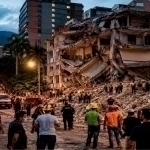
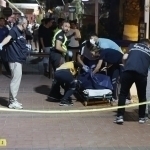
Donald Trump, who was listed among potential candidates for the Nobel Peace Prize toward the end of 2025, launched a small-scale war as early as the third day of 2026. On January 3, at least seven explosions were reported in Caracas, the capital of Venezuela. According to The New York Times, at least 40 people, including civilians and military personnel, were killed as a result of the operation. After just over three hours of attacks, Venezuelan President Nicolás Maduro and his wife were captured and taken out of the country. The United States charged the couple with “narco-terrorism.”
The United States describes its attack as self-defense
In justifying its actions, Washington has invoked Article 51 of the UN Charter, claiming that everything was carried out within a legal framework. However, under international law, the right to self-defense applies only in response to an armed attack or an imminent threat posed by another state. Despite this, Trump stated that he ordered the attack on Venezuela due to narcotics-related allegations that do not fall under the criteria of Article 51. Political analysts argue that the true objective of the military operation was to seize control of Venezuela’s strategic resources, particularly its oil and minerals.
At the same time, U.S. officials have stated that Washington does not seek a full-scale armed conflict with Venezuela and that the two countries are not officially at war.
“America does not want to wage war against Venezuela. We only fought bad people,” the White House leader said.
International reaction
As the U.S. attack sparked global debate, Chinese President Xi Jinping addressed the issue on January 4 during a meeting with the Prime Minister of Ireland.
“Today’s world is filled with change and instability, and unilateral intimidation has caused serious damage to the international order. All countries must respect the development paths independently chosen by other nations’ peoples and adhere to international law as well as the purposes and principles of the UN Charter. Major powers should set an example in this regard,” Xi Jinping said.
New York City Mayor Zohran Mamdani also described the U.S. operation to detain Venezuelan leader Nicolás Maduro as an “act of war” and a violation of both international and federal law. Mamdani confirmed that he had spoken with Trump by phone and openly expressed his opposition to the arrest of Maduro and his wife.
Whether Washington’s actions toward Venezuela constitute a direct invasion, an attempt to control internal processes through external pressure, or are justified as a fight against narco-mafia networks makes little difference. The situation has once again underscored a simple truth: in the modern world, war does not always begin with tanks, weapons, or explosions. Sometimes it starts with sanctions, sometimes with information warfare, and often through individuals bought from within.
The United States is one of the five permanent members of the UN Security Council. This means it not only wields immense power but also possesses the ability to present the unlawful use of force as “legitimate action.” As a result, U.S.-led interventions across the world are frequently justified under the banners of “democracy,” “the will of the people,” and “freedom.”
The Arab Spring: popular will or a geopolitical project?
The Arab Spring of 2011 initially began as a demand for freedom and justice. However, as external interference intensified, events spiraled out of control. Countries such as Syria, Libya, and Yemen were plunged into years of instability and humanitarian catastrophe. In some cases, old regimes collapsed only to be replaced by systems that were even harsher or more chaotic.
The situation in Venezuela is not unprecedented in U.S. foreign policy. Iraq, Libya, Afghanistan, and Syria offer clear examples of how such interventions tend to end.
The war against Iraq in 2003 was launched under the pretext of “weapons of mass destruction.” As a result, the state structure collapsed, millions of lives were lost, and the alleged weapons were never found.
In Libya, the 2011 intervention carried out under the slogan of “protecting civilians” ultimately destroyed the state system altogether. The very population that was supposedly being protected ended up suffering the most.
In Afghanistan, a war that lasted twenty years ultimately returned the country to its starting point, with the Taliban once again taking power. Over those years, countless lives were lost, vast natural resources were consumed, and the country’s global standing deteriorated.
Former U.S. Secretary of State Henry Kissinger’s remark that “it may be dangerous to be America’s enemy, but to be America’s friend is sometimes fatal” is rooted precisely in these historical experiences.
The Venezuelan case reflects the same pattern. A sovereign state was attacked, its president was removed within just over three hours, and most disturbingly, a portion of the population welcomed the event and celebrated. From the outside, this may resemble “liberation from a tyrant,” especially given that President Nicolás Maduro is often labeled a dictator and his rule described as authoritarian. However, from a political analysis perspective, this signifies the erosion of state immunity.
When a population greets foreign intervention with joy, accepts the removal of its own leader as a relief, and adopts the mindset of “anything is acceptable as long as the current government is gone,” it indicates that society has been fractured from within.
What are people dissatisfied with?
Venezuela is facing a severe economic crisis. Inflation has reached extreme levels, and wages are barely sufficient for survival. Reports suggest that 82 percent of the population lives below the internationally recognized poverty line, while 53 percent are in extreme poverty, unable to afford even basic food supplies. Although the government provides monthly subsidies of around $120 under the so-called “economic war bonus,” this amount fails to cover everyday needs. Leaked data indicate that more than 70 percent of the working population earns less than $50 per month. Economic inequality has deepened, with only about 6 percent of the population earning more than $1,000 per month. More than 5.4 million Venezuelans are currently in need of urgent humanitarian assistance.
At first glance, these figures paint a grim picture. It must be noted, however, that they are not drawn from official government sources. Due to strict media control, such data are not publicly released. The information presented here is based on local surveys and international research disseminated via social media. One fact, however, is undeniable: Venezuela’s economic crisis is deep, and living conditions for ordinary people are extremely harsh.
This deterioration can largely be attributed to oil dependence and poor governance. Venezuela holds one of the largest oil reserves in the world, yet corruption and misguided policies have prevented oil revenues from improving people’s lives. Where that income goes is not difficult to guess.
Basic services such as electricity, water, and gas, which are essential for daily life, are also plagued by serious problems. Power outages are frequent, access to clean drinking water is limited, and gas and fuel shortages persist. The healthcare and education systems are in crisis. Hospitals lack medicines, doctors are leaving the country, and schools and universities are failing to function properly. Independent media outlets that should highlight these issues are restricted. Protests are forcibly suppressed, and there are documented cases of activists and journalists being persecuted.
As a result, mass migration has taken hold. More than seven million Venezuelans have been forced to leave the country. This is a clear sign of a population that has lost hope in the future. Overall, the Venezuelan people are now struggling simply to survive.
The collapse of 13 years of rule
President Nicolás Maduro ruled Venezuela for nearly 13 years. He first assumed office after winning the election on April 19, 2013. He was re-elected in 2018 and secured a third term in the 2024 election, winning by a significant margin. It was during this period that public discontent intensified, with widespread allegations of electoral fraud. You already know how it ended.
Today, public dissatisfaction in Venezuela manifests in two main directions. Maduro supporters consider the U.S. military intervention a violation of sovereignty and describe the incident as the kidnapping of a president, demanding his release through protests. Meanwhile, the opposition and large segments of a population exhausted by years of food and medicine shortages, power outages, and political repression express their anger toward the government. There is also an international dimension of protest, with many voicing concern that blood is being spilled for oil and that the United States is attempting to control Venezuela’s natural resources.
At present, the country resembles an overinflated balloon, with the risk of clashes between armed groups and military factions remaining high.
The other side of the coin
The most dangerous enemy never crosses the border first. It enters minds, then elites, and finally the consciousness of people in the streets. Unfortunately, those applauding the events in Venezuela are not limited to its own population. In many other societies, voices have been heard saying, “This was right,” “The people were saved,” or “The U.S. restored order.” This is a deeply alarming signal.
Venezuela today, Iraq yesterday, and before that Libya, Afghanistan, and Syria—what happened there could knock on the door of another country tomorrow. No nation is immune. Especially if trust in the state erodes from within, if the illusion grows that problems can only be solved by an external “savior,” and worst of all, if betrayal begins to be justified.
Trump, who is being praised by some, speaks in ways that appeal to the Venezuelan public. He promises wealth, effective use of resources, and reduced crime. Yet his actions themselves amount to a crime. Launching an armed attack on a sovereign state with its own president, government, and borders is a violation of international law, regardless of attempts to frame it as self-defense.
Appetite grows with eating
Trump has stated that Maduro’s fate could befall another head of state. He accused Colombian President Gustavo Petro of involvement in drug production and did not rule out the possibility of an operation to overthrow him. According to the U.S. president, Washington’s mission is to “surround itself with viable and successful states,” while ensuring that America can freely extract oil in those territories.
Colombian President Gustavo Petro, in turn, said he is ready to take up arms to defend his country. He also stated that if the United States attempts to arrest him, he trusts that his people will stand by him. Petro wrote this on his X account, adding that although he has never been a soldier, he understands what war and underground struggle mean.
“After the 1989 peace agreement, I swore never to take up arms again, but I am ready to do so for my homeland, even though I hate war. If they try to arrest the president and succeed, and if my people love and respect their leader, the nation’s jaguar will be freed,” Petro wrote.
The president of the so-called “land of dreams” also openly stated that U.S. control over Greenland is essential for defense purposes, referencing the Monroe Doctrine of 1823. At the same time, he emphasized that the decision to remove Venezuelan President Nicolás Maduro was not driven solely by geographic considerations.
“It’s not about the hemisphere. It’s about the country. It’s about individual states,” the U.S. president said.
Donald Trump has repeatedly spoken about the necessity of U.S. control over Greenland. In a BBC interview in late December 2025, he stated that Greenland is “essential for national security.”
Whether the list of countries that could be brought under U.S. control in the name of American prosperity ends here remains unclear. Trump’s recent decisions and statements can best be described by a famous line from an old film: “Whatever they do will somehow be justified.”
That is why Venezuela should be seen not merely as a country on the map today, but as a mirror. When powerful states shout slogans of “peace,” “freedom,” and “the interests of the people,” it is worth carefully considering their true intentions. A helping hand extended yesterday can become a tool of control today and ownership tomorrow. Most tragically, it is always ordinary people who suffer the most in this process.
Nurzodbek Vohidov
Live
All