Preventive inspectors to be relieved of excessive duties
Local
−
08 April 11610 4 minutes
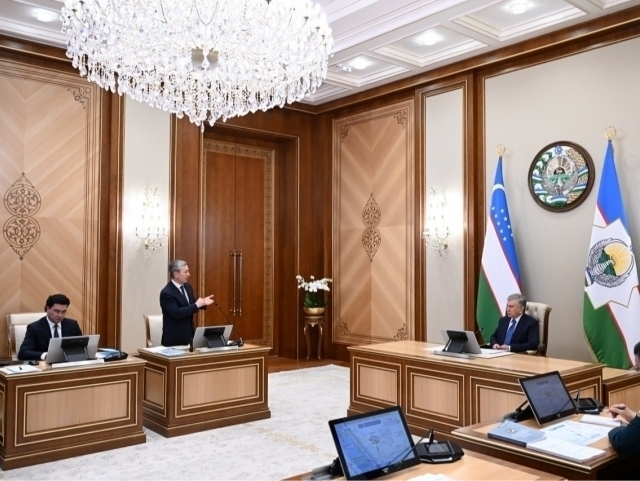
Preventive inspectors in Uzbekistan will be relieved of excessive duties. This was discussed during a presentation of proposals on further improving the public safety system, reviewed by President Shavkat Mirziyoyev on April 8.
According to the report, the head of state emphasized that ensuring reliable public safety remains one of the top priorities in today’s challenging environment. For this purpose, a Public Safety Department has been established within the Ministry of Internal Affairs, bringing together services responsible for crime prevention, public order, road safety, and probation. Currently, this department accounts for nearly 30 percent of the ministry’s personnel.
Managing such a large and complex system effectively, as well as ensuring strict oversight, requires a new approach. In this regard, the presentation discussed proposals to introduce modern management and digital monitoring mechanisms in the sector, as well as to revise performance indicators based on the principle of shifting “from a punitive system to a service-oriented system for the population.”
Special attention was given to the organization of preventive work at the neighborhood level. At present, more than 10,000 preventive inspectors serve in nearly 9,000 neighborhoods across the country. Last year, they reviewed over 2.5 million applications from citizens, and materials on more than 470,000 cases were submitted to courts. At the same time, it was noted that an increase in excessive management layers overseeing inspectors has reduced their focus on neighborhood safety and crime prevention.
In this regard, the need was emphasized to free preventive inspectors from unnecessary tasks and create a system that allows them to focus directly on their core responsibilities — ensuring safety in neighborhoods, preventing offenses, and addressing citizens’ issues in a targeted manner.
Among the proposed measures are the introduction of daily online briefings, the organization of services through the “My Inspector” electronic system, the establishment of electronic data exchange with forensic institutions, online training and professional development without interrupting work, and the launch of “public assistant” groups to support neighborhood safety.
It was also proposed to grant inspectors the authority to make decisions on certain minor offenses and to introduce an administrative warning system for six low-level violations. This would allow inspectors to work without leaving their assigned neighborhoods, increase efficiency, and enable closer engagement with residents.
The importance of establishing a continuous system for crime prevention was also highlighted. For this purpose, it is proposed to create an integrated system linking preventive inspectors, school-based inspector-psychologists, and inspectors responsible for women’s issues at the neighborhood level. This system would help prevent problems related to youth, women, and families at an early stage. A preventive information system will also be introduced to enable real-time data exchange and access to a unified database.
Particular attention was also given to personnel training. It was noted that the training system for public safety personnel is being revised based on a practice-oriented dual education model. In particular, a new system has been proposed between the Academy of the Ministry of Internal Affairs and the Public Safety University for targeted training of preventive inspectors, probation officers, patrol service personnel, traffic police officers, and security service specialists. The balance between theory and practice will be structured as 80/20 in the first year, 60/40 in the second year, and 50/50 in the third year.
During the training process, practical competencies will be developed in areas such as social prevention, procedural actions, decision-making in non-standard situations, combat readiness, psychological resilience, communication skills, and the management of operational units.
Trainees and students will be appointed to internship positions, granted authority to work independently and make decisions, and will operate under the supervision and responsibility of mentors. Their performance will be monitored for five years after graduation, with continuous professional development ensured.
The President approved the proposals and instructed officials to develop concrete solutions to ensure reliable public safety, prevent offenses in neighborhoods, respond promptly to citizens’ appeals, and improve the efficiency of personnel.

Live
All