Wall paintings dating back to 10th–11th centuries found in Tashkent region
Interesting
−
11 November 2025 3126 2 minutes
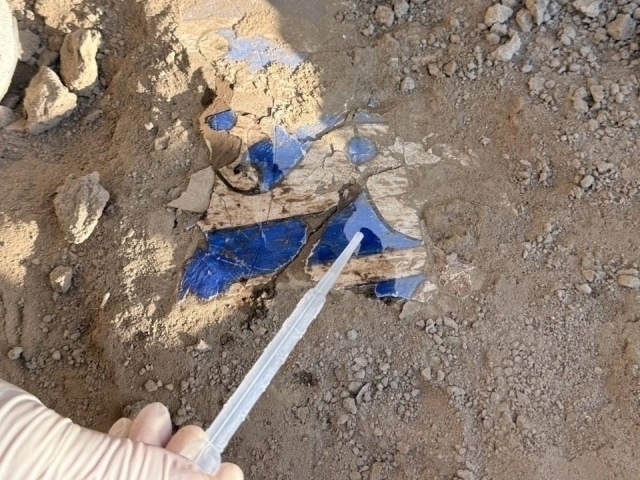
During the latest day of archaeological excavations carried out by archaeologists from the Institute of History of the Academy of Sciences of Uzbekistan, under the sponsorship of the Tashkent regional administration, a rare find was uncovered—wall paintings dating back to the 10th–11th centuries. This was reported by the Institute of History of the Academy of Sciences.
According to the report, the findings were discovered in the large caravanserai area located in the ancient city of Qanqa. The caravanserai, situated approximately 60 meters from the southern gate of the ancient city, measures around 100 by 70 meters in total. The building stands out for its architectural grandeur.
’’During the excavation of one of the caravanserai’s rooms, fragments of wall paintings fallen from the walls were found. The fragments measure 25 by 30, 15 by 20, and 30 by 35 centimeters, confirming that the rooms were decorated with wall paintings. The findings indicate that the art of wall decoration, which disappeared for some time after the Arab conquest, was revived in the Tashkent region during the 10th–11th centuries,’’ the report said.
Archaeological data suggest that similar wall paintings have been found at the Samarkand and Ahsikent sites. According to the report, these paintings are being studied with the participation of restorers from the Samarkand Archaeology Institute, showing that a school of wall painting existed in Tashkent as well. During archaeological research conducted at the site in 2023, wall paintings from the 5th–7th centuries were also recorded.
It is worth noting that earlier, a place of worship and military artifacts dating back to the 5th–8th centuries were discovered at the Qanqa site in the Tashkent region.

Live
All