Special flights to repatriate Uzbek citizens performing Umrah
World
−
02 March 43851 3 minutes
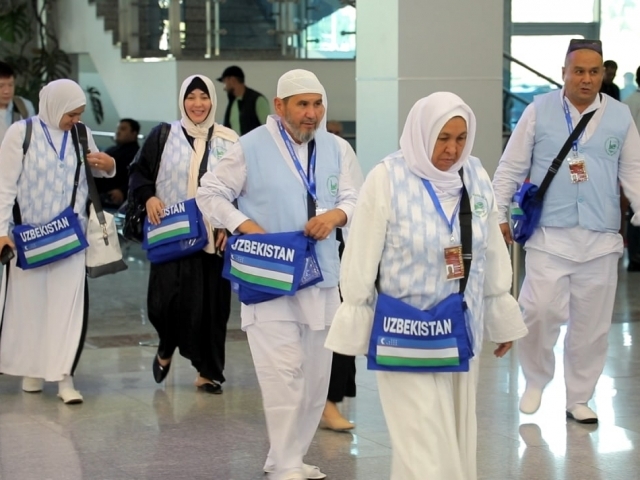
Special flights will be organized to return citizens of Uzbekistan who traveled to Saudi Arabia under the Umrah program, Uzbekistan Airways has announced.
According to the statement, under instructions from Uzbekistan’s aviation authorities, all airlines operating in the country have been tasked with suspending the transportation of Uzbek pilgrims to Saudi Arabia under the Umrah program until further notice.
Starting March 2, 2026, Uzbekistan Airways will operate repatriation flights on the Jeddah–Tashkent route to return Uzbek citizens who had been transported to Saudi Arabia under the Umrah program.
Earlier, several international flights were canceled due to the escalation of the situation in the Middle East and temporary restrictions on the use of airspace. For example, on March 2, a scheduled Tashkent–Jeddah flight carrying Umrah pilgrims, organized by the Muslim Board of Uzbekistan, was postponed for an unspecified period.
U.S.–Israel–Iran conflict
On February 28, Israel launched unexpected airstrikes against Iran. The strikes reportedly targeted key facilities, including the presidential residence, government buildings and nuclear sites. Iran’s Mehr news agency reported that the Iranian intelligence headquarters in Tehran was also attacked. The operation initiated by Israel was reportedly named “Shield of Judah.” According to preliminary sources, more than 30 missiles may have been launched at Iran.
Shortly afterward, the Israel Defense Forces officially confirmed the attack. The Defense Ministry also urged Israeli citizens to seek shelter. A state of emergency was declared across the country.
Meanwhile, U.S. President Donald Trump delivered an eight-minute statement on operations concerning Iran, confirming U.S. involvement in the strikes. He stated that the military actions against Iran were carried out to protect the American people. In his remarks, he called on Iranians to overthrow the current regime. Trump also urged Iranian military personnel to surrender in exchange for “immunity” or face what he described as “inevitable death.”
Reza Pahlavi, the former crown prince of Iran, who had been observing developments, also addressed the Iranian people, stating that decisive moments had arrived for the country. He described the confrontation as a final battle in which, he said, the Iranian people would prevail over the Islamic Republic’s system.
Soon after, Iran began launching strikes toward Israeli territory.
Israeli Prime Minister Benjamin Netanyahu also confirmed the attacks and issued a statement. According to him, the joint U.S.-Israeli operation against Iran was aimed at neutralizing the threat posed by what he called Iran’s “terror regime.” In his address, Netanyahu said that for the past 47 years Iran’s leadership had openly threatened Israel and the United States and pursued a policy of violence in the region.
Earlier, Iranian state television reported that Ayatollah Ali Khamenei had been killed in strikes by Israel and the United States. According to Iran’s Tasnim news agency, he was killed at his office on the morning of February 28. Following his death, 40 days of national mourning and seven days of public holidays were declared across the country.
During the attack on Iranian territory, four members of the ayatollah’s family — his daughter, son-in-law, grandson and one of his daughters-in-law — were also killed.
Following confirmation of the Supreme Leader’s death, Iran’s Islamic Revolutionary Guard Corps announced the launch of what it described as “the most intense offensive operation in the history of the Armed Forces.”
Subsequently, the Islamic Revolutionary Guard Corps declared that new attacks against Israel and the United States had begun.