When will discontent with foreign policy turn from caution to resolve?
Review
−
16 January 9194 8 minutes
At one time — more precisely, during the first administration — Uzbek labor migrants working abroad were treated with disdain and branded as “lazy.” Today, the era has changed. Migrants are officially recognized as a key driver of the national economy. The money they send home is now openly acknowledged.
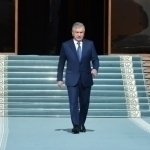
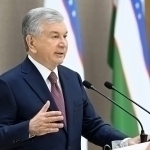
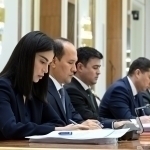
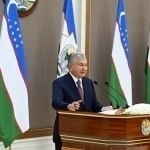
But what about their conditions? In which countries are they facing hardship? Are their rights being violated? Are they treated with basic human dignity? What plans does the state have to improve migrants’ lives going forward? Does this concern anyone at all? It certainly does — and deeply so. President Shavkat Mirziyoyev raised exactly these issues at a meeting devoted to the activities of the Ministry of Foreign Affairs and Uzbekistan’s diplomatic missions abroad.
From the President’s remarks, it is clear that he is dissatisfied with the work of the Foreign Ministry, particularly regarding the situation of migrants.
According to the President, reports of Uzbek citizens’ rights being violated during raids conducted in foreign countries are causing serious public outrage.
Anyone who assumes that the President does not read news reports, follow information flows, or watch videos circulating online would be mistaken. His statements show that he is well aware of everything — from inhumane treatment of Uzbeks abroad to migrants becoming victims of crime, and even security forces raiding restaurants where migrants are present.
What the President is dissatisfied with, however, is that in most cases the Ministry of Foreign Affairs limits its response to issuing formal diplomatic notes.
“Ambassadors and consuls must provide qualified legal assistance in every case and protect the rights and interests of our citizens abroad,” the President said.
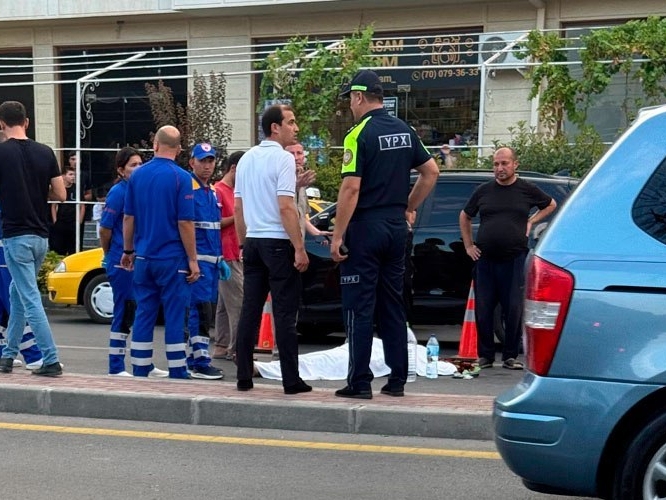
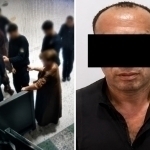
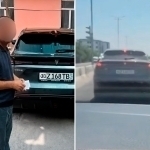
Although the President did not go into detail on each incident, it is not difficult to understand which cases and which countries he had in mind. For example, on December 12, an Uzbek migrant worker from Samarkand died in Russia’s Khabarovsk after being tortured by Russian security forces — the Special Purpose Mobile Unit (OMON). Information about the incident only reached the media 20 days later, on January 2. His body was sent back to Uzbekistan a month after his death.
Until the media reported on the incident, the Ministry of Foreign Affairs remained silent for 20 days. The Migration Agency said nothing either, as if the incident had nothing to do with it.
Only after the story became public did Uzbekistan’s Consulate General send diplomatic notes to the Khabarovsk Regional Prosecutor’s Office, the Investigative Directorate, and the local office of Russia’s Foreign Ministry, requesting an objective and lawful investigation.
This is about human life — not one life, but the fate of thousands. A single death may not fully reflect the scale of the problem, but it clearly points to deeper issues. In such circumstances, is it appropriate for Uzbekistan to respond only at the consular level rather than at the level of the Foreign Ministry itself? This question was raised by Qalampir. The President, for his part, is openly dissatisfied with responses limited to formal notes — and rightly so. How long will those responsible for foreign policy continue to act with excessive caution, restraint, and politeness?
Because timely responses to abuse against migrants are lacking, policies pursued by security agencies toward migrants are spilling over into the lives of ordinary people. The killing of 10-year-old Tajik boy Kobiljon Aliev by a 15-year-old student in the Gorki-2 district of Odintsovo, Moscow region, was not just an act of brutality — it was a consequence of anti-migrant policies. That child could just as easily have been Uzbek, as illustrated by the death of an Uzbek migrant following a beating by OMON officers.
When discussing the issue of limiting responses to diplomatic notes, another point must be clarified: even in issuing notes, the Ministry of Foreign Affairs acts with extreme caution. Russian politicians, political commentators, and pro-Kremlin journalists openly claim that the Uzbek nation does not exist, that it was invented by Lenin, that Uzbekistan emerged only after the collapse of the Soviet Union, and that its current borders are merely a “gift” — even openly discussing territorial seizure. Yet the Foreign Ministry remains silent.
Recently, television host and propagandist Vladimir Solovyov stated that Russia should conduct military operations in Central Asia similar to those in Ukraine. He did not explicitly mention Uzbekistan, but this does not mean the statement does not concern it.
Recall the case in which an Uzbek taxi driver in Russia was insulted and told he would soon become a “slave again” on the eve of Uzbekistan’s Independence Day. No official response followed. The very next day, Russia’s Foreign Minister was warmly welcomed in Uzbekistan by Foreign Minister Bakhtiyor Saidov — and even lectured officials at a World War II memorial about the absence of Russian-language inscriptions.
So who is supposed to respond to chauvinistic rhetoric and hate speech — only activists like Qodirov, Qudratkhoja, and Kusherbaev? Where is the Foreign Ministry? Where is parliament? Where are political parties, state bodies, and civil institutions? Or do they live somewhere else, with different passports?
Returning to the meeting, the President also expressed concern about young people and students abroad. According to him, the fact that some are being drawn into radical movements should alarm everyone.
From now on, ambassadors must abandon “cabinet diplomacy” and visit construction sites, dormitories, and university classrooms where compatriots work and study, identify their problems, and work on solutions, the President said.
Officials were instructed to establish a free call center for citizens facing difficult situations abroad, with a system capable of resolving appeals promptly in coordination with relevant ministries.
The President also voiced concern over citizens staying abroad illegally. He noted that last year, Uzbekistan succeeded in securing a “migration amnesty” for more than 150,000 citizens in Russia. Similar efforts should be made in other countries to legalize Uzbek workers, intensify negotiations with foreign partners, and at the same time remind citizens to comply with the laws of their host countries.
From now on, working with labor migrants will be a core task for consular staff, especially in countries with growing migration flows, particularly in Europe. Simplifying consular registration procedures and reducing unnecessary bureaucracy was also ordered.
Last year, the US government simplified visa procedures for agricultural workers. Uzbekistan’s ambassador to the US, Furkat Siddikov, was tasked with negotiating Uzbekistan’s inclusion in the list of countries eligible for seasonal worker programs. Each ambassador will also be responsible for identifying high-income job opportunities abroad and preparing citizens with the necessary skills and language training. In this regard, signing migration agreements with Japan, Sweden, Norway, Bulgaria, Austria, Croatia, Slovenia, Serbia, Greece, and Oman was emphasized.
At the same time, the President criticized the unsatisfactory performance of ambassadors in Austria, France, Spain, Italy, the Czech Republic, and Saudi Arabia in attracting labor opportunities.
According to analyses, Sweden, Denmark, and Norway currently face a shortage of about 300,000 workers. Officials were instructed to reach agreements with these countries and facilitate the placement of Uzbek citizens in well-paid jobs. Ambassadors to Sweden and Latvia were tasked with developing a broader labor migration cooperation program with Nordic countries.
The President noted that global geopolitical shifts, instability in international relations, regional confrontations, and economic transformations require every country to continuously reassess its foreign policy. However, he did not specify which global events he had in mind — as official Tashkent usually avoids explicitly naming wars or conflicts.
Recently, at an expanded Security Council meeting, the President said Uzbekistan’s Defense Doctrine and National Security Concept need revision. Now it is the turn of the Foreign Policy Concept. According to the President, it must be updated, priorities reviewed, and concrete tasks set to protect national interests and strengthen Uzbekistan’s position on the international stage.
All Uzbek diplomats must maintain high levels of international engagement this year. Preparations for high-level visits should begin well in advance, not just a month before. Poorly prepared agreements risk becoming dead-end projects, while investors may spend years navigating bureaucracy.
Since taking office, President Mirziyoyev has not yet conducted high-level visits with major countries such as the United Kingdom, Spain, Indonesia, Australia, Brazil, and Canada. At the meeting, he specifically criticized the lack of initiatives to revive relations with countries where cooperation remains weak. Improving the quality of preparation for high-level visits and strengthening the Foreign Ministry’s strategic analysis and planning capacity were set as key tasks.
According to the President, the time has come for a new generation of diplomats — professionals who work in a new spirit, deliver concrete results, and firmly defend Uzbekistan’s interests on the international stage.
Live
All40 gektar maydonda Yangi Jizzax shahri quriladi
03 February
Erdo'g'an Saudiyaga bordi
03 February
Putin “qora shahzoda” bilan telefonlashdi
03 February
Qashqadaryoda YPX mashinasi yonib ketdi
03 February