“Abbos Dollar” detained; Central Asia cracks down on pedophiles — Midweek
Review
−
09 October 2025 7322 11 minutes
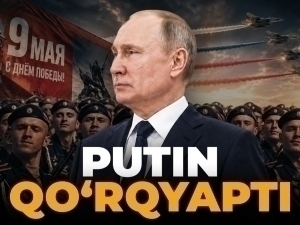
A stream of unidentified drones flying over various European countries and interfering with critical infrastructure has heightened fears that Putin may be secretly preparing for conflict with NATO.
The fight against pedophilia in Central Asia is intensifying. Kazakhstan has approved chemical castration, while Kyrgyzstan plans to put the measure to a public vote.
This week, reports that prominent Afghan businessman and politician Abbas Ibrahimzoda — widely known as “Abbos Dollar” — was detained in Tashkent drew significant attention across Uzbek social-media segments.
In Turkey, a number of well-known singers and actors were arrested on suspicion of drug trafficking and smuggling.
Here are the main events of the week as covered by QALAMPIR.UZ’s Midweek programme.
“Abbos Dollar” detained in Uzbekistan
This week, the Amu publication, which covers events around Afghanistan, reported that former parliamentary deputy speaker and Afghan millionaire Abbas Ibrahimzoda — known as “Abbos Dollar” — had been detained in Tashkent. According to the report, Ibrahimzoda was arrested on September 24 following numerous complaints filed by business rivals. Despite reportedly posting more than $350,000 in bail, he has not been released. Sources say Ibrahimzoda invested over $50 million in Uzbekistan during the past four years. Those investments covered commercial transport and food-production sectors. His detention has raised concerns about disruptions to the activities of companies associated with him. Officials and Ibrahimzoda himself have not commented on the situation.
Who is “Abbos Dollar” and why is he widely known in Central and South Asia? Ibrahimzoda was born in 1970 in Sholgara district, Balkh province. He finished 12th grade at the Bakhtar secondary school in Mazar-i-Sharif. He served as a member of parliament representing Balkh during the 16th convocation. Combining business with politics, Ibrahimzoda is of Hazara ethnicity and earned the nickname “Abbos-Dollar” for leading an association of money exchangers in Balkh. He was also counted among Afghanistan’s wealthiest people and was active in the oil and gas business.
Exact details about when he moved to Tashkent are unclear. However, after the 2021 coup in Afghanistan, he left the country. In the summer of that year, Ibrahimzoda led efforts to protect Mazar-i-Sharif from the Taliban, but soon after the Taliban took power he left Afghanistan and reportedly settled in Turkey. His Ibrohimzada Group once united several dozen companies. He also controlled a private television network in Balkh and regularly invested in education and charity. The Group Charity Foundation, founded by Ibrahimzoda, was one of his most notable initiatives, focusing primarily on literacy programs for women. Ibrahimzoda owned three universities, two colleges, and 30 secondary schools across Balkh and Kabul.
In recent years, Ibrahimzoda reportedly traded fuel, gas, mineral fertilizers, and construction materials from Turkmenistan, Uzbekistan, and Kazakhstan. His fuel and gas depot in Hayraton, a city bordering Uzbekistan, had a capacity exceeding 50,000 tonnes. The Taliban’s rise to power dramatically altered his operations, and the regime’s takeover proved costly for him: in 2023, the Taliban froze around 20 of his commercial properties. Those assets reportedly included six petrol stations, two hospitals, a television channel, two food-processing plants, five shopping centres, two residential complexes, and an industrial facility at the Hayraton station.
Ibrahimzoda was twice elected to the lower house of Afghanistan’s parliament. In 2019 he founded the New Afghanistan Unity Party, which became the country’s third-largest party among Shiite Hazaras. The party reportedly had nearly one million supporters and had parliamentary representation, gaining notable visibility on social media.
Mass arrests of celebrities in Turkey
The year 2025 has been difficult for Turkey’s show business. The process began in February when Sardar Ortach was sentenced to 10 months’ imprisonment for involvement in prohibited advertising activities. By spring the wave continued with penalties for celebrities such as Halit Ergenç, known for his role as Sultan Suleiman in the series Magnificent Century, and Riza Kojawglin, beloved by young audiences for his role in the series Chukur. They were accused of participating in the 2013 Gezi Park protests that led to public disorder.
Interrogations and arrests of celebrities are ongoing. Although the names this time are somewhat less prominent than those earlier in the year, the number of detainees is significant. On October 8, numerous famous singers and actors were arrested in operations related to narcotics promotion and smuggling.
The list of those detained includes Birce Akalay; Birsen Berrak Tuzunataç; Jeren Morav Orhan; Demet Evgar Babataş; Deren Talu; Dilan Polat; Duygu Özaslan Mutaf; Engin Polat; Feyza Altun; Hadise Açıkgöz; İrem Derici; Kaan Yıldırım; Kublay Aka; Mert Yazıcıoğlu; Metin Akdülger; Özge Özpirinçci (Yamanturk); Zainab Meriç Aral Keskin; and Zeynab Sali (Saftar). They were taken to the Istanbul provincial gendarmerie command for questioning and blood samples.
Some of those named are currently abroad, while others have already begun interrogation procedures. Each defendant’s lawyer has released initial statements. For example, İrem Derici’s lawyer, Ayşegül Mermer, said her client was taken to the gendarmerie for questioning and that no official information had yet been provided about the charges; she added that further details would be disclosed as the investigation progresses. Zeynep Sali’s lawyer said his client is currently abroad and will give testimony upon return; he also stressed that Sali has never smoked and has no connection to the individuals named in the investigation. According to Sözcü, the attorney for the singer Simge Sağın said she has been in the US for a week and is expected to be questioned upon her return.
It is worth noting that extensive raids targeting drug trafficking and smuggling have been carried out across Turkey in recent days. The arrests of several high-profile celebrities in those operations came as a surprise.
Central Asia declares “war” on pedophiles
Recently, legal developments across Central Asia have shown both positive and contentious trends. A horrific murder in Kyrgyzstan — linked to the sexual assault of a minor girl — served as a catalyst. President Sadyr Japarov has put the reinstatement of the death penalty for such heinous crimes on the agenda and stands firm on the proposal. He has said that any move to restore capital punishment must be approved directly by the people and that the final decision will rest with them, indicating Kyrgyzstan may hold a referendum on reinstating the death penalty.
Commenting on the tragic death of Oysuluv Mukaisheva, Japarov said he personally oversees the investigation and has instructed his administration to draft legislative amendments to increase penalties for future crimes. He noted that crimes involving the murder of minors and sexual violence against women are rising, and that standard prison sentences are no longer deterring offenders. He clarified that corruption offences would not be eligible for capital punishment, which would be reserved only for particularly brutal murders and cases of pedophilia. Japarov also addressed public concerns about the risk of unfair trials, pledging that technological capabilities would ensure transparency in proceedings.
“We will not decide this issue alone. We will consult the people. This matter could be placed on a nationwide referendum. If the majority supports it, changes to the Constitution and laws will be needed, and international obligations will have to be reconsidered,” Japarov said.
Kazakhstan’s approach differs: authorities are taking a more measured stance. The country has introduced chemical castration to be applied to those convicted of sexual crimes against minors, to be implemented six months before the end of the convict’s sentence. Under the new procedure, prison administration must send relevant documents to the court at least 12 months before the sentence’s completion to determine whether psychiatric or forensic evaluations indicate a propensity for sexual violence. The order enters into force ten days after its official publication.
Pedophilia is an appalling crime. When a state adopts harsh measures such as the death penalty or chemical castration, it provokes intense debate. Many human-rights activists strongly criticize such measures. Yet if people imagine themselves as parents of the victims, perspectives may shift. On the other hand, extreme punishments like capital punishment carry a significant risk of grave errors due to wrongful investigations or unjust court rulings — mistakes that cannot be undone.
There are many complex problems in life. Determining appropriate punishments for pedophiles is one of them. It is worth noting that Uzbekistan recently discussed introducing chemical castration for pedophiles as well. Those debates were triggered by a gruesome case similar to Kyrgyzstan’s — the rape and murder of a very young girl who had just turned 12.
Putin preparing for war with NATO
Over the past month, Russia has been testing NATO’s “nervous system.” Moscow has significantly intensified provocative actions against several alliance members. The incidents began with drones over Poland and escalated after NATO activated the mechanism to discuss a response rather than immediately retaliating. Russia’s next target appeared to be Estonia — not with drones alone, but with three fighter jets that entered NATO airspace without encountering resistance. Russian military aircraft were also recorded in Romanian airspace. Even more alarmingly, aircraft believed to be Russian drones were reported in the airspace of Denmark, Norway, and Germany. If confirmed, these incidents suggest NATO’s eastern, northern, central, and western flanks have been penetrated.
European analysts view these moves as attempts to paralyze NATO. According to Danish military intelligence, the main purpose appears to be weakening NATO’s political cohesion and disrupting its decision-making. Structure head Thomas Arnekeil has said Russia is conducting hybrid warfare against Denmark and other Western countries, seeking to sow distrust and discord within NATO and to undermine support for Ukraine.
Reported drone flights over Danish airports and key strategic sites have occasionally led to temporary airspace closures for civilian drones and even flight stoppages at Copenhagen and Aalborg airports. The operators of the drones remain unknown, but Danish officials suspect Russian involvement. At the same time, Russia’s “shadow fleet” continues to transport oil through the Baltic Sea, protected by fighter jets and other aircraft — a fact that should not be overlooked. Under such conditions, the likelihood of airspace violations over NATO countries such as Poland, Estonia, Finland, and Romania increases.
Putin and Medvedev’s reactions to these events have been striking. One responded with sarcasm, joking that no more drones would be sent to those regions, while the other did not rule out that Moscow might be responsible for the flights. On October 2, at the Valdai International Discussion Club, Vladimir Putin jokingly said, “We will no longer send drones to France, Denmark, or Copenhagen,” arguing that Russia does not possess drones that can reach Lisbon and that European cities are not valid targets; he dismissed Western accusations as a way to escalate tensions and justify higher defence spending. Dmitry Medvedev listed five possible origins and purposes for the drones and concluded by suggesting Russia could have been responsible — a remark that was at once suspicious and somewhat comical, given his stature as former president and prime minister.
But the situation is no laughing matter. The US-based Institute for the Study of War has summarized these events as part of the Kremlin’s active strategic operations aimed at preparing for confrontation with NATO. The institute argues that Russia is shaping an informational and psychological environment for future clashes. According to analysts, Russian intelligence is carrying out covert and overt attacks against NATO states from Moscow, including electronic warfare measures, GPS jamming, and air provocations. All these actions indicate Russia is “creating conditions for operations.” However, it is still too early to conclude that the Kremlin has decided to launch a full-scale war with NATO, as Russia has not shown evidence of the large-scale military mobilization required for such a conflict.
Nevertheless, experts believe these activities reflect Moscow’s long-term strategic plans, including potential preparations for war with NATO. Alongside provocations, Russia is reorganizing military districts bordering NATO and building new bases along the Finnish border.
Live
All