Uzbekistan moving away from gas, a university where students became drug couriers, deaths on operating tables, and a healthcare system under scrutiny — Weekly Analysis
Review
−
14 December 2025 10146 14 minutes
In Uzbekistan, 184 people have been convicted of bribery-related crimes, with 114 of them sentenced to imprisonment. These figures reflect statistics for the first 11 months of the current year, not a single day. Despite this, corruption-related crimes and bribery continue unabated in the country. The numbers only capture cases known to the public and law enforcement agencies. But what about those that remain hidden? In everyday life, many people encounter various forms of petty, routine corruption, yet often choose silence out of shame or social restraint. Even when dissatisfied, people hesitate to speak up. So which sectors do you personally encounter everyday corruption in? Do education and healthcare still rank at the top? Share your thoughts in the comments.
“Anaphylactic shock”: Young man dies during surgery in Tashkent
A 31-year-old man was found dead at Ibatov’s Clinic, a medical facility well known not only in Uzbekistan but also in neighboring countries for rhinoplasty and septoplasty procedures. Although the incident occurred on November 12, it only became public a month later, drawing widespread attention on social media during the past week.
According to information provided by the Prosecutor General’s Office to QALAMPIR.UZ, the man, born in 1994, sought treatment at Ibatov’s Clinic in Tashkent with a diagnosis of left-sided cystic maxillary sinusitis, right-sided middle turbinate concha bullosa, and vasomotor rhinitis. During the surgical procedure performed by the clinic’s doctors, the patient’s pulse disappeared and his heart suddenly stopped, resulting in biological death.
A preliminary report issued on November 13 by the Morphology Department of the Tashkent branch of the Republican Scientific and Practical Center for Forensic Medical Examination stated that the cause of death was acute coronary death and acute anaphylactic shock.
To determine the exact cause of death, a forensic medical examination was appointed on November 12. On November 29, the Olmazor District Prosecutor’s Office opened a criminal case against the private clinic’s doctors under Article 116, Part 4, Clause “a” of the Criminal Code (failure to properly perform professional duties), and a preliminary investigation is currently underway.
In addition, based on a separate instruction issued during the preliminary investigation, the clinic’s operations were officially suspended starting December 6 under decision No. 14-03/28. Investigative actions are ongoing.
In an effort to clarify the situation, QALAMPIR.UZ invited the founder of Ibatov’s Clinic, Nodir Ibadov, to the studio for an interview. The clinic’s head stated that he was not present at the clinic on the day of the incident, did not personally know the deceased patient, and that the operation was carried out by a qualified team of doctors using all necessary technical and medical equipment. He emphasized that the doctors were not at fault.
While discussions surrounding the death of the 31-year-old patient continue, the public outcry of the mother of a girl who became disabled following surgery at the same clinic has also spread online. QALAMPIR.UZ questioned Ibadov on this matter as well.
We express our condolences to the family of the deceased and state that we are open to hearing all sides in order to study the issue thoroughly, objectively, and comprehensively. We also urge social media users to respect the presumption of innocence, refrain from insults and accusations in the comments, and wait for the court’s conclusion.
Inspector convicted over teen’s death
A court verdict has been issued against a prevention inspector whose actions led to the self-immolation of a 17-year-old boy in Bulungur district of Samarkand region.
The incident began on February 20, 2025, when a boy born in 2008 drove his uncle’s Cobalt car without permission. A report was made via the emergency number 102 to the duty unit of the Samarkand Regional Department of Internal Affairs, and the case was assigned to a senior prevention inspector of the “Kildon” mahalla in Bulungur district.
After two days of searching, the teenager was found on February 21 in Zarbdor district of Jizzakh region and brought home. The inspector then told the boy’s relatives that he had taken the teenager out of police custody by paying 400,000 soums, deceived them, gained their trust, and demanded the money.
According to court documents, the inspector took the teenager out of the house but failed to conduct the required pedagogical and psychological preventive measures or properly formalize the necessary documentation. Instead, he intimidated the boy’s relatives by saying, “This child will be imprisoned and will now have to answer before the law.”
Fearing imprisonment, the teenager poured diesel fuel from a 20-liter container over himself in the family’s barn and set himself on fire. He did not die immediately and underwent treatment in hospital for two months, but ultimately succumbed to his injuries.
On December 4, the Payariq District Criminal Court found the prevention inspector guilty under Article 168, Part 3, Clause “v” (fraud) and Article 207, Part 3, Clause “a” (official negligence resulting in death) of the Criminal Code.
He was sentenced to two years and six months in prison, with a two-year ban on working in the internal affairs system. The former officer was taken into custody in the courtroom and sent to a penal colony.
Will medicines now be sold only with a prescription?
In our previous program, I remarked that people here buy medicine by the handful, as casually as tobacco. In reality, problems in healthcare are not limited to a single clinic or doctor. This sector requires a comprehensive, systemic review and reform. Until public medical awareness improves, demand will remain low in quality, and healthcare workers will continue to offer services that match that demand. This is the logic of the market, and expecting more from a healthcare system that has effectively become a business is, perhaps, a mistake.
In Uzbekistan, the sale of medicines without a doctor’s prescription has finally been banned, with the new system coming into force on December 12. The DMED electronic prescription system has been launched, and all prescription-only medicines are now dispensed exclusively based on digital prescriptions. However, both patients and doctors are still struggling to adapt to the system, and many doctors remain unconnected.
Under the new rules, antibiotics, hormonal drugs, psychotropic substances, and any medicine labeled “prescription only” will be sold strictly with a prescription.
The system is explained simply: doctors issue prescriptions via DMED, and patients obtain medicines from pharmacies using an ID or QR code. But questions remain about how patients are expected to consult doctors for minor complaints like a runny nose or headache. There is also a high likelihood that requests for emergency medical services and visits to local polyclinics will increase simply to obtain prescriptions.
Officials state that prescriptions cannot be forged, as information about the doctor, clinic, and pharmacy is recorded automatically. Only medicines registered in Uzbekistan can be dispensed through electronic prescriptions, and pharmacists must enter the drug’s batch, expiration date, and series into the system. Doctors, in turn, will be able to track medication circulation online.
This raises another question: who said pharmacies are staffed by qualified pharmacists? In many cases, they are not. Pharmacies are filled with students studying in various medical-related fields. Shouldn’t the sales process itself be regulated first, and the activities of unqualified staff restricted?
As for those who feel uneasy without taking medication, they have not been forgotten. A total of 1,846 types of over-the-counter medicines will remain available. These include 25 types of anti-allergy drugs, 63 cold and ARVI treatments, 10 remedies for heartburn, 71 vitamins and multivitamins, 47 topical ointments, 55 painkillers and antipyretics, and 118 antiseptics.
Man sentenced for planning terrorist attack in Tashkent
A 20-year-old man from Kashkadarya region who established contact with terrorists on social media and prepared to carry out a sabotage attack in Tashkent has been sentenced to six years in prison.
Since 2023, the man independently studied religious materials online, during which he fell under the influence of extremist and terrorist ideologies. As a result, he became deeply dissatisfied with reforms in the country and established close contact with members of the Syrian-based terrorist organization “Katibat al-Tawhid wal Jihad,” which has been recognized as a terrorist organization by the Supreme Court of Uzbekistan and banned in the country.
He later communicated via his personal Instagram account with a Tajik user known as “Khabargoyi Syria,” a member of the same organization, under whose influence his views became increasingly radical.
The man explored ways to travel to Syria to participate in combat operations and join the group. Influenced by jihadist propaganda sermons of terrorist ideologues, he also prepared to carry out sabotage activities in Tashkent.
In addition, he stored prohibited extremist and terrorist materials on his mobile devices and distributed them online.
Although the sanctions for the charges brought against him предусaw long prison terms, the court applied mitigating circumstances and, based on principles of humanity, sentenced him to six years of imprisonment.
It is worth noting that during the past week, President Shavkat Mirziyoyev signed a decree pardoning 615 inmates on the occasion of the 33rd anniversary of the adoption of Uzbekistan’s Constitution. These individuals had expressed sincere remorse and demonstrated a commitment to reform.
Of those pardoned, 220 were fully released from their primary sentence, 123 were granted early conditional release, 97 had their prison sentences replaced with lighter penalties, and the remaining 175 had their sentences reduced.
Among those pardoned were nine foreign citizens, 29 women, 23 men over the age of 60, 264 young people (including two minors), and nine individuals convicted of participation in banned organizations.
What is the condition of the girl who fell from a zipline?
A girl fell from a zipline at a recreation facility in the Kamchiq Pass. Her condition is described as serious but stable.
The incident occurred on December 11 at the Qor City recreation complex shortly after 11:00 a.m. The girl reportedly hung suspended on the rope for several minutes, but no one came to assist her.
The victim is currently receiving treatment in the emergency department of the Kokand City Medical Association in Fergana region. She has been diagnosed with closed chest trauma, closed lower back injury, and a closed fracture of the right leg.
The cause of the incident has not yet been disclosed, and no official statements have been issued by authorities. According to information obtained by QALAMPIR.UZ from the Ministry of Internal Affairs, a criminal case has been opened under Article 257, Part 1 of the Criminal Code (violation of labor protection rules), and an investigation is underway.
The safety, condition, and compliance of amusement rides in Uzbekistan remains a deeply concerning issue. Earlier this year, the Committee for Industrial, Radiation, and Nuclear Safety reported that more than 70 amusement parks across the country were operating makeshift attractions lacking manufacturer passports and identification tags.
A total of 2,120 attractions installed in 148 cultural and recreational parks nationwide were inspected. Of these, 74 were found to be makeshift, 228 were defective or unfit for operation and had been shut down, and only 1,100 attractions were officially registered.
Digitization: Cash purchases of homes and cars to be banned
Cash transactions for buying and selling housing and vehicles are being abolished in Uzbekistan. According to a presidential decree titled “On Additional Measures to Promote Cashless Payments and Reduce the Share of the Shadow Economy,” starting April 1, 2026, payments for a wide range of goods and services must be made exclusively via bank cards or electronic payment systems.
These include government services, electricity, natural gas, drinking water, alcohol and tobacco products, fuel sales at gas stations, charging services for electric vehicles, goods and services valued over 25 million soums, real estate transactions, and the purchase and sale of vehicles under 10 years old in categories M, N, O, and G, as well as special-purpose vehicles.
Settlements between buyers and sellers under sales contracts will be carried out through data exchange between bank and notary information systems, except for payments made through bank cash desks.
The Central Bank is tasked with introducing a unified QR code for accepting electronic payments by all commercial and service-providing legal entities by January 1, 2026.
Not gas, but electricity: Home heating rules to change
Uzbekistan will gradually transition from gas-based to electricity-based home heating. This was announced by Energy Minister Jurabek Mirzamakhmudov during his recent report to the Legislative Chamber of the Oliy Majlis.
The proposal involves fully electrifying newly constructed multi-storey residential buildings, equipping them with electric stoves, switching heating systems to electricity, and introducing preferential tariffs for apartment buildings, dormitories, and homes in areas not connected to natural gas networks.
Under the draft proposals, households living in fully electrified buildings without centralized heating or gas connections will be eligible for discounts of up to 50 percent on electricity tariffs. During the heating season, discounts would apply to consumption of up to 2,000 kWh per month, and up to 1,000 kWh outside the heating season, provided they do not use subsidized liquefied gas, coal, or natural gas.
The proposals have been approved through interagency coordination.
The Energy Ministry explained that these reforms represent a significant transformation of Uzbekistan’s energy system and, as international experience shows, require deep analysis, time, and a high level of caution. The phased implementation reflects the strategic importance of the sector.
As often happens each winter, shortly after cold air masses entered the country, restrictions were imposed on the operation of compressed natural gas filling stations.
In Tashkent, 78 CNG stations now operate from 6:00 a.m. to 11:00 p.m., while 21 stations continue operating overnight to ensure uninterrupted public transport services.
In Andijan region, 143 stations operate from 5:00 a.m. to 5:00 p.m.; in Namangan, 134 stations; and in Khorezm, 94 stations under the same schedule. In Fergana region, 173 stations; in Syrdarya, 53; and in Karakalpakstan, 124 stations operate from 6:00 a.m. to 6:00 p.m. In Navoi, 51 stations, and in Bukhara, 95 stations operate from 6:00 a.m. to 7:00 p.m. In Surkhandarya region, 106 stations operate from 6:00 a.m. to 5:00 p.m.
Authorities say these restrictions are temporary and that work is underway to stabilize gas pressure.
Students arrested as drug couriers in Tashkent
First-year university students involved in drug courier activities have been detained in Tashkent.
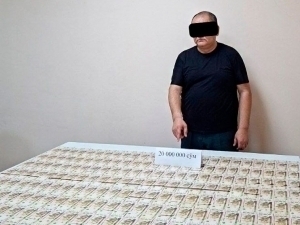
During a rapid operational operation in Yashnobod district, two students were searched in the presence of witnesses, and 120 grams of synthetic drug Alpha-PVP were found on them. Further checks of a university dormitory where a student born in 2007 was temporarily residing revealed an additional 400 grams of Alpha-PVP.
It was established that the students collected the synthetic drugs from geolocations provided by an acquaintance, packaged them into doses in the university dormitory, and distributed them to designated locations. As a result of the operation, the illegal circulation of 520 grams of synthetic drugs, equivalent to 2,600 single-use doses, was prevented.
The students face charges under Article 273, Part 5 of the Criminal Code, which carries a possible sentence of 10 to 20 years’ imprisonment.
The Ministry of Internal Affairs’ Operational Search Department, which provided the information, did not specify which university the students attended. This raises serious questions about oversight by university administrations and dormitory management. If narcotics can be freely stored and packaged in student dormitories, what else might be happening unnoticed?
Drug-related crimes in Uzbekistan continue to rise each year. In 2020, 6,032 cases were recorded. By 2024, this figure had more than doubled to 12,278 cases. Of these, 3,167 involved young people, meaning every third drug-related crime is committed by individuals under the age of 30. Moreover, while women accounted for only a small percentage of drug crimes five years ago, their number has now tripled.
Since last month, the issue of preventing the spread of drugs among young people has been placed under the personal supervision of Presidential Administration Head Saida Mirziyoyeva. Since then, intensified рейд operations have been launched nationwide.
According to official data, more than 11,000 drug-related crimes have been uncovered since the beginning of the year, and nearly 2.5 tons of narcotics have been seized. However, members of the public and activists continue to criticize the government for what they see as a weak response to drug trafficking, circulation, and cross-border smuggling. In particular, they point to the growing trade in synthetic drugs and allege that in some areas, transportation, sale, and consumption occur with impunity due to insufficient action by law enforcement agencies.

Live
All