Is Moscow no longer safe?
Review
−
18 June 6506 6 minutes
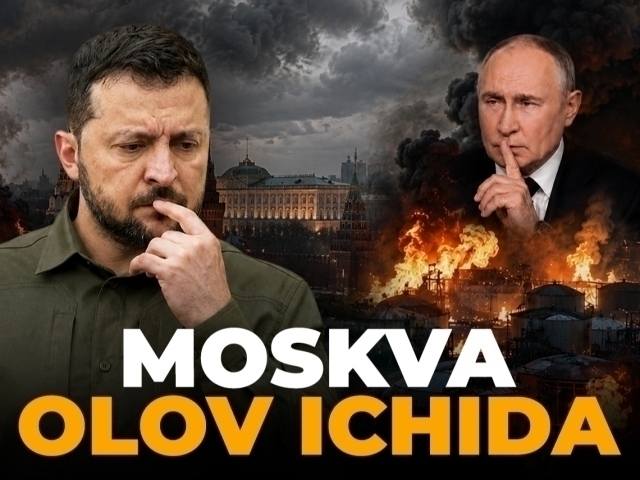
After G7 leaders announced an increase in arms supplies to Ukraine, Russia bombarded Kyiv. Early this morning, Ukraine’s Armed Forces carried out one of the largest and most serious strategic drone attacks on Russian territory since the start of the war. As a result, the Moscow oil refinery, one of Russia’s main fuel sources, stopped operating. Losses have been significant on both sides.
The G7 summit was held in Evian-les-Bains, France, on June 15-17 this year. One of the main topics of the political leaders’ meeting was developing a common approach to resolving the Ukraine issue. They announced that an agreement had been reached to increase arms supplies to the country led by Volodymyr Zelenskyy.
In addition, U.S. President Donald Trump said the United States may soon lift exemptions from sanctions on Russian oil due to falling raw material prices. Naturally, these statements did not sit well with official Moscow. As a result, shortly after the G7 countries announced they would further strengthen support for Ukraine, the Russian army carried out a ballistic missile strike on Kyiv, as if in response. Following the attack, air raid alerts were announced in several regions of the country. The sounds of explosions alarmed residents.
This took place overnight on June 18. Air raid sirens sounded throughout the night in Kyiv. Timur Tkachenko, Head of the Kyiv City Military Administration, warned on his Telegram channel that ballistic missiles had been launched toward the capital.
“Stay in safe places until the danger passes,” Timur Tkachenko said.
Ukraine’s Air Force immediately reported that the threat of ballistic missile attacks also remained in the country’s northern regions. Videos circulated on social media showing that explosions were also heard in Poltava and Sumy. The Poltava City Council reported power outages in some areas. The Zaporizhzhia regional administration also confirmed explosions in its territory. A warning that particularly alarmed Ukrainians, especially residents of Sumy region, was also issued. Ukraine’s Air Force said the area could be struck with guided aerial bombs and urged citizens to remain vigilant. In short, another night in Ukraine passed with fear and losses. Zelenskyy did not leave it unanswered.
A “fiery morning” in Moscow
At dawn on June 18, a new page was opened in the history of long-range operations in the Russia-Ukraine war, however strange that may sound. Ukraine’s Armed Forces launched one of the largest mass drone attacks in recent years on Russia’s economic and military infrastructure, particularly the Moscow oil refinery in Kapotnya, considered the heart of the capital’s energy system. The black smoke that covered Moscow’s skies in the morning became not only a sign of the scale of economic damage, but also a geopolitical signal on the international stage.
The Russian side initially tried to downplay the scale of the attack as much as possible and emphasize the success of its air defense systems. In an official statement, Russia’s Defense Ministry stressed that the situation was under control.
“With the help of our air defense systems and electronic warfare equipment, terrorist attacks targeting Russian territory were prevented. In total, more than 500 Ukrainian unmanned aerial vehicles were shot down and neutralized across the country,” Russia’s Defense Ministry said.
However, a statement by Moscow Mayor Sergey Sobyanin partially confirmed that the situation in the capital had taken a much more serious turn.
“More than 180 drones flying toward the capital were destroyed by air defense forces. As a result of drone debris falling on the territory of the oil refinery in the Kapotnya district, a fire broke out in one of the technical buildings. There were no casualties,” the mayor said.
In fact, in today’s world, where the internet is developed and almost everyone has a smartphone, hiding anything is nearly impossible. Dozens of videos posted on social media by local residents showed that the plant’s technological facilities had sustained serious damage and that the fire was far more alarming than a simple case of “falling debris.”
Ukraine’s leadership and military command described the operation as a “fair response strategy” against Russia, which has been destroying Ukraine’s energy system.
“Russia must feel the real cost of war on its own territory. While our cities and power plants are being hit every day, the oil refineries feeding Russia’s military machine cannot remain untouched. This is a fully justified, fair and strategic response to the terror directed against the Ukrainian people,” Volodymyr Zelenskyy said.
Ukrainian intelligence recalled that the same refinery had also been targeted just two days earlier, claiming that this time its most important oil distillation columns had been disabled and that a fuel crisis in the capital was inevitable. According to the information provided, the drones targeted the refinery’s primary oil processing unit. According to Reuters, the damaged complex had accounted for nearly 53% of the enterprise’s capacity. For this reason, the plant’s operations were temporarily suspended.
International experts and Western political analysts are assessing the incident as the war’s shift into a geoeconomic phase and as a serious dilemma for Russia. Analysts from the U.S. Institute for Policy Studies and Reuters suggest that, given the Moscow oil refinery supplies nearly half of the capital’s fuel market, its shutdown could trigger a chain reaction in Russia’s domestic market. International energy market analyst John Evans also gave his assessment of the situation.
“By striking Russia’s oil infrastructure, Ukraine is hitting the Kremlin where it hurts most. A fuel shortage around Moscow will force the Russian government either to completely halt exports or sharply raise domestic prices. This, against the backdrop of the war, could lead to internal social discontent,” John Evans said.
If we analyze the events up to today as a whole, Ukraine has shown that with waves of economically inexpensive but technically sophisticated drones, it can render Russia’s multibillion-dollar energy giants and most modern air defense systems helpless.
The war is increasingly shifting from positional clashes along the front line to a struggle over strategic and economic resilience at the level of capitals. Most importantly, Russia’s areas once considered the “safest” have now also become an open front. In this war, where pressure is mounting and the populations of both countries are already exhausted, it remains unclear who will be the first to surrender. In your opinion, which side will be the first to raise the white flag?

Live
All