Cotton and wheat
Review
−
22 May 17680 5 minutes
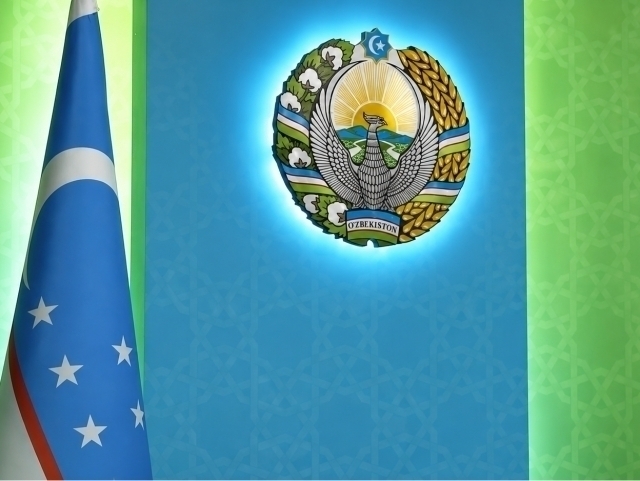
State symbols are not merely visual attributes. They are symbols of political meaning and collective identity. Through an emblem, flag or anthem, a state expresses its historical memory, political legitimacy and vision of the future. Every symbol depicted in them reflects the shared values, hopes and aspirations of that country’s citizens.
In May 2026, Senator Kudratilla Rafiqov, chairman of the Federation of Trade Unions of Uzbekistan, addressed this issue in a broad article and raised a question that has been asked many times but has yet to receive a clear answer: why did cotton and wheat remain on Uzbekistan’s state emblem even after independence? The question sparked wide debate on social media. Some supported it, some rejected it, and others approached the issue from different angles.
However, the debate itself is already a sign of something important. Society has begun to think about its own symbols. And this question is not only about the emblem; it is a deeper question about how Uzbekistan sees itself.
What did the senator say?
In his new broad article on Samarkand and Shavkat Mirziyoyev’s political path, Kudratilla Rafiqov paid special attention to the issue of state symbols. In his view, Uzbekistan’s state symbols from the early years of independence reflected the “political anxiety, fear and hesitation of the 1990s.”
“Even after we gained independence, the images of cotton and grain, wrapped in red around the wreath of our emblem as symbols of our pride, remained unchanged. Why?” the senator asked.
The senator recalled that President Mirziyoyev had repeatedly said that revenue from cotton in those years “did not even reach one billion dollars.”
There are historical wounds behind this statement. In the 1980s, the “cotton affair” was not simply an economic issue. It became a measure of national dignity and political loyalty. In agriculture, whether a production “plan” was fulfilled or not could determine people’s fate. This rhetoric became so deeply embedded in public consciousness that, even after independence was declared, it remained for many years in symbols, slogans and official speeches.
Cotton and wheat on the emblem
The state emblem of Uzbekistan was adopted on July 2, 1992. Its author was artist Anvar Mamajonov, and it is known that First President Islam Karimov played a significant role in the process of creating the emblem.
On the emblem, cotton and wheat ears surround the circle from both sides. They symbolize textiles and bread grain. Although this reflected the economic reality of its time, today’s Uzbekistan is fundamentally different from the Uzbekistan of 1992.
First, the economy has diversified. Oil and gas, tourism, the digital economy, metallurgy and the automotive industry are also among the areas that define the country’s economic achievements today. Two crops alone can no longer fully reflect Uzbekistan’s potential.
In addition, cotton fields are being reduced. In recent years, the government has pursued a policy of redirecting part of the land intended for cotton cultivation to other crops. This is a sign that the state itself is moving away from cotton monoculture. Therefore, although the textile industry remains an important part of the national economy, cotton and wheat are no longer as relevant as they once were.
Public opinions
After the senator’s article was published, a broad discussion began on social media. Some users published posts supporting the idea of updating the emblem. Others said there are more urgent issues than such changes.
Many people are concerned about the burden such a change could place on the state budget. Blogger Zafarbek Solijonov also criticized the initiative to change the state emblem from a practical point of view.
In his opinion, updating the state symbol would require a significant amount of money. This is because the emblem is displayed in thousands of schools, kindergartens, higher education institutions, hospitals, local administrations, courts and other state organizations across the country. Such changes would also affect service vehicles belonging to the Ministry of Internal Affairs, the National Guard, the Ministry of Emergency Situations and the Ministry of Defense.
Solijonov said budget funds should first be directed toward repairing schools and addressing more urgent social problems.
Blogger Nozim Safari, however, supported the idea of changing the emblem and posted about it on X.
“I agree with Senator Rafiqov’s comments about the symbols on the emblem. Someone from the upper circles had to say it,” he said.
Otabek Akromov, a doctoral student in political science at the Australian National University, spoke about the role of state symbols in global politics and said attention should be paid to the ability of these symbols to unite the people.
“The legitimacy of state symbols depends not only on their history or design, but also on how they are accepted by society. Strong political symbols take shape over time and become part of collective memory. Therefore, in such debates, the issue is not about simple categories such as ‘Soviet’ or ‘modern,’ but about the symbol’s ability to unite society and what political meaning it conveys about statehood,” he wrote.
Overall, the state emblem is very important as a political symbol. However, many public activists are concerned about the possible costs of changing it and believe that attention should instead be directed toward a number of unresolved social problems.

Live
All