President criticizes shortcomings in the textile sector
Local
−
13 August 2025 3487 2 minutes
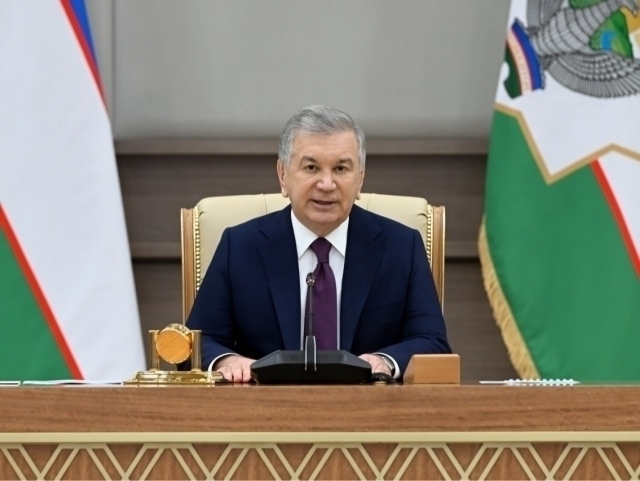
President Shavkat Mirziyoyev criticized a number of shortcomings in the textile industry, including the indebtedness of entrepreneurs on commercial loans and insufficient cooperation with brands. He made this statement today, August 12, at a videoconference meeting on further support for the textile sector.
It was noted that textiles account for 3 percent of the country’s economy and 14 percent of industrial output. Over the past five years, 396 large enterprises worth $3.5 billion have been launched in the sector, and production has reached $10 billion. More than 500,000 people are employed in the sector, which represents 20 percent of the total industrial workforce.
At the same time, production and export indicators in the sector have slowed, which, given the current international situation, requires urgent measures to preserve production, jobs, and exports.
The decline in global cotton prices since 2022 has created problems for clusters. Over the past three years, the price has dropped from $3,000 to $1,500 per ton.
Entrepreneurs are covering old debts with income from new crops. To address this situation, the preferential loan for cotton raw materials for 2022–2023 was extended three times, and last year, a subsidy of 1 million soums per ton was allocated to reduce the cost of cotton.
The head of state stressed that the sharp fall in world market prices did not start today, and that the economic complex, together with scientific organizations, should have developed various scenarios and solutions in advance.
The meeting also criticized the fact that some “advantaged individuals” without sufficient fiber processing capacity are engaging in cotton “speculation” using state-subsidized resources.
Textile enterprises currently hold $2.2 billion in commercial loan debt. Between 90 and 95 percent of these loans are in foreign currency, and only 16 percent of enterprises possess international certification.
“How will enterprises compete in foreign markets and repay their loans under such conditions?” the President asked.
It was noted that in each region, 10–15 manufacturers of finished products are working to establish cooperation with brands and align with modern standards.
In the Andijan, Namangan, Fergana, Navoi, and Tashkent regions, fiber processing capacities are 2–2.5 times greater than the amount of raw materials available. Nonetheless, governors continue to propose yarn projects when developing regional investment programs.
The President emphasized the importance of diplomatic missions abroad in more actively supporting the export of textile products.