Philosopher or fantasist? Dugin faces backlash after questioning Uzbekistan’s independence
Review
−
19 January 12819 7 minutes
Another Russian propagandist has cast doubt on the independence of Central Asian countries.
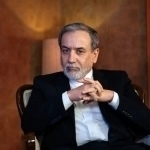
The public had barely processed recent remarks by Russian television host Vladimir Solovyov, who suggested that Russia should launch attacks against Armenia and Central Asian states, when yet another figure associated with the “Russian world” ideology made an even more explicit statement. As expected, Russian Foreign Ministry spokesperson Maria Zakharova attempted to downplay Solovyov’s remarks, calling them merely a journalist’s personal opinion and urging that they not be linked to official policy. However, before the controversy subsided, Alexander Dugin, one of the ideologues of the “Russian world” and a pro-Kremlin propagandist, openly questioned the independence of Uzbekistan and other former Soviet republics.
Like Solovyov, Dugin referred to Armenia and Central Asian countries as territories under Russia’s sphere of influence, stating that they could either become part of Russia’s alliance or turn into a Western “bridgehead,” meaning territories under Western control. In his view, the era of sovereign nation-states has come to an end.
“The existence of sovereign Armenia, Georgia, Azerbaijan, Kazakhstan, sovereign Uzbekistan, Tajikistan, and Kyrgyzstan is unacceptable. In the new reality, there is no place for sovereignty. They will either be with us, within our single alliance, or they will become a foothold for the West, the European Union, America, and in some cases China,” Dugin said.
He also promoted the concept of a tripolar world, placing Russia alongside the United States and China. In this system, Russia, he argued, should become a “center of power” and strengthen control over surrounding regions. According to Dugin, if Central Asian and Caucasus countries remain outside Russia’s control, they will not be able to pursue an independent and neutral path or become peaceful states akin to Switzerland.
“Our goal is to become one of the most important centers of power in a tripolar world: a sovereign, free, independent, and vast state. All territories we do not control will not remain neutral. They will not turn into peaceful ‘Switzerlands.’ On the contrary, they will become footholds for other poles, primarily the more aggressive pole led by the United States,” he added.
In essence, Dugin’s message can be summed up as: “If you are not under our control, you will fall under the control of our enemies.”
Who is Alexander Dugin?
Alexander Dugin’s open hostility toward the sovereignty of countries in the region is nothing new. He has long been at the center of criticism for his imperialist views, denial of state sovereignty, and aggressive rhetoric. Dugin promotes the concept of a “Eurasian civilization” in opposition to the liberal Western model, portraying Russia as a distinct and superior historical space. Other nations and peoples within his ideological framework are treated as secondary actors. Although Dugin does not hold an official government position, many analysts note that his ideas often resonate with or are reflected in Kremlin decision-making.
Dugin has also been a prominent figure in discussions surrounding the Russia–Ukraine conflict. He sought to ideologically justify Russia’s policy toward Ukraine, arguing that concluding a peace agreement without victory would amount to defeat for Russia. He was an outspoken supporter of Russia’s full-scale invasion of Ukraine. His harsh statements denying Ukraine’s sovereignty have been voiced since the early 2000s. As a result, Ukraine imposed a five-year entry ban on him in June 2006, and in 2007 Kyiv declared him persona non grata.
However, tensions between Dugin and Ukraine did not end there.
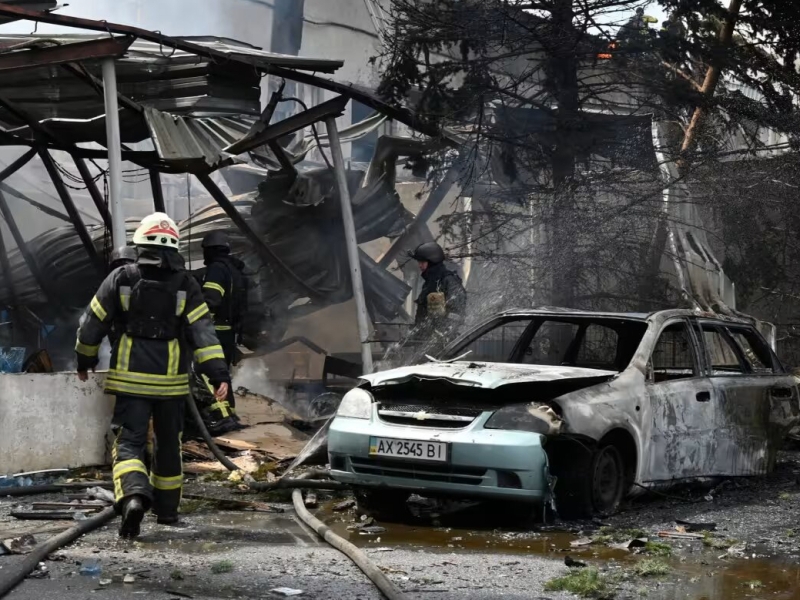
On August 20, 2022, a car that Alexander Dugin was reportedly supposed to be riding in was blown up. Ukrainian actors were initially cited as being responsible, though official Kyiv denied involvement. The explosion killed Dugin’s 29-year-old daughter, journalist Darya Dugina. According to initial assumptions, the assassination attempt was organized by Ukrainian special services, with Dugin himself believed to be the intended target.
According to available details, on August 20 Dugin and his daughter attended a patriotic festival called “Tradition,” supported by the Presidential Fund for Cultural Initiatives, the Moscow Region Ministry of Culture and Tourism, and the Odintsovo administration. After the event, Dugin and his daughter were supposed to leave together, but for unknown reasons they departed in separate vehicles.
At first, the explosion was attributed to a malfunctioning gas cylinder in the car. Later, law enforcement agencies reported that an improvised explosive device had been planted under the vehicle.
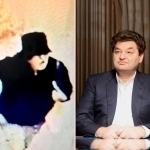
Russia’s Federal Security Service stated that Darya Dugina’s killing had been prepared by Ukrainian special services. While Kyiv denied the accusation, Russian authorities later claimed they had identified the perpetrator as Ukrainian citizen Natalya Pavlovna Vovk, born in 1979, alleging that the crime had been planned and carried out by Ukrainian intelligence.
Alexander Dugin is not the only prominent figure to have questioned Uzbekistan’s sovereignty. In recent months, dismissive and hostile statements about the independence of Central Asian states originating from Russia have proliferated on social media. On January 10, Russian television host and Kremlin-aligned propagandist Vladimir Solovyov said during a live broadcast that the so-called “special military operation” carried out in Ukraine should also be extended to other territories within Russia’s “sphere of influence,” including Central Asian countries and Armenia.
Following these remarks, Armenia’s Foreign Ministry summoned Russian Ambassador Sergey Kopirkin and handed him a note of protest, describing Solovyov’s statements as an encroachment on Armenia’s sovereignty. Uzbekistan’s Foreign Ministry, however, remained silent on the matter.
Nevertheless, public figures in Uzbekistan responded firmly to Solovyov’s remarks. Bobur Bekmurodov, chairman of the Yuksalish nationwide movement and a deputy of the Legislative Chamber of the Oliy Majlis, described Solovyov’s statements as “nonsense” and dismissed the propagandist himself as a “copy.”
“We spat on Solovyov’s words, and we spat on his imperial ambitions as well. We suggest he learn an Uzbek expression that roughly translates as: go and mind your own business,” Bekmurodov said.
Deputy Speaker of the Legislative Chamber and leader of the Milliy Tiklanish Democratic Party, Alisher Qodirov, also commented on Solovyov’s remarks on his Telegram channel, calling them “fruitless” and a sign of helplessness and frustration. He noted that such statements by Russian chauvinists are nothing new.
“Conducting a pragmatic, mutually beneficial foreign policy and cooperating with all Commonwealth states on the basis of universally recognized principles of international law will remain the cornerstone of Uzbekistan’s state policy.
The continuous statements in Russian media not only contradict the spirit of comprehensive strategic partnership and allied relations between our two countries, but also have a destructive impact on them,” Qodirov wrote.
Rasul Kusherbayev, adviser to the Minister of Ecology, Environmental Protection and Climate Change and a public activist, said that Solovyov’s remarks amounted to an open threat against Central Asian states and called on Uzbekistan’s Foreign Ministry to issue a strong response.
As political analysts anticipated, to “extinguish the fire” sparked by one journalist’s provocative remarks, Russian Foreign Ministry spokesperson Maria Zakharova stepped in. At a briefing on January 15, Zakharova stressed that Solovyov’s statements did not reflect Moscow’s official position and were voiced on his personal platform. According to her, the remarks were not an official statement but rather a question posed in a discussion format, which some analysts had interpreted in a provocative manner.
In conclusion, while Russian official bodies appear to be ignoring such sharp and unexpected statements, the rhetoric voiced by Kremlin-linked propagandists like Solovyov and Dugin is seriously calling into question relations and cooperation between Russia and countries in the region. How Moscow will politically or diplomatically respond to Dugin’s latest remarks, and whether Maria Zakharova will address them this time, remains unclear.
Live
AllSuriyada KIP qo'mondoni o'ldirib ketildi
21 January