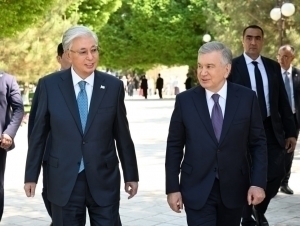
“We owe a debt to the Uzbeks” – Israeli Ambassador
Interviews
−
26 March 12261 9 minutes
The escalating situation in the Middle East, particularly the tensions between Iran and Israel, is significantly disrupting the international order. Amid military operations, official statements, and reactions from foreign governments, many questions have arisen among the public. To address these concerns, we organized an interview with Gideon Lustig, the Ambassador Extraordinary and Plenipotentiary of the State of Israel to Uzbekistan.
It should be noted that most of the questions in this interview were prepared based on public opinion and do not represent the official position of the editorial office. QALAMPIR.UZ remains neutral and is committed to providing equal opportunities for all sides to express their views.
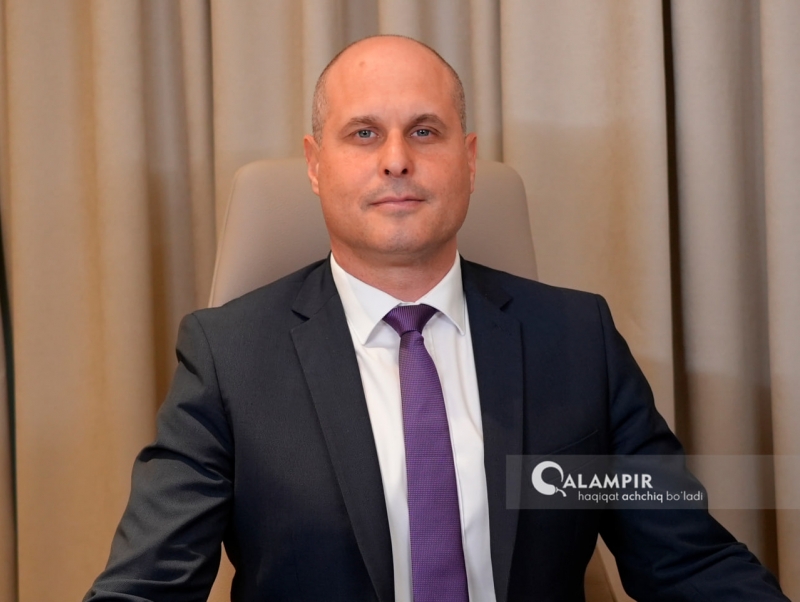
Abdurahmon Ergashov, correspondent: Good afternoon, Mr. Ambassador. First of all, thank you for agreeing to this interview. It is a pleasure to meet you.
Gideon Lustig, Ambassador: It is a pleasure for me to be here. Thank you very much for giving me the opportunity to conduct this interview today.
A.E.: Recently, there have been various rumors circulating about Benjamin Netanyahu, including claims that he has disappeared or even passed away. Some videos are said to be generated using artificial intelligence. What is the current condition of the Prime Minister?
G.L.: Prime Minister Benjamin Netanyahu is alive and fully capable of performing his duties. I must say that the sheer amount of false information circulating on social media is sometimes absurd. People call me and tell me that Tel Aviv has been completely destroyed or that thousands of Israeli citizens have been killed. This is, of course, false and does not reflect reality. In my opinion, some individuals deliberately spread such misinformation to create the impression that Israel is losing, which is completely untrue. You can see my five fingers here — real media provides real news, and that is what should be trusted. However, I believe people in Uzbekistan should be concerned about which sources they rely on.
I am often surprised that instead of discussing what is actually happening, people debate fabricated stories. For example, just yesterday, Iran launched missiles toward Jerusalem, a city sacred to three religions. The missiles struck near the Church of the Holy Sepulchre, the Temple Mount (Haram al-Sharif), and the Western Wall in the Jewish Quarter. Yet here in Uzbekistan, people are not discussing this. Instead, they are focusing on completely fictional narratives.
A.E.: Israel’s name is often mentioned at the center of nearly every conflict in the region. In these conflicts involving or associated with Israel, what is its primary objective?
G.L.: As you mentioned, these questions reflect public opinion. I would say this is a matter of perspective, because the question could be framed differently. The reason we are involved in these conflicts is that we have been attacked. Hamas attacked us on October 7, 2023. Hezbollah began attacks the following day, on October 8. The Houthis in Yemen started launching missiles at us, and then Iran did the same. We are under attack. The reality is that Israel is not initiating aggression across the region. We are in a prolonged conflict with those who seek to destroy Israel. They declared war on us and initiated hostilities. That is how the question should be understood.
Our objective in this military campaign is to eliminate the existential threat against Israel, prevent Iran from acquiring nuclear weapons, significantly degrade its long-range missile capabilities, and ensure that it cannot continue attacking us through proxy groups such as the Houthis, Hezbollah, Hamas, and Islamic Jihad. This is our goal, and we must pursue it because all other options have failed.
A.E.: These events did not happen overnight. What do you think are the main causes behind the accumulation of these tensions? Even before the establishment of the Islamic Republic of Iran, there were conflicts involving Israel in the region.
G.L.: We need to look at the broader historical context. Iran has been behind numerous attacks against Israel, both directly and through proxies. For years, it has supported Hamas financially, militarily, and through training. Since the 1980s, it has backed Hezbollah in Lebanon. The purpose has always been to attack Israel when deemed necessary. Iran has also supplied missiles and capabilities to the Houthis in Yemen. In fact, Iran is responsible for over 90 percent of the region’s terrorist activities. This is not a short-term issue; it has been ongoing for decades. Our current operation aims to eliminate this threat permanently.
When the Ayatollah regime came to power, it pledged to destroy Israel, repeatedly chanting “Death to America” and “Death to Israel.” It has consistently worked to strengthen proxy forces and wage war against us. Hezbollah, for example, emerged with Iranian support after the regime took power. The same applies to the Houthis. Iran has been engaged in global acts of aggression for years. Recently, Argentina stated that attacks on Israeli and Jewish targets in the 1990s were carried out by the Iranian regime, with Ali Khamenei bearing responsibility.
Now consider this: what would you do as a state if another country openly called for your destruction for years? Would you trust them? We believe Iran is pursuing nuclear weapons and long-range missiles to destroy us, and we cannot allow that. We must protect our citizens.
A.E.: The idea of a “Greater Israel,” encompassing territories of neighboring countries, is frequently discussed on social media. How realistic are such views, and what is Israel’s official position?
G.L.: You already answered that — these ideas are circulating on social media. The problem today is that anyone can promote any idea online, even if it is false or one-sided, and present it as truth. In the past, only serious perspectives reached mainstream media. Frankly, such extreme ideas have no connection to reality, and I can assure you they are not part of Israeli government policy.
A.E.: Reports indicate that thousands of civilians, including children, have died in Gaza due to military operations. Similar claims are made regarding Iran-related incidents. How does Israel respond to this, and what measures are being taken to minimize civilian casualties?
G.L.: First and foremost, let me be very clear: we never target civilians who are not involved in the conflict. We act against threats. The other side, including Iran and Hamas, deliberately targets our civilians. Even now, they are launching missiles into densely populated areas.
We take extensive measures to minimize harm to civilians. In some cases, operations have been canceled because civilians were nearby. However, the other side exploits this. Iranian officials, for example, have deliberately surrounded themselves with civilians, knowing we would not strike them. Hamas launches rockets from schools, hospitals, and mosques, using civilians as shields. This is something we do not do.
A.E.: Around the world, many people are protesting against Israel, while governments may support it. Does Israel fear long-term public hostility?
G.L.: Yes, this is concerning. Many people chant “Free Palestine,” but few reflect on what that means. The phrase “from the river to the sea” implies the elimination of Israel. That is deeply troubling.
There are several reasons for this. Some people are uninformed and believe they are supporting Palestinian statehood, without realizing their slogans call for Israel’s destruction. Additionally, there are organized efforts and funding behind these campaigns, using social media and messaging to influence public opinion. I hope that once the Iranian regime is gone, such narratives will diminish.
A.E.: What kind of solution could be acceptable to all parties involved — the United States, Israel, and Iran? When will diplomacy prevail over conflict?
G.L.: We gave diplomacy many years. Western countries attempted negotiations with Iran to address nuclear and missile issues, but Iran consistently misled them while continuing its programs.
Now Iran claims it was attacked during negotiations, but the reality is they were not negotiating in good faith. They were buying time. They refused to discuss key issues such as missile programs or support for terrorism. If the other side is not serious about negotiations, what are we supposed to do? That is why we acted.
A.E.: Iran is a member of the International Atomic Energy Agency. Shouldn’t such issues be handled through that framework?
G.L.: Membership does not guarantee honesty. The IAEA itself has stated there is no justification for Iran enriching uranium to such high levels. Iran has clearly been pursuing nuclear weapons.
We previously set their program back significantly, hoping they would reconsider. Instead, they resumed their efforts. Therefore, we had to act again. Iran must never obtain nuclear capabilities.
A.E.: Has the ongoing conflict affected trade relations between Israel and Uzbekistan?
G.L.: No, not significantly. Our relations are strong. Flights are currently suspended due to security reasons, but business continues. Once the situation stabilizes, activities will fully resume.
A.E.: Which sectors have seen growth or challenges in bilateral trade?
G.L.: There is positive news. Copper exports from Uzbekistan to Israel increased, and tourism nearly doubled last year. Overall trade has grown significantly between 2023 and 2025. This shows the strength and potential of our partnership.
A.E.: What role does the Bukharian Jewish diaspora play in relations between the two countries?
G.L.: They are a vital bridge. They preserve Uzbek culture, cuisine, and traditions in Israel. Personally, my wife is of Bukharian Jewish origin, and I experienced Uzbek hospitality through her family.
Moreover, Uzbekistan sheltered Jewish refugees during World War II, something we will never forget. We are forever grateful.
A.E.: How safe are Israeli citizens currently in Uzbekistan?
G.L.: Overall, there are no security concerns. Israeli tourists feel safe and welcomed. Uzbek hospitality is highly appreciated, and we maintain strong cooperation with local authorities.
A.E.: How do you see the future of Uzbekistan–Israel relations?
G.L.: Our relations date back to Uzbekistan’s independence. Looking ahead, they will only strengthen. Regional developments, including the Abraham Accords, have brought countries closer together. I believe our economic, cultural, and human ties will continue to grow significantly.
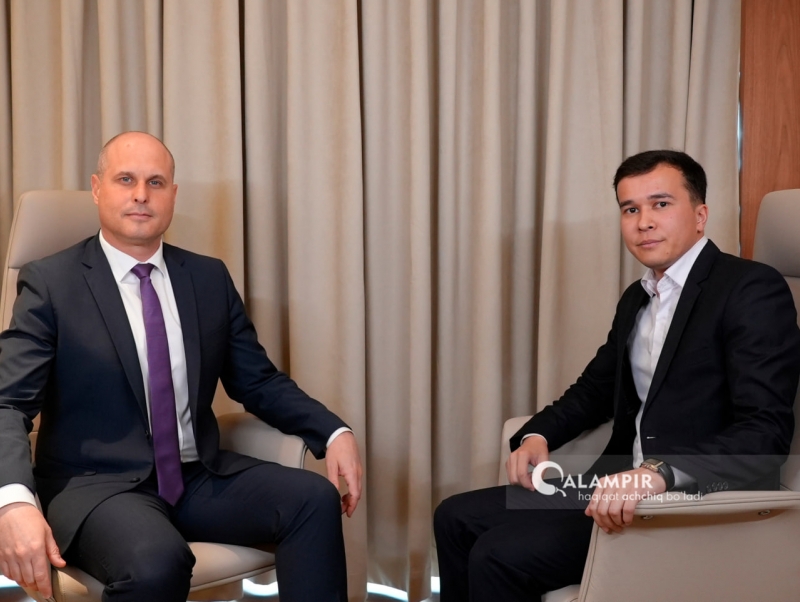
The full version of this interview can be viewed in the video player above or on QALAMPIR.UZ’s YouTube channel.

Live
All