Regrets and Ruin: The Biggest Blunders of All Time
Interesting
−
22 April 2025 12229 7 minutes
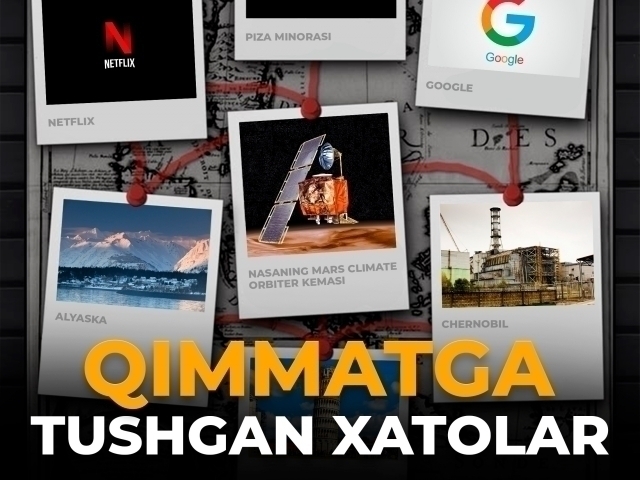
To err is human, and mistakes are inevitable. History is full of both minor slip-ups and monumental misjudgments. Some have little impact, while others have altered the course of nations, ruined lives, and changed the world forever. Below are some of the most astonishing and costly mistakes ever made.
The Austrian Army Attacked Itself
In 1788, the Austrian army suffered a bizarre and tragic blunder, losing 10,000 soldiers in a friendly-fire incident. During the Austro-Turkish War, a group of Austrian scouts encountered Gypsy merchants and purchased alcohol from them.

As the night wore on, intoxicated soldiers refused to share the drink with others, sparking a brawl. The commotion was misinterpreted as a Turkish attack. In the chaos, Austrian troops mistook each other for the enemy and launched a full-scale assault against their comrades. By the end of the night, 10,000 Austrian soldiers were dead. The army, now weakened and demoralized, ultimately lost the battle to the Ottomans. This remains one of history’s greatest military blunders.
The Assassination of Franz Ferdinand
The assassination of Archduke Franz Ferdinand, heir to the Austro-Hungarian throne, was a pivotal moment that triggered World War I. In 1914, while visiting Sarajevo, Ferdinand’s driver took a wrong turn due to unfamiliarity with the local roads. This mistake brought them face-to-face with Gavrilo Princip, a Bosnian nationalist who had earlier failed to assassinate the Archduke.
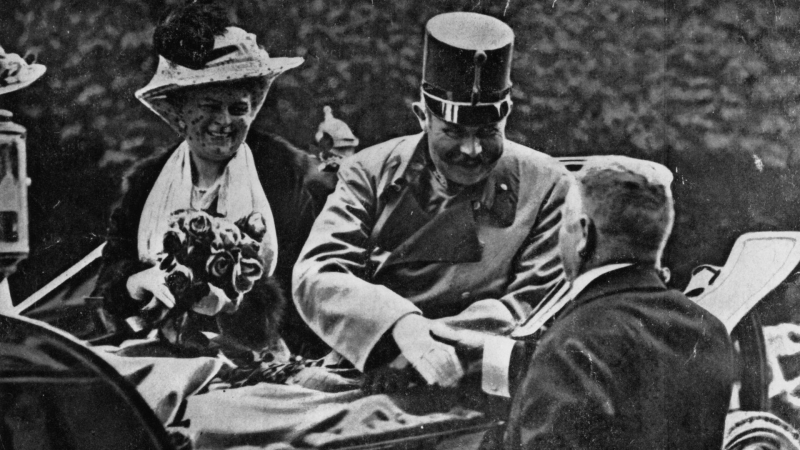
Seizing the opportunity, Princip fatally shot Ferdinand and his wife. The assassination set off a chain reaction of alliances and war declarations, leading to a global conflict that claimed over 17 million lives.
The Lost $181 Million Lottery Ticket
Some mistakes may not start wars—but they can destroy dreams. A British woman experienced this firsthand when she lost a lottery ticket worth $181 million. She had noted the numbers separately, but her husband accidentally threw the actual ticket in the trash.

Tragically, her chosen numbers were the winning combination for the largest lottery prize in European history. A simple oversight turned into a heartbreaking “what could have been.”
The Leaning Tower of Pisa
The famous Leaning Tower of Pisa was never meant to lean. Its tilt is the result of a serious engineering miscalculation. Built on soft, unstable ground, the foundation could not support the tower's weight. As construction progressed, the structure gradually began to lean.

Decades later, engineers managed to stabilize the tower and reduce the tilt to 1.5 degrees. Despite its origins as a mistake, the Leaning Tower of Pisa is now one of the most iconic landmarks in the world—proof that even errors can become art.
NASA Lost Its Spacecraft
In 1999, NASA experienced one of its most expensive technical failures. The Mars Climate Orbiter, worth $125 million, was lost after entering Mars' atmosphere incorrectly.

The cause? A unit conversion error. One engineering team used imperial units while the other used metric. This simple miscommunication caused the spacecraft to descend too close to Mars and burn up. The mistake was a major setback, but NASA used it to overhaul internal procedures and improve mission safety. As Henry Ford once said, “Failure is an opportunity to begin again, but more intelligently.”
Russia’s Sale of Alaska
In 1867, Russia sold Alaska to the United States for just $7.2 million—a decision considered one of history’s worst real estate deals. Facing economic hardship after the Crimean War, Russia saw the vast, icy territory as a burden.

However, the discovery of gold, oil, and other natural resources turned Alaska into a goldmine for the U.S. The sale is now viewed as one of the greatest strategic and financial miscalculations of the 19th century.
The £9 Million “S” Typo
A single typo cost the British government £9 million. In 2009, a clerical error mistakenly added an extra “S” to a company name in an official document. As a result, the government falsely declared a Welsh company, Taylor and Sons, bankrupt—confusing it with the similarly named but defunct Taylor and Son.

The 124-year-old family business collapsed, and 250 employees lost their jobs. The government had to pay millions in compensation. A simple letter caused irreversible damage.
The Rejection of “Harry Potter”
Before becoming a global phenomenon, Harry Potter and the Philosopher’s Stone was rejected by 12 publishers. Many deemed it “too long” or “too complex” for children. Everything changed when the eight-year-old daughter of Bloomsbury’s chairman read the first chapter and insisted on more.

Today, the Harry Potter series has sold over 500 million copies, been translated into more than 60 languages, and made J.K. Rowling a billionaire. The publishers who rejected the book undoubtedly regret missing one of the biggest literary opportunities of the century.
The Sinking of the Titanic
Touted as “unsinkable,” the Titanic tragically sank in April 1912 on its maiden voyage from Southampton to New York. Over 1,500 people died.

Critical safety failures contributed to the disaster. The officers lacked a key to the cabinet containing binoculars, which could have helped spot the iceberg in time. Furthermore, warnings about icebergs were ignored, and the ship continued at full speed. The Titanic disaster remains a powerful example of overconfidence and poor planning.
Blockbuster’s Failure to Buy Netflix
In 2000, Blockbuster declined the chance to buy Netflix for just $50 million. At the time, Blockbuster was a dominant force in video rentals and saw Netflix’s mail-based DVD service as a novelty.

As consumer preferences shifted to digital streaming, Netflix adapted—while Blockbuster stuck with its traditional model. By the time it tried to catch up, it was too late. Blockbuster filed for bankruptcy in 2010. Today, Netflix is a global media giant. The missed opportunity is remembered as a major business blunder.
Yahoo’s Failure to Buy Google
Yahoo once had the chance to acquire Google for a mere $1 million. In 1999, Google’s founders approached Excite, a Yahoo-owned company, with an offer to sell. Even after lowering their asking price to $750,000, the offer was declined.

Years later, Google became one of the most influential tech companies in the world. Yahoo, meanwhile, faded into obscurity. Google’s parent company, Alphabet, is now worth hundreds of billions. The missed deal remains one of the costliest oversights in tech history.
Forgotten Gate of Constantinople
In 1453, the Byzantine capital Constantinople fell to the Ottomans after a crucial error—someone forgot to close the Kerkoporta gate. During the chaos of battle, a wounded general was brought into the city, and the small side gate was left open.

Ottoman soldiers entered through it, causing panic and confusion. Believing the city was already lost, defenders fled. The mistake led to the fall of the Byzantine Empire. The message is simple: never forget to close the door, especially during a siege!
Hitler’s “Unshooting”

In 1914, British soldier Henry Tandy encountered a wounded, unarmed German soldier in the trenches—and chose not to shoot. That man was reportedly Adolf Hitler.
While this story is debated among historians, Tandy later said he spared many lives and that one of them may have been Hitler’s. If true, the decision not to pull the trigger would be one of the most consequential choices in modern history.
The Chernobyl Disaster

In April 1986, a flawed safety test at the Chernobyl nuclear power plant in Ukraine caused one of the worst technological disasters ever. Explosions released massive amounts of radiation across Europe.
The test was poorly planned, safety protocols were ignored, and communication failed. Over 200,000 people were evacuated, and thousands developed radiation-related illnesses. Cleanup took more than a decade, and Chernobyl remains uninhabitable to this day. The incident serves as a chilling reminder of the cost of negligence.

While mistakes are an inevitable part of human nature, some errors have proven to be devastatingly costly. Whether due to poor judgment, oversight, or simple human error, each of these incidents has left a lasting mark on history. The best we can do is learn—and never repeat them.

Live
All