Threat of “ecoterrorism” – Weekend
Review
−
20 July 2025 8290 15 minutes
Catch up on the key developments from Uzbekistan and around the world this week in QALAMPIR.UZ’s Weekend program.
Who will compensate for the oxygen?
In recent years, the number of road fatalities in Uzbekistan has increased to such an extent that the term “autoterrorism” or “autoterrorist” has emerged among the public and on social networks. However, the destruction of trees—which are crucial for human life and health—is just as widespread, particularly in the capital, as traffic accidents. It’s no surprise, then, that terms like “ecoterrorism” or “ecoterrorist” are gaining popularity in public discourse. What’s more alarming is that many members of the Oliy Majlis—an essential branch of state governance—remain indifferent to this destructive trend.
On July 17, during a meeting of the Chamber of Commerce and Industry focused on the construction sector, businessman Murod Nazarov made remarks suggesting that the ban on cutting down trees in Tashkent should be lifted for construction companies. These comments quickly went viral on social media. Phrases such as "reconstruction," "renovation," and "tree bank" sparked widespread discussion and drew sharp criticism. There is no need to elaborate further: Nazarov essentially claimed that the presidential moratorium against illegal tree cutting is not being enforced, and proposed that construction companies be required to plant new trees in advance for those they plan to remove in future projects. This idea, which he called a “tree bank,” suggests that builders should estimate how many trees they will cut down in the next few years, determine their size and characteristics, and plant an equivalent number of saplings ahead of time.
According to Nazarov, this approach would offset environmental damage. However, his proposal has raised several legitimate concerns. First, the moratorium he referred to was established indefinitely by a presidential decree issued on December 31, 2021, titled “On Measures to Accelerate Greening Efforts in the Republic and Improve Tree Protection.” The decree significantly increased fines and doubled the assessed environmental damage costs. It also strictly prohibits any government body or regional governor from authorizing the destruction of trees under any circumstances. Second, Nazarov seems to believe that his proposed “tree bank” can adequately compensate for environmental harm and social impact—but he is mistaken.
Nazarov’s idea suggests cutting down mature, oxygen-producing trees and replacing them with saplings of similar diameter, without addressing when these new trees will begin producing oxygen at meaningful levels, or who will compensate for the environmental gap in the meantime. This is a critical question. While saplings begin photosynthesis in their first year, it takes 5, 8, 10, or even 20 years—depending on the species—before they actively produce oxygen at significant levels. Only after two decades can a tree typically provide oxygen for hundreds of people annually.
Take, for example, two trees common in Uzbekistan: the juniper and the plane tree. A juniper begins producing substantial oxygen after 8 years, while a plane tree takes about 10 years. Other species vary, but all require several years to reach full environmental capacity. Mature trees not only provide clean air but also play a vital role in regulating temperature. As many know, there is a noticeable difference between areas in direct sunlight and those shaded by trees. This is especially important for Uzbekistan, where temperatures rise every year.
In short, the proposed “tree bank” cannot compensate for the years lost without oxygen. And who would be financially responsible for those losses? Even a developer who once claimed a personal fortune of $50 million may struggle to repay the public for lost air quality.
Proposal to investigate Nazarov and a contrasting statement from Kadyrov
As expected, deputies of the Legislative Chamber of the Oliy Majlis sharply criticized Nazarov's statements. Javlon Abdullayev, a deputy from the Ecological Party of Uzbekistan, shared compelling data and opinions. He emphasized the importance of the tree-felling moratorium, noting that despite some illegal cases, over 98 percent of trees were preserved thanks to this policy. In the first half of this year alone, 3,235 tree-cutting applications were rejected, preventing the felling of 453,238 trees, including 86,309 valuable species.
Abdullayev warned that replacing cut trees with “alternative planting” under the pretext of them being an obstacle amounts to environmental crime. He also highlighted that in developed countries, there is financial liability for every illegally cut centimeter of a tree—sometimes even land reclamation from the developer is enforced.
Bobur Bekmurodov, head of the “Yuksalish” movement and another deputy of the Legislative Chamber, stated unequivocally that the moratorium is not up for debate. He questioned whether those calling for its repeal had ever planted a tree or created a garden.
“The developer wants tree-cutting legalized. Environmentalists say they should build outside the city. The public decides what’s right. Today, people support expanding green spaces, not more city-center construction. It takes 7–10 years for a plane tree to offer shade. Did the developer plant a tree years ago?” he asked.
The Ministry of Ecology, Environmental Protection and Climate Change took a firmer stance than the deputies, appealing to law enforcement to investigate Nazarov. According to the ministry, this investigation could provide insights into Nazarov’s previous activities. The ministry underscored two points: first, no sapling can replace a mature tree in absorbing CO₂, regulating microclimates, and preserving biodiversity. According to the European Environment Agency, a single mature tree absorbs 21 kg of CO₂ per year—something saplings cannot achieve for decades.
The ministry also addressed the practice of compensatory planting, warning that in some countries it is used to conceal illegal logging. In Uzbekistan, such measures are supplementary to administrative or criminal penalties, not a substitute. The ministry reaffirmed its openness to dialogue but stressed it would not compromise on key environmental principles.
However, while most officials stood firmly against Nazarov’s proposal, Alisher Kadyrov, deputy of the Legislative Chamber and head of the "Milliy Tiklanish" Democratic Party faction, expressed a divergent view. He argued that tree-cutting should not be entirely forbidden if deemed necessary. Still, he did not clarify what those circumstances might be.
“We spent a year on paperwork just to cut down a worm-infested tree in front of the office. The situation is absurd—those arriving to cut it down looked more like an execution team than a tree crew,” Kadyrov wrote on social media.
While the bureaucratic difficulty of felling a tree may seem laughable to some, it’s a relief to many who value the protection of green spaces. Ironically, the head of a party that claims to promote values appears to dismiss core environmental ones such as clean air and natural beauty.
“Of course, trees are important—we need air—but let’s not forget, we protect trees for people, not people for trees! Hopefully, future generations won’t forget religion and begin worshipping trees instead. Just as we unite to protect trees, we could also unite to stop the waste of water, land, energy, food, and even our own time and selves!” Kadyrov stated.
Navoi is covered in toxic air
While one of Uzbekistan’s most prominent construction entrepreneurs was urging the Ministry of Ecology, Environmental Protection, and Climate Change to lift the tree-cutting ban through what the Ministry calls "creative" methods, a toxic smog descended upon Navoi. The incident occurred on the morning of July 19 in Navoi city, Navoi region. According to the regional ecology department, research was conducted in the smog-affected areas. Between 7:00 and 9:00 a.m., the department’s analytical laboratory, together with the Sanitary Laboratory of Navoiyazot JSC, carried out air quality tests.
The results showed that ammonia levels were 1.4 times higher than the accepted limit, while hydrogen sulfide levels exceeded the norm by a staggering 16.8 times.
Many online users claimed that the emissions originated from the territory of Navoiyazot JSC. However, the company denied responsibility. According to Navoiyazot, the smoke entered from the western side, near Navoi International Airport, and was carried by the wind past the plant before spreading across the city. Ironically, Navoi—a largely desert city—demonstrated the consequences of deforestation not long after Nazarov’s controversial remarks.
A valley cleared of terrorism
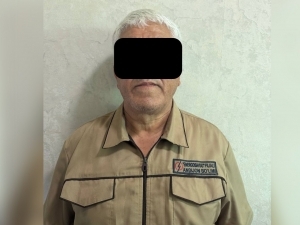
Now, let’s talk about actual terrorism. Over the weekend, the State Security Service uncovered a secret cell affiliated with the international terrorist organization “Islamic State of Khorasan Province” in Namangan city. Authorities searched the homes of 16 suspected members, seizing 37 mobile phones, 51 pieces of banned religious literature, 40 DVDs, 4 flash drives, as well as a laptop and a tablet.
The group allegedly held meetings at a residence in Davlatabad district, where calls for “jihad” and “martyrdom” by leaders of international terrorist organizations were actively promoted. The group’s leader also created several Telegram channels and chat groups with over 120 members, where he distributed materials supporting the Islamic State, including extremist audio and video content, and led ideological discussions.
These channels were used to post religious calls aimed at radicalizing youth under the guise of “sharia law,” fostering dissatisfaction with political and social reforms, and promoting the foundations of the so-called Islamic State.
The group’s leader reportedly underwent a significant ideological shift after attending religious lessons in a covert cell in Istanbul in 2022. When his father tried to intervene, the daughter—also radicalized—allegedly denounced him as an “infidel.”
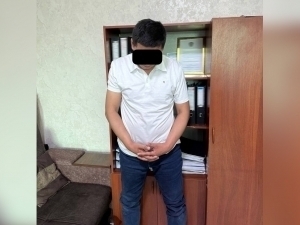
One member of this extremist group was found to be the founder of a private university in Namangan. Criminal proceedings have been launched against the group’s leader and three of its active members under relevant articles of the Criminal Code, and they have been placed under arrest. Investigations are ongoing against the remaining members.
This isn’t an isolated incident. In recent months, similar extremist cells have been discovered in other regions of the Ferghana Valley.
In May, authorities in Andijan uncovered a group allegedly formed by a man born in 1981. He gathered 12 people around him and planned to join the international terrorist organization “Tawhid and Jihad Group” in Syria. The group reportedly held meetings in local teahouses and collected funds under the pretext of “Bayt al-Mal.” Banned literature and other material evidence were found during searches of the suspects’ homes.
Meanwhile, in the Fergana region, the State Security Service exposed another secret group, this time affiliated with the extremist organization “Hizb ut-Tahrir.” Notably, the group’s leader had already spent nearly 20 years in prison for extremist activities. A resident of Kokand born in 1962, he had previously been convicted under Articles 159 (Undermining the constitutional order), 244¹ (Distribution of materials threatening public security), and 244² (Organization of and participation in extremist religious groups) of the Criminal Code.
Despite his past, the man formed a new group in 2024–2025, involving four citizens born between 1965 and 1971. The group held meetings in teahouses and canteens in Kokand, discussed radical content from “Hizb ut-Tahrir” publications, and participated in a private Telegram channel dedicated to extremist materials. Criminal charges under the same articles were again filed, and all members were placed under arrest.
Lukashenko and potatoes, again
Belarusian President Alexander Lukashenko is once again in the spotlight—this time, not for a serious political issue, but for yet another statement about potatoes. At a harvest meeting on July 18, Lukashenko expressed concern that certain diseases could damage this year’s potato crop. He reminded the Minister of Agriculture and Food about last year’s problems with the vegetable harvest and urged him to take the matter seriously. “This year, you can’t joke about potatoes,” he said. “Last year, people were criticized for this very issue.”
In response, Minister of Agriculture and Food Yuriy Gorlov acknowledged that officials may have made mistakes due to excessive moisture last year but said this year’s harvest is expected to be better, promising a yield of over one million tons.
It’s well known that when a food-related problem arises in one post-Soviet country, it often has a ripple effect on others due to their economic interdependence. For example, when Kazakhstan faced potato shortages in recent months, officials in Astana blamed Uzbekistan. Lukashenko’s emphasis on potatoes is not only a domestic concern but also tied to his long-standing push to increase production to supply both Belarus and neighboring Russia.
However, this week, Lukashenko didn’t make headlines only for his remarks about potatoes. The fact that he awarded a state-funded scholarship to his own son has sparked widespread discussion. According to "Reformation", Lukashenko signed a decree on July 15, 2025, approving the decision of the Special Presidential Fund for Social Support of Gifted Pupils and Students to grant a scholarship to his son, Nikolai Lukashenko.
Nikolai, a third-year student at Belarusian State University, received a scholarship of approximately 229 Belarusian rubles (885,744 Uzbek soums) for the second semester of the 2024/25 academic year. In the first semester, the amount was 221.88 rubles (858,205 soums), based on a similar presidential decree. Reports indicate that Nikolai has been receiving this scholarship for gifted students since he entered the university. In this context, it’s worth briefly considering the Lukashenko family, which often faces criticism and public scrutiny. It is true that Lukashenko has described himself as a dictator—something he has openly admitted several times. However, unlike some autocrats whose family members live lavish lives abroad off looted state funds, Lukashenko’s children remain in Belarus. His son attends a public university rather than a prestigious institution in the West, and the scholarship he receives is modest.
Moreover, Lukashenko does not appear to be grooming his son for succession, as seen in Turkmenistan’s dynastic ambitions. While Lukashenko’s deepening ties with Russia and his unprecedented seventh presidential term have diminished Belarus’s international standing, Belarusians may yet see political change after his departure. In January 2025, he stated that his sons do not aspire to become presidents. “The future leaders of the country are not my sons,” he said, “but current governors, ministers, parliamentary leaders, and senior officials.”
Trump diagnosed with chronic venous insufficiency, files defamation lawsuit
Former U.S. President Donald Trump is reportedly in good health despite a recent diagnosis. The White House has officially confirmed that Trump has been diagnosed with “chronic venous insufficiency,” a relatively common condition among the elderly.
White House Press Secretary Caroline Leavitt stated that Trump experienced mild swelling in his legs over the past few weeks, prompting a full medical check-up. The diagnosis revealed venous insufficiency, which Leavitt described as a harmless condition, especially common in people over the age of 70. Trump, currently 79, remains active.
Speculation about his health intensified after a photo showing Trump's swollen leg during his July 16 meeting with Bahraini Crown Prince Salman bin Hamad al-Khalifa went viral. Earlier images showing bruising and swelling on Trump’s right hand had also sparked social media rumors. Leavitt attributed these signs to “shaking hands with many people” and Trump’s regular intake of aspirin, which he uses to lower his risk of heart attack and stroke.
To calm public concern, the White House also released a letter from Trump’s physician, Dr. Sean Barbabella. The letter states that Trump underwent a full medical exam, including blood tests and a heart echocardiogram, all of which returned normal results. No signs of blood clots or arterial blockages were found. According to Johns Hopkins Medical Center, chronic venous insufficiency (CVI) impairs blood flow from the legs to the heart and is not considered medically serious. Stanford University notes that the condition may cause swelling and discomfort, and in severe cases, leg ulcers.
Despite these developments, Trump remains combative—especially toward the media. He has filed a defamation lawsuit against media tycoon Rupert Murdoch. The lawsuit, which appears in the electronic database of the Southern District of Florida, also names two journalists from "The Wall Street Journal". It stems from an article about a controversial album prepared for the late Jeffrey Epstein’s 50th birthday. The article alleged that Trump contributed a hand-drawn image of a naked woman and a congratulatory note.
While the lawsuit has yet to proceed to court, the database lists the case under defamation. Rumors linking Trump to Epstein—who was accused of sexually abusing underage girls—continue to swirl. Allegations, speculation, and op-eds referencing possible ties between Trump and Epstein frequently surface in U.S. media outlets. Meanwhile, the complete list of Epstein's associates remains undisclosed.
Live
All