“Work or leave!”: Pharma company founder criticizes industry regulators
Local
−
30 July 2025 11993 6 minutes

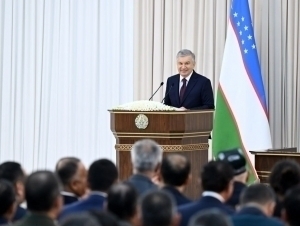
On July 29, during an open dialogue with entrepreneurs in the pharmaceutical, medical equipment, and trade sectors, Shavkat Ismailov, founder of the pharmaceutical company "Lakhisam", harshly criticized the relevant state organizations.
“We’ve been operating in the pharmaceutical market since 1994. Recently, the challenges have become so overwhelming that we can no longer remain silent. We’ve grown and contributed a lot. But over the past five or six years, many pharmaceutical enterprises have suffered enormous losses,” Ismailov said.
According to him, a factory that had been in operation since the 1980s was forced to halt production in the last five years.
“Previously, 130 people worked in three shifts. For the past five years, we’ve only been able to retain 20 employees. If the equipment doesn't operate even for a day or two, microbes develop, the products become unusable, and we have to discard them,” he explained.
He stressed that the root of the problem lies in regulatory bottlenecks, especially in the registration process.
“For five years, we’ve been installing equipment, paying salaries and taxes, and retaining staff, but the result is zero. The main issue is registration. In the past, we had ‘Pharmkomitet’ and ‘Pharmprom’—they were involved and helpful. Now, they’re indifferent. I see the chairman of "Pharmprom" here, but I’ve never even seen the chairman of "Pharmkomitet". Before, they worked closely with manufacturers. Now it’s like we live in two separate worlds.”
“When we ask for help, they don’t even respond. How is the pharmaceutical industry supposed to develop under such conditions? That’s my objection.”
Ismailov pointed out that establishing a pharmaceutical operation is highly complex, but dismantling one is alarmingly easy.
“They talk about improving pharmaceutical quality, but in reality, their policies are causing losses,” he said.

According to him, recent reforms have further complicated the work of pharmaceutical businesses.
“Introducing a new product has become torture. Around five or six years ago, something called ‘substance registration’ was introduced, and it severely harmed the industry. We cried out, pleaded—but no one listened. We're doing our best, but there's no support. Our facility, which once operated on 4,000 square meters, and our unfinished 7,000-square-meter building, are now ‘dead’. And "Pharmkomitet" and "Pharmprom" remain indifferent.”
He added that products that had been tested on animals and previously manufactured now require re-registration if reintroduced.
“They tell us, ‘You have to re-register the product.’ But that process will take two to three years. How are we supposed to survive? Why must we redo everything from scratch if the halt was caused by the authorities? All of this costs money. What kind of pharmaceutical business can endure this? It’s become unbearable. In my 31 years in this sector, I’ve never seen such a disgraceful situation.”
Despite a Cabinet of Ministers resolution mandating that registration be completed within 155 days, Ismailov says delays often stretch to two years.
“They do it if they want. If not, they just sit on it. When we ask why it’s taking so long, we hear excuses: ‘There’s no specialist’, ‘He’s on vacation’, ‘He’s sick’, ‘He’s busy’. What is this? The "Pharmaceutical Committee" takes $10,000 for registration, but fails to fulfill its responsibilities. Their trump card is that they can find a flaw in anything and reject it.”
Ismailov also alleged that relevant organizations are demanding confidential commercial information from entrepreneurs.
“When we buy raw materials from abroad, we collect the necessary documents, submit them, and proceed with our work. Recently, however, the ‘Pharmaceutical Committee’ has been illegally demanding a document called the DMF. What does this mean? For example, it’s said that Coca-Cola keeps its secret formula in three separate places. But ours says, ‘Give me your secret first, and then I’ll register your product.’ There should be a limit to everything!”
“In the past, many foreign companies came to us with offers to collaborate. Now, they no longer do. Several of them have already left, saying, ‘It’s impossible to register anything in Uzbekistan — we won’t work here.’”
“We are now at a crossroads: should we throw away the equipment and lease out our building, or wait another five years? The President has issued around 20 resolutions on the pharmaceutical sector, but the situation on the ground remains unchanged. That’s enough! I would like to appeal directly to the Chairman of the Pharmaceutical Committee and ‘Pharmprom’: open your eyes and take a look—why are you so worried?”
“It all comes down to one thing: improving quality. The slogan is there, but the work tells a different story. If the working style of the ‘Pharmaceutical Committee’ and ‘Pharmprom’ does not change fundamentally, the pharmaceutical industry is headed for disaster. Either do the work or vacate your positions. That’s what I’m saying.”
“Our workforce has decreased tenfold. We once had branches across the regions. They are now closed. I know this is a direct result of the misguided policy of the ‘Pharmaceutical Committee’. Instead of creating jobs, they are eliminating them. People are avoiding medicines. What does that indicate? If they do not revise their policies, billionaires will become millionaires—and millionaires will disappear,” said businessman Shavkat Ismailov.

Chairman of the Chamber of Commerce and Industry, Davron Vakhobov, supported the entrepreneur’s objections and requested a response from the relevant authorities.

“DMF — or ‘Drug Master File’ — is a document related to the quality and production technology of pharmaceutical substances. This has been a requirement since 2018 under Resolution No. 213 of the Supreme Council of the Republic of Uzbekistan. During the investigation into the ‘Dok-1 Max’ case, it was found that these documents were missing. Today, every applicant must submit this document during the registration process. This is standard international practice,” said Alisher Temirov, Director of the Center for the Safety of Pharmaceutical Products.
Despite several minutes of discussion, no concrete solutions were proposed to address the issues raised by businessman Shavkat Ismailov.

Live
All