Uzbek victims of Putin’s war
Review
−
22 January 8985 7 minutes
Another Uzbek national has been detained in Russia. Uzbek citizen Ahmad Qurbonov, suspected of being recruited by Ukraine and killing a Russian general, has been sentenced to life imprisonment. Rumors have also circulated that Russia is drawing migrants into the war through various pretexts or blackmail. To date, more than 2,000 Uzbek citizens in Russia have signed contracts to take part in the war. In the coming minutes, we will provide more detailed information on this topic.
Many Uzbek citizens travel to Russia in hopes of earning money and supporting their families, only to become entangled in the Russia–Ukraine war. According to unverified sources, nearly 3 million Uzbek nationals reside in Russia, while the migration agency estimates the figure at slightly over 1 million. Some sources claim that the number of Central Asian migrants working in Russia exceeds 10 million.
Unfortunately, among them are individuals who have violated the law or whose rights have been abused. According to reports circulated in the media on January 22, an Uzbek citizen was detained in Russia on charges of organizing illegal migration. According to the accusations, he and his accomplices sold fake contracts to at least 270 foreign nationals via the internet. This was reported by the press service of the region’s courts of general jurisdiction.
“The Karasuk District Court of Novosibirsk Region considered the investigator’s motion regarding Mas’udali Khidirov, a citizen of the Republic of Uzbekistan, who is accused under Article 322.1, Part 2, Clauses ‘a’ and ‘d’ of the Criminal Code of the Russian Federation (organizing illegal migration committed by a group of persons by prior conspiracy),” the statement said.
According to investigators, Khidirov acted as part of a prearranged group. They allegedly prepared fake civil-law contracts and sold them online to at least 270 foreign nationals, including citizens of member states of the Eurasian Economic Union.
The court ordered Khidirov’s detention until February 28, 2026. If found guilty, he could face up to seven years in prison. Unfortunately, such disturbing cases are neither the first nor the last. The list is long. Among them are cases involving the killing of a Russian general. As a reminder, on December 17, 2024, Uzbek citizen Ahmad Qurbonov was detained on suspicion of killing a Russian general on instructions from the Security Service of Ukraine. His trial took place in January 2026, and Qurbonov was sentenced to life imprisonment.
According to the investigation, on December 17, 2024, Qurbonov, acting on instructions from the Security Service of Ukraine, left an electric scooter rigged with a remotely controlled explosive device at the entrance of the building where General Igor Kirillov lived. After that, the perpetrator entered a rented vehicle and livestreamed the events to Ukraine. When General Kirillov and his aide, Major Ilya Polikarpov, exited the building, an explosion occurred, killing both officers.
According to the Russian Investigative Committee, Qurbonov was promised $100,000, new documents, and a residence permit in one of the European Union countries for carrying out the attack. However, he did not receive the reward, as he was detained several hours after the explosion. Subsequently, Safaryan was also detained in the city of Vladimir. Investigators allege that he handed over the bomb, brought from Poland, to Qurbonov. Initially, he was charged only with illegal handling of explosives, but after being transferred to Moscow, he was also charged with participation in a terrorist attack.
Later, in January 2025, Batuhan Tochiyev and Ramazon Padiyev were also detained. According to case materials, they provided Qurbonov with an apartment to hide in after the explosion. Russian investigators reported that the Security Service of Ukraine financed the preparation of the attack through USDT stablecoins. At the initial stage, Qurbonov received $5,000, equivalent to 404,800 rubles at the time.
Investigators established that Qurbonov, who barely spoke Russian, traveled from Tashkent to Baku, then through Astana to Moscow. In the Russian capital, he received another 431,000 rubles via cryptocurrency. In total, investigators estimate that about 842,000 rubles were spent on organizing the attack. Material damage to owners of 27 apartments and 13 vehicles was estimated at 3.3 million rubles. Qurbonov admitted guilt and actively cooperated with the investigation. Other defendants claimed they were unaware of Qurbonov’s terrorist activities.
Tochiyev and Padiyev told the court they were only involved in renting out the apartment, while Safaryan said he did not know what the parcel he delivered contained. Azerbaijani citizen Robert Safaryan, who delivered the explosives, was sentenced to 25 years in a maximum-security colony, with the first nine years to be served in prison. Tochiyev and Padiyev were sentenced to 22 years and 18 years respectively, along with fines of 200,000 rubles.
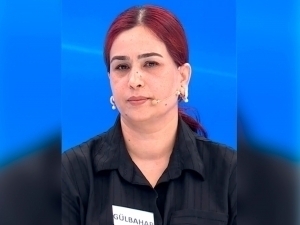
In addition, several citizens contacted the QALAMPIR.UZ editorial office, saying their sons went to Russia for work and became involved in the Russia–Ukraine war. According to a father from Namangan, his son traveled to Russia after divorcing his family and later signed a contract to participate in the war. The son regularly called his father, saying he had been promoted and would receive Russian citizenship after completing the contract. According to the father, the son has been missing for six months, and the parent now only wants to know whether his child is alive or dead.
In another case, an Uzbek citizen said he was falsely accused of drug trafficking in Russia and forced through threats to fight against Ukraine. Ukrainian blogger Dmytro Karpenko posted an interview with the Uzbek man on social media.
The man said he was held in detention for six days and subjected to severe torture. In court, he was given two options: fight in the war for one year or face at least 12.5 years in prison. Hearing this, the blogger expressed surprise that a court verdict was issued in just six days.
“I’ve never heard of such a case. A verdict in six days. It seems this only happens so quickly with Uzbek citizens,” the blogger said.
The interview was conducted by a person who identifies himself as a blogger exposing the dark side of the Russian army. So far, no official comment has been issued by Russian authorities or relevant Uzbek agencies. Reports of Uzbek citizens falling into such traps in Russia have surfaced repeatedly before. Now, however, not only Uzbeks and Central Asians but also Indians and Africans are reportedly being recruited into the war using similar methods.
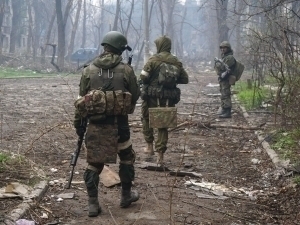
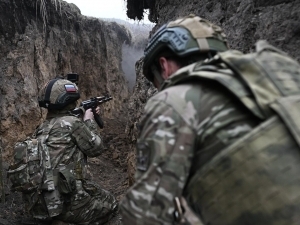
On October 29, 2025, the “I Want to Live” project, supported by Ukraine’s Ministry of Defense and Main Intelligence Directorate, published the names of more than 2,000 Uzbek citizens who signed contracts with the Russian Armed Forces to fight against Ukraine. Many who went to war expecting quick and easy money are now fleeing despite the promised payments. They are willing to face prosecution in Uzbekistan rather than return to the horrors of war.
QALAMPIR.UZ reviewed court documents of individuals who participated in the war. One man born in 1993 from Sherobod District of Surkhandarya Region traveled to Russia on January 16, 2025, to earn money. On April 7, 2025, he signed a contract to participate in the war. After signing, 1.6 million rubles were transferred to his bank card. He underwent 15 days of initial military training and later fled the combat zone, realizing the danger and wrongfulness of his actions. With the help of the Uzbek embassy, he returned to Uzbekistan and was sentenced to corrective labor.
In another case, an Uzbek citizen attempting to flee the war was detained by Russian border guards and sentenced to seven years and nine months in prison. In yet another case, an Andijan native who fought in Ukraine was sentenced in Uzbekistan to two years of restricted liberty.
Regardless of which side one fights on, war is condemned under human rights principles. Uzbekistan’s Constitution and Criminal Code explicitly prohibit participation in foreign armed forces. Under Article 154 of the Criminal Code, mercenarism carries a sentence of five to ten years in prison.
For full details, watch the video report on QALAMPIR.UZ’s YouTube channel.

Live
All