Staying away from Russia: Putin’s “grand plans” for Uzbekistan – weekly analysis
Review
−
04 January 33235 12 minutes
An Uzbek migrant worker in Russia died as a result of torture by OMON officers. Claims were made that Ukrainian drones attacked President Vladimir Putin’s residence. Russia’s alleged grand plans involving Uzbekistan were openly discussed. New York’s mayor took the oath of office on the Quran, while in Uzbekistan, the son of a former chairman was appointed to head UzGidroenergo. The most significant events of the week that bridged the old and the new year are covered in the latest edition of Weekly Analysis. In front of the cameras, Qamariddin Shaykhov and our team began.
We have spoken extensively about the death of 10-year-old Tajik migrant Qobiljon Aliev in Russia, who became the victim of a nationalist-motivated killing committed by a 15-year-old ninth-grade student at his school. In reality, this tragedy had already unfolded long before, but no one spoke up or raised the alarm.
While Qobiljon’s murder took place on December 16, 2025, just four days earlier, on December 12, an Uzbek migrant worker from Samarkand died in Russia’s Khabarovsk city as a result of torture carried out by Russian law enforcement officers, specifically the Special Purpose Mobile Unit, known as OMON. However, information about the incident only reached the media 20 days later, on January 2.
According to reports, the incident occurred on December 12 in Khabarovsk. Social media posts claim that special forces raided one of the cafés and used force against Uzbek citizens present there. As a result, two individuals sustained severe injuries and fell into a coma, one of whom died several days later. Information about the second victim has not been officially confirmed.
It is reported that the deceased was born in Jumavoy village of Kattakurgan district, Samarkand region. His body has not yet been returned to Uzbekistan. There is no information on where the body has been kept for the past 20 days, why it remains in Russia, whether a forensic examination has been ordered, or what its results are. It is also unclear whether law enforcement agencies have opened a criminal case into the death. A man goes to a cold foreign country to work, dies there, and everyone remains silent.
The Ministry of Foreign Affairs remained silent for 20 days, only reacting after reports of the Uzbek citizen’s death appeared in the media. As for the Migration Agency, it maintained its usual deep silence and offered no comment even after the reports surfaced.
The Ministry later stated that the Consulate General is in constant contact with the deceased’s relatives and is providing the necessary consular and practical assistance. It was also reported that work is underway to return the body to Uzbekistan.
According to a statement by Akhror Burkhanov, the Consulate General of Uzbekistan sent official notes to the Khabarovsk Regional Prosecutor’s Office, the Investigative Directorate, and the regional office of Russia’s Ministry of Foreign Affairs, requesting a comprehensive, impartial, and lawful investigation into the incident.
At present, there is no officially confirmed information regarding the cause of the citizen’s death. It was stated that additional information would be provided to the public once verified details are received from the relevant authorities.
Burkhanov also noted that information circulating on social media about a second victim has not been confirmed. He emphasized that protecting the rights and interests of every Uzbek citizen abroad remains a priority for Uzbek diplomats.
According to data released by Uzbekistan’s Agency for External Labor Migration in October 2025, more than 1.3 million Uzbeks have obtained migrant worker status in Russia. However, unofficial estimates suggest that over 3 million Uzbek citizens are working abroad, with more than 2 million in Russia alone. In contrast, the Ministry of Foreign Affairs stated in June 2025 that fewer than 1 million Uzbek labor migrants are in Russia. Commenting on the killing of an Uzbek citizen, Alisher Kadyrov, Deputy Speaker of the Legislative Chamber and leader of the Milliy Tiklanish party, called on Uzbeks to leave the Russian Federation.
“Believe me, the situation will only worsen month by month. Russian security services view Central Asians as potential active participants in future unrest, which is why they have already abandoned any benefit they gain from them. Use your common sense and leave Russia as soon as possible. No income is worth the tears of your parents and children,” Kadyrov said.
This raises an important question. We are talking about human lives, not one but thousands of destinies. A single death may not fully reflect the reality of the situation, but it can signal deeper problems. In such circumstances, how justified is it for Uzbekistan to send a note to Russia only at the consular level, rather than through the Ministry of Foreign Affairs? Following Qobiljon’s death, Tajikistan sent a diplomatic note at the ministerial level. Russia’s ambassador to Dushanbe was summoned, Tajik Interior Minister Ramazon Rahimzoda called his Russian counterpart Vladimir Kolokoltsev, and Russia’s Security Council Secretary Sergei Shoigu contacted his Tajik counterpart Yusuf Rahmon to oversee the investigation. While the outcome may have amounted to condolences and expressions of sympathy, action was taken. Where is Uzbekistan’s resolve? Why has Russia’s ambassador in Uzbekistan not even been summoned to the Foreign Ministry? He appears occupied with holiday celebrations, greetings, and announcements of Russia’s grand plans for Uzbekistan, which we will return to shortly.
As the fourth year of Russia’s armed invasion of Ukraine approaches and discussions on security guarantees for Ukraine continue, Russian Foreign Minister Sergey Lavrov claimed on December 29 that Ukraine’s armed forces launched 91 drones at President Vladimir Putin’s state residence in the Novgorod region. However, there were no casualties, no traces, and no evidence. A week has passed, yet neither Russian security services nor Lavrov himself have presented any facts supporting the claim.
Lavrov stated that Russia’s position in peace negotiations would be revised in light of the alleged attack, but emphasized that Moscow does not intend to withdraw from talks with the United States.
Notably, at the time of the alleged attack, Ukrainian President Volodymyr Zelensky was in Florida, holding peace talks with U.S. President Donald Trump at the Mar-a-Lago residence.
After the talks, Zelensky dismissed Lavrov’s statement as false, linking it to Russia’s plans to strike Kyiv’s government quarter. According to Zelensky, Moscow is attempting to derail progress achieved in peace negotiations between Kyiv and Washington. He urged Trump to respond appropriately to Russia’s threats.
On December 31, the U.S. Central Intelligence Agency clarified the situation. According to the agency, Ukrainian special forces did not attempt to attack Putin’s residence in Valdai, Novgorod region. The CIA concluded that Ukrainian drones targeted a military facility in the same region, but not near the presidential residence. U.S. intelligence monitors such attacks using satellites and radar systems. CIA Director John Ratcliffe briefed President Trump on the findings. Shortly afterward, Trump shared a link on Truth Social to an analytical article by the New York Post stating that Ukraine did not strike Putin’s residence.
Russia, however, continues to insist on its claims. The Russian Ministry of Defense presented navigation data to the U.S., alleging it was obtained from a Ukrainian drone that reached Putin’s residence. Russian security services claim their decryption analysis conclusively confirmed that the intended target was the Valdai residence.
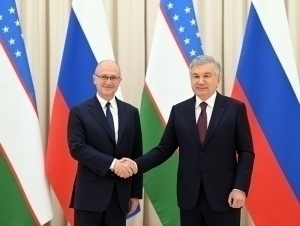
On December 30, Uzbek President Shavkat Mirziyoyev and Russian President Vladimir Putin held a phone conversation.
At the start of the call, the Uzbek leader strongly condemned the attempted attack on the Russian president’s residence in the Nizhny Novgorod region, stating that such actions threaten stability, security, and efforts to achieve lasting peace.
The leaders also discussed further developing Uzbekistan–Russia strategic partnership and alliance relations in the context of implementing high-level agreements.
Russia’s leadership has major plans involving Uzbekistan, one of which is improving the quality of life in the country. This was stated by Russia’s ambassador to Uzbekistan, Alexey Yerkhov, in his New Year message.
He said that the trusting, open, and constructive dialogue between Presidents Vladimir Putin and Shavkat Mirziyoyev serves as a solid foundation for achievements and future prospects, setting the strategic direction and high pace for bilateral relations.
According to the ambassador, 2025 was a productive year in strengthening strategic partnership and alliance relations between Russia and Uzbekistan.
He added that intensive exchanges of delegations helped fill the bilateral agenda with practical content aimed at serving the interests of citizens of both countries.
“We have ambitious plans ahead, including deepening cooperation, launching new joint projects, expanding interregional ties, creating additional conditions for economic growth and technological development, and improving quality of life,” Yerkhov said.
U.S. Ambassador to Uzbekistan Jonathan Henick also congratulated the Uzbek people on the New Year. A notable difference from the Russian ambassador’s message was that the greetings were delivered in Uzbek, with other embassy staff joining him.
Indeed, Uzbekistan–U.S. relations have reached an unprecedented level. Recently, U.S. President Donald Trump personally called Shavkat Mirziyoyev to extend New Year greetings. The leaders discussed prospects for further developing strategic partnership relations. In 2026, Mirziyoyev is expected to attend the G20 leaders’ summit in Miami at Trump’s invitation.
In the first half of 2025, remittances from the United States to Uzbekistan increased by 10.3 percent compared to 2024. Uzbekistan was not included in the list of countries affected by new U.S. visa restrictions, preserving entry opportunities, though the process remains complex.
From January 1, 2026, Uzbekistan introduced a 30-day visa-free regime for U.S. citizens. In response, a proposal was made to extend U.S. visas for Uzbek citizens to up to 10 years, though no positive outcome has yet been achieved.
New York’s newly elected mayor, Zohran Mamdani, who won the 2025 election and officially assumed office on January 1, took the oath on the Quran.
Notably, the ceremony took place in the early minutes of the New Year at Manhattan’s City Hall subway station, which was closed in 1945. Mamdani’s team said the location symbolized his closeness to ordinary working people.
By law, New York mayors are not required to swear on any religious text, though most have traditionally used sacred books. Mamdani became the first New York mayor to take the oath on the Quran. He used three copies: one belonging to his grandfather, one donated to the New York Public Library from Arturo Schomburg’s collection, and a family heirloom belonging to his grandparents.
The election for New York City’s 111th mayor was held on November 4, 2025. Nominated by the Democratic Party and the Working Families Party, Mamdani won 50.3 percent of the vote. He was followed by independent candidate Andrew Cuomo, who had urged voters to support him with backing from President Trump and had threatened funding cuts to the city. Cuomo served as New York governor from 2011 to 2021 but resigned following sexual misconduct allegations and later lost the Democratic primaries to Mamdani.
The 34-year-old Mamdani promised free and rapid bus services, a network of municipal grocery stores, universal preschool education, and a freeze on rent for nearly 2 million residents living in rent-regulated apartments. He became the first Muslim and first politician of South Asian descent to serve as New York City mayor.
President Donald Trump previously described Mamdani as a “communist lunatic” and a “future disaster.” Mamdani responded by stating that he would seek cooperation with Trump in the city’s interests but would not allow himself to be intimidated. He later met Trump in the Oval Office, where Trump reportedly greeted him warmly.
It is worth noting that Mamdani quickly gained popularity among Uzbeks as well. In his victory speech on November 5, he expressed gratitude to Uzbek nurses.
In Uzbekistan, individuals who report corruption will now be granted protection orders. This was stipulated in a decree signed by President Shavkat Mirziyoyev at the end of 2025 on improving the system for preventing and combating corruption.
According to the decree, the Digital Compliance information system will be launched in pilot mode from July 1, 2026.
Its main objective is to ensure rapid data exchange among participants in the anti-corruption cluster and fully digitize the work of internal anti-corruption control units through the E-Compliance module.
The Anti-Corruption Agency will be granted the authority to issue mandatory instructions and submissions to prevent legal violations within internal control units of state bodies and organizations.
To protect individuals who report corruption from workplace persecution or pressure, the agency will introduce the practice of issuing protection orders.
A breast badge titled “For Contribution to the Fight Against Corruption” will also be established to reward those who make a meaningful contribution to anti-corruption efforts.
On December 17, 2025, Bahodirjon Siddiqov stepped down as chairman of the board of Uzbekneftegaz, and the position was taken over by Abdughani Sanginov, who had led Uzbekgidroenergo since 2017.
So who replaced Sanginov at Uzbekgidroenergo? Islam Abduganiyevich. The name may remind some of Uzbekistan’s first president, Islam Karimov, but this refers to Islam Abduganiyevich Abdurakhmonov.
Abdurakhmonov was appointed acting chairman of the board of Uzbekgidroenergo. During the past week, information emerged and was not denied that he is the son of former chairman Abdughani Sanginov. As the saying goes, the son follows in his father’s footsteps.
Most notably, Abdurakhmonov is a major shareholder in one of the companies involved in the construction of the Sardoba reservoir, where a tragedy occurred in May 2020. According to the Unified State Register of Enterprises, he owns 61.7 percent of To’palang HPD Holding. The Uzbekgidroenergo website also states that from 2018 to 2025, Abdurakhmonov served as генеральный director of To’palang HPD Holding LLC.

Live
All