’’It is wrong to scratch where it does not itch’’. Qudratkhoja reminds Lola Karimova of her father’s mistakes
Local
−
08 September 2025 117539 5 minutes
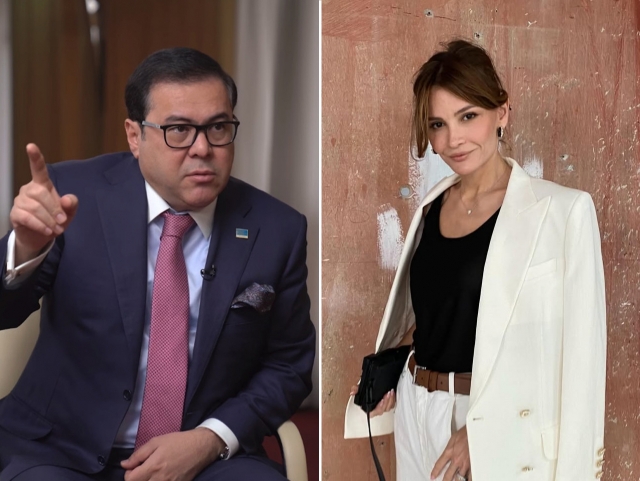
Recently awarded the honorary title of ’’Distinguished journalist of the Republic of Uzbekistan’’, Sherzodkhan Qudratkhoja, rector of the Uzbekistan University of journalism and mass communications, reminded Lola Karimova of her father’s mistakes. This came in response to her remarks on the ninth anniversary of the death of the first President, Islam Karimov, when she stated that ’’Uzbekistan did not become like Syria thanks to Islam Karimov’s wise policies’’. Qudratkhoja advised her not to ’’scratch where it doesn’t itch’’, noting the importance of reflecting on past mistakes, in a post quoting Karimova’s words.
’’Our sister could ask the elders carefully why things happened this way. Perhaps, unlike our neighbors, it was the misguided policies of the 1990s that led to radicalization in our country?” he wrote.
Besides that, the rector of the Journalism university, Sherzodkhoja, noted that ’’thousands of fates and destinies were broken because a skillful and well-thought-out policy was not implemented’’.
’’Perhaps it was precisely Islam Karimov’s style of governance that prevented us from becoming like former Syria or Afghanistan. As our fathers said, it is unwise to ‘scratch where it doesn’t itch’…’’, he said.
This post sparked widespread debate, with some social media users criticizing the rector, pointing out that he also worked in government during Karimov’s era and questioning why he had not made such statements at that time. A photo of Sherzodkhoja smiling alongside late President Karimov, together with figures like Abdullah Oripov, Erkin Vohidov, and Quddus Azam, was shared to highlight his close proximity to the former president.
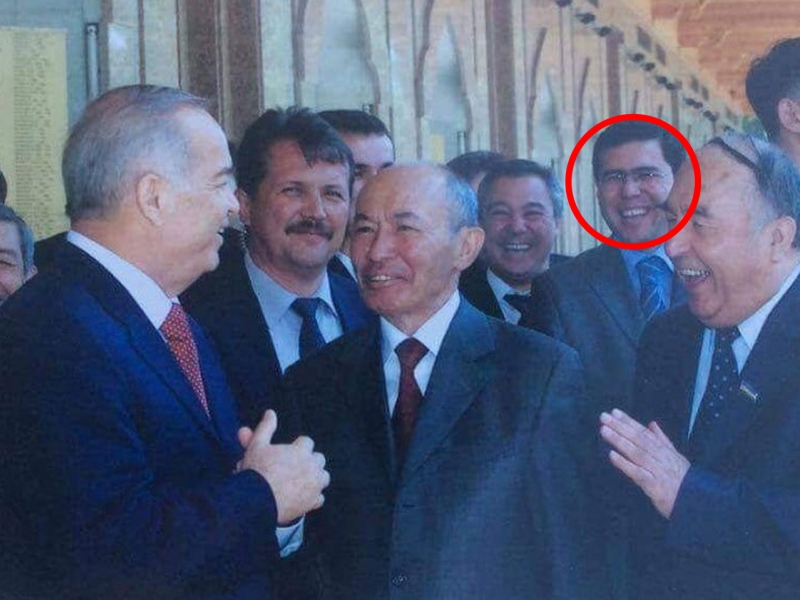
’’Sherzodkhoja Qudratkhoja, you were not the rector at that time, nor had you received the honorary title, yet we recognized you on television back then. Watching your comments and reports on informational programs from a remote region, we believed we were witnessing heaven on earth. Look, it seems you, like Yulduz opa, have quietly felt oppressed’’, wrote International Chemistry University professor Gulnoza Odilova.
Journalist Karimberdi Toramurod seemed to agree with the rector’s views, noting that Karimov had aimed to make the number of those imprisoned equal to those outside.
’’One of his father’s dreams remained unfulfilled, his life ended before he could achieve it: he wanted the number of prisoners to match those outside!’’ he said.
Meanwhile, Honored artist of Uzbekistan Gulbahor Erqulova remarked that criticizing the past and seeking their shortcomings is something peculiar to Uzbekistan.
’’Finding faults in the past, only those who had been in their place would understand. May no one experience what that person went through. Yet in our country, we only talk about the predecessors in state affairs’’, said the maqom singer.
In response to hundreds of such comments, Sherzodkhon Qudratkhoja issued a clarification, stating that he had not expected so much reaction to a post written just a day earlier. He added that the opinions of those who wrote negatively were also interesting and argued that today’s environment, unlike the past, allows for diverse viewpoints. He emphasized that as long as there is no insult, everyone should endure criticism. He addressed the questions directed at him on three main points.
’’Here are my responses: First, I did not write against anyone; as a political scientist, I expressed my own view and position (which is possible, of course). Second, it is generally not customary to speak ill of the deceased, but in this case, we are not talking about ordinary believers or Muslims; within the discipline of political science and history, we always study the lives and activities of late kings, emperors, commanders, monarchs, presidents, prime ministers, and ministers as case studies. Otherwise, why would humanity need history, political science, or philosophy? Third, during that period, it was not just me, no one could speak freely; those who dared to say something were either imprisoned or silenced. Even Uzbekistan’s Heroes were removed from their positions, ostracized, or made invisible, and some were physically eliminated’’.
The rector recalled an incident involving Soviet leader Nikita Khrushchev.
’’After Stalin’s death, at the 20th Congress, Nikita Khrushchev delivered a report exposing Stalin’s tyranny and cruelty. During the session, someone in the hall shouted, ‘Then why didn’t you speak up at the time?’ Khrushchev replied, ‘Who is that? Sit down.’ Silence followed. Then Nikita Sergeyevich said, ‘You see? We were also afraid back then; we kept silent’’, he added.
Qudratkhoja emphasized that he is speaking out only now, gaining the courage to voice his thoughts, and noted that this is often misunderstood by those who are caught up in nostalgic, almost deifying views of leadership. However, he said that those who lost loved ones in repressions, those expelled during the ’’dark years’’, and their families and children understand him immediately.
’’Those who have mourned at home for years, those who have carried grief, those who were oppressed, they understand me. Whether they are academics, businessmen, farmers, ordinary believers, or imams, it doesn’t matter. We have already forgotten history and its dark days too much; we must remember and know them so that such times never return’’, he mentioned.
At the end of his statement, Sherzodkhoja Qudratkhoja stressed that Uzbekistan should strive to develop like Malaysia, Korea, Japan, or Singapore, rather than following a path like Syria.

Live
All