Russia to screen migrants for viral hepatitis
World
−
15 October 2025 3536 3 minutes
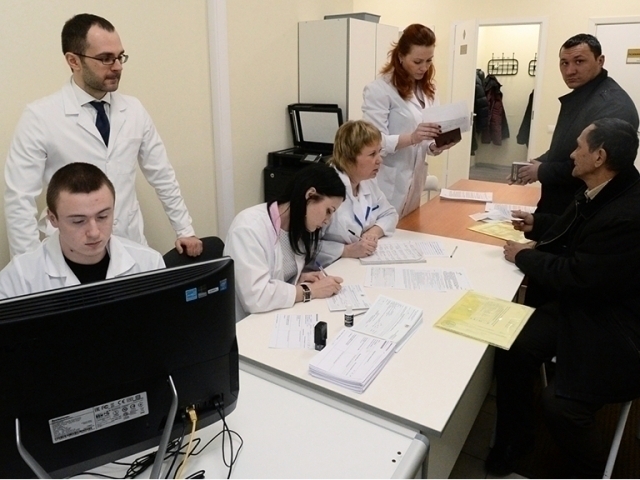
Starting from March 1, 2026, migrants arriving in Russia will be tested for acute hepatitis and viral hepatitis types B, C, and D, Vedomosti reported.
The changes were approved by the Ministry of Health and apply to foreign nationals, stateless persons, and individuals who have refugee status or have applied for temporary asylum. Later, the list of dangerous infections subject to testing is expected to be expanded.
According to the draft amendments published on the federal portal of regulatory legal acts, this procedure is being introduced “to improve the organizational framework and procedures of medical examinations.”
Medical screening for migrants is required, among other things, to obtain work permits, as well as temporary or permanent residence permits in Russia. Foreign citizens arriving in Russia for employment must undergo the examination within 30 calendar days after entering the country, while those visiting for non-work purposes must complete it within 90 days of entry. This requirement is stipulated by the law ’’On the legal status of foreign citizens in the Russian Federation.’’
At present, foreign nationals and stateless persons are already being tested for diseases that pose a danger to others or require the use of specific medications. According to the order of the Ministry of Health titled ’’On the procedure for medical examination of foreign citizens,’’ such diseases include HIV (including asymptomatic infection), tuberculosis, syphilis, and leprosy.
In February, the inter-factional working group on migration policy proposed adding hepatitis C to the list of mandatory tests for foreigners. Deputy Speaker of the State Duma Irina Yarovaya noted that this disease is currently widespread and poses a significant risk of being imported into Russia.
Larisa Popovich, Director of the Institute for Health Economics at the National Research University Higher School of Economics, stated that the sharp increase in socially significant diseases in Russia is often linked to incoming migrants. According to Mikhail Gomberg, President of the Guild of Specialists in Sexually Transmitted Infections and dermatologist-venereologist, the monitoring of migrant health has improved since the launch of centralized employment screening at the multifunctional medical center for labor migration.
In addition, in January of this year, the Ministry of Health proposed introducing administrative fines for doctors and medical institutions that violate the procedure for conducting medical examinations of foreign citizens and stateless persons. In particular, a new article will be added to the Administrative Code. Under the proposal, individual medical practitioners who violate the established procedure for examining a foreign citizen may face fines ranging from 25,000 to 50,000 rubles; officials, such as clinic management, from 50,000 to 100,000 rubles; and legal entities (the clinics themselves) from 250,000 to 800,000 rubles. Furthermore, the activities of such medical institutions may be suspended for a period ranging from 14 to 90 days.
It is worth noting that earlier, Russian President Vladimir Putin proposed considering the abolition of the current patent system for labor migrants.

Live
All18 April