Greenhouses, construction sites, and industrial enterprises under inspection in Tashkent
Local
−
24 November 2025 2974 3 minutes

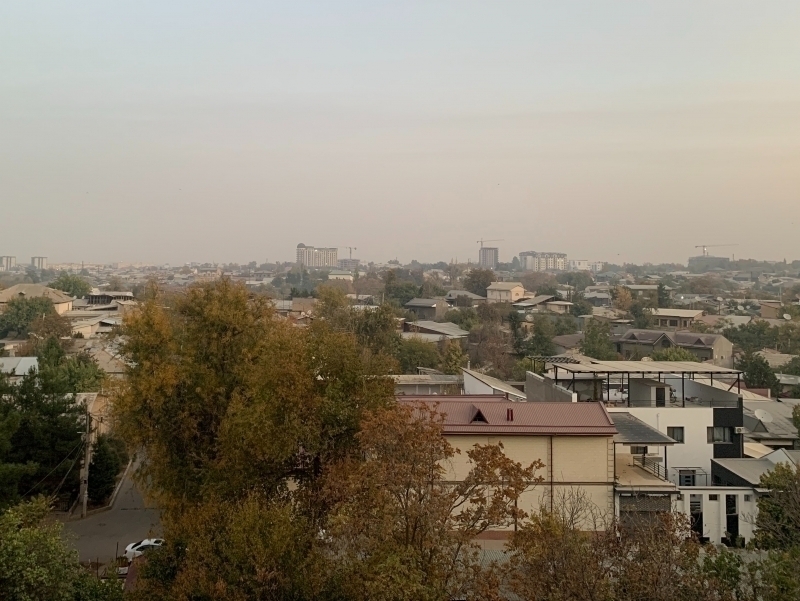

Toxic PM2.5 particles have persisted in the air over Tashkent and surrounding areas for several days. In response, authorities have intensified monitoring of greenhouses, industrial enterprises, and construction organizations in the capital, conducting inspections and raids, the director of the Research Institute of Hydrometeorology and Doctor of Geographical Sciences, Doniyor Turgunov, reported.
According to Turgunov, the current air pollution is linked to a low-gradient, high-pressure atmospheric process, resulting in persistent inversion conditions. Inversion affects vertical air movement, and its disruption has caused a degree of stagnation in atmospheric air quality. Authorities are taking measures to mitigate these effects.
The National Committee on Ecology and Climate Change has established a rapid-response headquarters operating 24/7. This team carries out activities based on quick analyses and scientific findings. As a result, practical measures have been implemented on the ground, including continued street cleaning and dust removal in Tashkent.
Additionally, greenhouse operations in areas adjacent to Tashkent have been examined. Activities of 106 greenhouses with a significant impact on the atmosphere have been restricted. Construction activities in the city are also under supervision. Inspections identified 14 construction sites that violated regulations and had high emissions, for which warnings were issued and recommendations provided on how to proceed.
First- and second-category industrial enterprises in Tashkent and surrounding areas have also been analyzed. Modernization of 883 dust and gas purification units across 305 industrial enterprises has begun as a result of the study.
The rapid-response headquarters is currently discussing additional measures and developing new programs. These programs are divided into two parts: immediate actions and strategic follow-up measures. The development process involves the Ecology Committee, relevant ministries and agencies, experts, and scientists. The program is expected to be submitted to the government for approval in the coming days.
Tashkent has recently ranked among the world’s leading cities in terms of air quality deterioration. For instance, on 11 November, PM2.5 levels in Tashkent and Andijan exceeded safe limits. On 16 November, fine particle concentrations in Tashkent’s atmosphere remained several times above permissible levels. On 20 November, the capital ranked second among major cities globally for air pollution. Experts link the rise in pollution to inversion caused by sudden temperature changes, which traps harmful particles close to the ground. To improve air quality, the Tashkent Thermal Power Plant in Yakkasaray District has ceased using fuel oil.
What is PM2.5?
PM2.5 refers to air pollutants consisting of fine solid particles and liquid droplets ranging from 10 nanometers to 2.5 micrometers. Unlike larger particles, PM2.5 can easily penetrate biological barriers, posing significant health risks.
Particles smaller than 2.5 micrometers remain suspended in the air. They are present in forests and coastal areas but are particularly dangerous in urban environments due to higher concentrations and more harmful chemical compositions. The composition of PM2.5 aerosols can also vary significantly between cities.
Primary PM2.5 particles are released directly into the atmosphere, originating from sources such as smoke, asphalt, vehicle tire wear, mineral salts (sulfates, nitrates), and heavy metal compounds (mostly oxides). Biological pollutants, including certain allergens and microorganisms, also contribute to PM2.5.
Secondary PM2.5 forms in the atmosphere itself. For example, nitrogen and sulfur oxides emitted into urban air react with water to form acids, which then generate solid salt particles, such as nitrates and sulfates.
It should be noted that the National Committee on Ecology and Climate Change recently reminded construction organizations of environmental requirements and warned that failure to comply would result in accountability measures.

Live
All