Nuclear tension: Do weapons tests speed up war?
Review
−
03 November 2025 5458 6 minutes
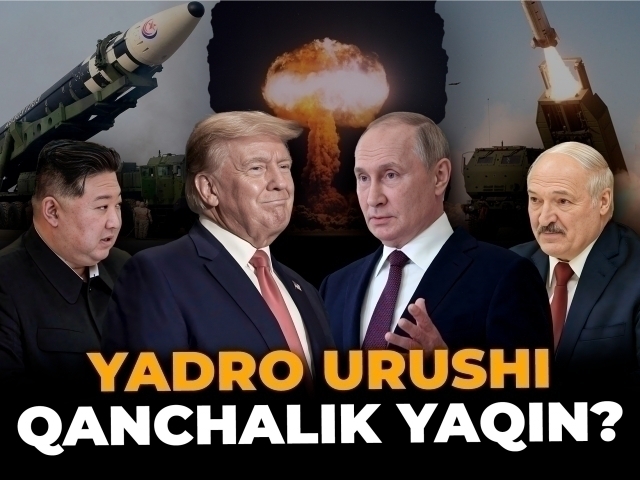
Recent days have seen a wave of news about world leaders testing “toys” capable of potentially sending the entire planet back to the Stone Age. These developments have sparked extensive discussions online, as the world seems to be preparing for an apocalyptic arms race.
On one side, Russia is demonstrating its nuclear power through weapons tests, while the United States boasts of the strength of its arsenal. Meanwhile, in another corner of the world, North Korean leader Kim Jong Un appears to signal, “I am here too,” drawing global attention with his own “secret weapons.”
This raises a pressing question: how close is the threat of nuclear war?
Who is in the game?
The so-called arms “festival” began after the U.S. threatened to supply Tomahawk missiles to Ukraine. On October 26, reports emerged that Russia had tested its nuclear-powered “Burevestnik” cruise missile.
During a visit to the Joint Armed Forces Headquarters, Russian President Vladimir Putin’s Chief of Staff, Valery Gerasimov, provided some details. He confirmed that the October 21 tests were successful, with the Burevestnik reportedly flying for approximately 15 hours, but stressed that the program was not yet complete.
.jpg)
“The technical characteristics of this missile allow it to strike highly protected targets at any distance with precision,” he said.
Russia’s demonstration prompted a swift response from the U.S. administration. On October 30, a statement on the social media platform Truth Social reported that former U.S. President Donald Trump had ordered the Department of Defense to resume nuclear testing.
“The United States has more nuclear weapons than any other country. This includes a complete modernization of the existing arsenal during my first term… Russia is second, China third, and it will remain so even over the next five years,” Trump wrote.
However, according to official sources such as the Arms Control Association and ICAN, Russia still holds the largest nuclear arsenal. In this context, Trump’s statement could either reflect an exaggeration or a violation of Article 2 of the 1968 Treaty on the Non-Proliferation of Nuclear Weapons, which prohibits nuclear expansion.
Trump’s directive drew widespread international criticism. Rapid responses came from China’s Foreign Ministry spokesperson, Gao Jiakun, and Kremlin press secretary Dmitry Peskov.
“China hopes the United States will honor its obligations under the Comprehensive Nuclear-Test-Ban Treaty (CNTBT) and maintain the moratorium on nuclear testing,” Gao Jiakun said.
The Kremlin, meanwhile, stated that it does not believe a new stage in the arms race between Russia and the U.S. has begun.
Russia, which does not want to restart a full-scale arms race, continues to test older “toys” from the Soviet arsenal. For instance, during a meeting with journalists on October 29, Putin announced the successful test of the Poseidon unmanned underwater vehicle.
The Poseidon is a nuclear-powered submarine capable of carrying conventional or nuclear warheads of up to two megatons, reaching speeds of up to 200 kilometers per hour.
.jpg)
Russia is not only focusing on itself but also arming its allies. On October 31, Belarus reportedly replaced old weapons on its territory with new, modern nuclear warheads imported from Russia.
Meanwhile, North Korea has intermittently joined the arms show. On October 10, during a military parade marking the 80th anniversary of the Workers’ Party, Pyongyang unveiled the new intercontinental ballistic missile “Hwasong-20.” On October 28, the North Korean leadership announced tests of strategic winged missiles, with Party Central Committee secretary Pak Jong Chon emphasizing the “successes in ensuring the operational readiness of the country’s nuclear forces.”
.jpg)
In short, countries appear to be bringing their stored weapons out of the shadows. The global nuclear balance is becoming increasingly fragile.
Why nuclear war may not happen
At a time when international law is gradually losing significance, regional conflicts persist, and nuclear agreements are sidelined, what guarantees that an apocalyptic war will not occur? After all, as politicians often say, the international system is essentially anarchic.
Indeed, the global order lacks a single governing authority. Any country with nuclear weapons can potentially use them, particularly when major arsenals are held by Russia or the U.S., which together account for 90 percent of all nuclear weapons worldwide. As “Nuclear Threat Initiative” practitioner Shade Ward notes:
“The risk of using nuclear weapons is higher today than at any time since the Cuban Missile Crisis 60 years ago.”
Yet, there is a prevailing idea that the use of nuclear weapons is tantamount to suicide. In other words, these so-called doomsday weapons, while threatening, simultaneously provide a form of security.
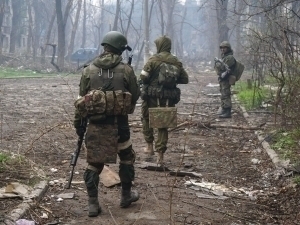
Russia is currently seen as the country with the highest risk of nuclear escalation. Prolonged conflict in Ukraine, coupled with U.S. approval to supply Tomahawk missiles on October 31, appears to have hardened Moscow’s stance. However, the practical likelihood of nuclear deployment remains low, as using warheads would provoke global outrage.
.jpg)
Consider some possible scenarios for Russia’s nuclear options. Ukraine is leveraging Western support despite not being a NATO member. Should Russia deliver nuclear bombs to Ukraine, global backlash would be immediate, with clear consequences for Moscow. As Montesquieu wrote in 'The Spirit of the Laws':
“The purpose of war is victory, and the purpose of victory is survival.”
Another scenario might involve Russia using a limited number of tactical warheads to intimidate Ukraine with minimal casualties. Even in this case, it would constitute a breach of the Nuclear Non-Proliferation Treaty and prompt serious international responses. Moreover, the damage from one or two tactical nuclear weapons would not be sufficient to demoralize the Ukrainian public. As Janis Stein Munk, founding director of the Global Affairs & Public Policy School, notes:
“Use of tactical nuclear weapons could backfire, uniting the Ukrainian people around their flag, reinforcing support for their leadership, and strengthening resistance to ceasefire proposals.”
In conclusion, the use of nuclear weapons would escalate conflicts rather than resolve them. The current “weapons exhibition” is largely a game of intimidation. Therefore, it is highly unlikely that a nuclear strike will occur in the near future, barring a catastrophic “black swan” event.
Temur Suvonov

Live
All