HIV/AIDS is growing rapidly, prices are rising every month, Uzbeks are living from credit to credit, Kuchkarovs have forgotten their promises, the Agalarovs are taking over Chorvak – Analysis of the Week
Review
−
03 August 2025 25645 22 minutes
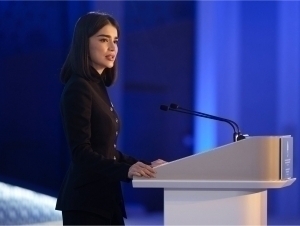
The number of people infected with HIV and AIDS is increasing in Uzbekistan. In the summer of 2023, the number of registered cases was 48,000. Two years later, this figure has increased by more than 3,000. This week alone, 22 changes were made to the new structure of the Presidential Administration headed by Saida Mirziyoyeva, although most of the new appointments are familiar faces. Meanwhile, despite public protests, the project in Chorvak, backed by the billionaire Agalarov family, appears to be moving forward. While wages in Uzbekistan have increased, prices have risen even more sharply. These and other key developments are covered in this week’s edition of “Analysis of the Week.”
HIV/AIDS cases in Uzbekistan are increasing
The number of people infected with the human immunodeficiency virus (HIV) continues to rise in Uzbekistan. This information was not announced quietly, but publicly in the Senate.
If the President signs off, citizens aged 18 to 60 who have spent more than 90 days abroad and return to Uzbekistan—as well as foreign citizens and stateless persons permanently residing or working in the country—will be subject to mandatory HIV testing. The bill, titled “On Amendments and Additions to Certain Legislative Acts of the Republic of Uzbekistan,” was reviewed and approved at the ninth plenary session of the Senate on August 1.
According to Senator Gulnara Marufova, over 5.1 million citizens were tested for HIV/AIDS in 2024, and 3,903 of them were diagnosed with the virus. Among the 1.7 million citizens who had been abroad for extended periods, only 434,000—about 25 percent—voluntarily took the test, and 1,512 were found to be HIV positive. This marks a 19 percent increase compared to 2023.
Additionally, more than 12,700 foreign citizens and stateless persons were voluntarily tested last year, with 81 cases of HIV/AIDS diagnosed. The number of infections detected among labor migrants rose by 23.7 percent compared to the previous year.
In many countries, particularly in the post-Soviet region, HIV/AIDS cases are often underreported or concealed, both on a personal level and in official statistics. It remains unclear what methodology Uzbekistan uses to compile its figures. However, Senator Marufova stated that, as of July 1, 2025, a total of 51,087 people were officially registered as living with HIV in the country. According to her, the virus is primarily transmitted through sexual contact in Uzbekistan.
Globally, there is still no definitive data on how and where individuals are infected with HIV/AIDS. So, when the Uzbek senator refers to "transmission route analysis," which organization or institution is being cited? Does the Ministry of Health confirm these findings? Moreover, Marufova did not specify which countries the diagnosed individuals had visited or come from.
The law introduces several changes to Uzbekistan’s legislation on HIV/AIDS prevention, private employment agencies, and employment.
Citizens and stateless individuals permanently residing in Uzbekistan will undergo mandatory testing at the state’s expense. Foreign citizens and stateless persons entering the country for employment or already living in Uzbekistan will be tested at their own expense, or that of the employer, or via other legal financial sources.
The new law stipulates that a diagnosis of HIV/AIDS or tuberculosis will serve as grounds for refusing a work permit in Uzbekistan.
This brings us to another important issue: the memory of the coronavirus pandemic. During the height of the outbreak, negative Covid test results were required to travel or enter Uzbekistan. But in hindsight, were these tests reliable? How many people took real tests, and how many falsified documents or colluded with testing laboratories? It is well known that certain labs in Tashkent issued fake Covid-negative certificates for Uzbeks traveling abroad. And what about the vaccine? Are the official vaccination figures accurate?
Looking back at the pandemic, Covid testing was mandatory for travel, but there were widespread reports of document forgery. Many citizens bypassed proper testing procedures by obtaining fake negative results through unofficial means. The same occurred with vaccination records, which became commercialized both in Uzbekistan and abroad. In this context, who can guarantee that a new wave of corruption won’t follow mandatory HIV testing? In a country where at least four million citizens are living abroad, such a policy could lead to significant financial and logistical burdens.
If even half of those citizens return home once a year, that would require two million HIV tests annually. At an estimated cost of 150,000 soums per test, that totals a massive expense. This is a conservative estimate. So the question is: can the national budget absorb this burden?
Uzbekistan in the throes of poverty and credit
Since July, pensions, benefits, and material assistance payments to low-income families in Uzbekistan have been increased by 10 percent. As of August 1, salaries and scholarships for employees of budgetary organizations have also risen by 10 percent. However, traditionally, these increases are quickly offset by large price fluctuations in the markets. While pensions and salaries have risen by 10 percent, the prices of basic household goods—particularly food products such as meat—have risen much faster, leading to public dissatisfaction.
According to data from the National Statistics Committee for the previous month, beef prices across regions ranged from 90,000 to 106,000 soums per kilogram. However, it remains unclear which markets and what quality of products the Committee referred to. In reality, the price of beef in markets has reached as high as 160,000 soums. Reports and rumors on social media about low-quality meat, including donkey meat being sold as beef, have caused consumers to distrust cheaper, unverified meat products on the shelves.
The National Statistics Committee reports that in the first half of 2025, the average salary in Uzbekistan was 5.98 million soums—a 17 percent increase compared to the same period last year.
The highest average salaries are in Tashkent, at approximately 10 million soums. The Navoi region ranks second with 7.48 million, while Tashkent region follows with an average of 5.67 million. Kashkadarya has the lowest average salary in the country at 4.1 million soums.
Employees in finance and insurance earn the highest average monthly salaries, exceeding 16 million soums. Salaries in the information and communications sector surpass 14 million soums, with programmers earning over 19 million.
Healthcare workers earn an average of 3.6 million soums per month. Those working in higher education institutions earn around 9.5 million soums, while kindergarten employees receive only about 2.2 million. Workers in arts, entertainment, and recreation sectors earn approximately 5 million soums monthly.
Although official statistics show a 17 percent year-on-year increase in average salaries, prices in the market have risen at a much faster rate. For many households, wages barely cover food and utility costs.
According to the Central Bank of Uzbekistan, as of June 2025, 40 percent of loan recipients spend more than half their monthly income on loan repayments. The number of borrowers with multiple outstanding loans is increasing, raising serious concerns about the population’s growing debt burden. Many citizens are taking on new loans before repaying existing ones.
The Central Bank also reports that micro-borrowers face a rising debt load, and nearly one-fifth of individuals with mortgage loans are using most of their income to service these debts.
A recent Central Bank survey on cash circulation and cash settlements revealed that one-third of the population has no savings. In other words, they don’t even have a few coins set aside for emergencies.
In an online survey of more than 14,000 respondents, 23 percent said they keep their savings in cash, another half store funds on bank cards, and 20 percent use bank savings accounts. However, 34 percent reported having no savings at all. For many, saving is simply out of reach. As soon as they hear that prices are rising, they must pay more for goods and services. If a child gets sick and they visit a pharmacy, the cost is enough to induce panic.
Despite these hardships, some potentially positive news was announced this week: the Ministry of Economy and Finance released its Fiscal Strategy for 2026–2028, promising that salaries, pensions, and benefits for budget-sector employees will grow faster than the annual inflation rate. If inflation is accurately calculated and reflects real market conditions, this would indeed be welcome news. However, given past unfulfilled promises, the announcement may be met with skepticism.
For instance, the Fiscal Strategy for 2025–2027 had also promised to index social payments in line with inflation. But did that actually happen?
Estimates suggest that every one percent increase in public-sector salaries in 2026 would cost the state budget 1.67 trillion soums. Increasing pensions by the same amount would add 861 billion soums. If the number of families receiving social benefits grows by 10 percent, the resulting cost to the budget would be about 1.6 trillion soums.
Will the Agalarovs occupy Charvak?
The tourist project "Sea Breeze Uzbekistan," initiated by Emin Agalarov, the former son-in-law of the President of Azerbaijan, is expected to occupy the shore of the Charvak reservoir in the Bostanlyk district of the Tashkent region. Despite public, environmental, and media opposition, the project appears set to proceed.
Does the adoption of a separate resolution by the Cabinet of Ministers regarding the "Sea Breeze Uzbekistan" project suggest that it will go ahead regardless of expert evaluations and the conclusions of the Ministry of Construction?
According to Rasul Kusherboev, Advisor to the Minister of Ecology, Environmental Protection and Climate Change, the government is expected to adopt a decision that imposes several conditions on the project owners. It remains unclear whether this resolution will be made public or classified as an internal departmental document.
One of the main concerns raised by activists is the discharge of wastewater from construction projects into the Charvak reservoir, a key source of drinking water for the capital. The government resolution mandates that no wastewater is to be discharged into the Charvak or Chirchik rivers. Instead, the investor is required to implement a modern water recycling and reuse system, with all associated costs to be covered by the investor.
The resolution strictly stipulates that any violation—such as the discharge of even a single drop of wastewater into Charvak—will result in the suspension of the project, termination of the investment contract, and confiscation of the land.
The Prosecutor General's Office will oversee compliance with all urban planning and environmental regulations in the resort area. Both the Cabinet of Ministers and the Prosecutor General's Office are tasked with ensuring the legality and transparency of all procedures, from preliminary design to the commissioning of facilities.
Concerns have also emerged over the project's location near the former Margumish cemetery, which is believed to contain buried toxic substances. Environmental activists warn that leakage from this site could contaminate water flowing into Tashkent and surrounding areas.
In its report, Ozodlik referenced the Cabinet of Ministers’ resolution from February 4, 2021, on the comprehensive socio-economic development of the Bostanlyk district for 2021–2022. That document allocated 5 billion soums from the local budget for the reconstruction of the Margumish cemetery in the Yakkatut neighborhood.
According to a separate resolution adopted on October 15, 2021, regarding the regulation of toxic waste storage facilities, the Margumish cemetery was transferred to the jurisdiction of the State Committee for Ecology. Project documentation for the site’s conservation was reportedly developed, with an estimated cost of 4.1 billion soums. Although these funds were allocated from the state budget, actual conservation work has not yet begun.
The Agency for Waste Management and Circular Economy Development has denied these allegations, stating that the site is under constant monitoring and that the claims are unfounded. However, the agency has not provided any supporting documentation, detailed estimates, or public reports to substantiate its statements.
“The negative impact of the Margumish facility on the environment and the population has been minimized. The area has been enclosed with concrete barriers and fencing, and inert soil has been layered on top of the site. Perforation has also been carried out along the walls to prevent the infiltration of rainwater and wastewater,” the agency stated.
“In addition, regular water and soil sampling is conducted quarterly as part of ongoing monitoring efforts,” the agency added.
Still, questions remain. When were the most recent soil samples taken? What is the current environmental status of the site? In 2021, Prosecutor General Nigmatilla Yuldashev warned of the risk that rainwater and mudflows could carry contaminants from the Margumish cemetery into the Khojaabad stream, the Koksuv River, and ultimately the Charvak reservoir. These concerns have yet to be fully addressed.
Meanwhile, Emin Agalarov has announced on social media that construction of the Sea Breeze Uzbekistan project has already begun. A sales office has even opened in Tashkent. However, the Ministry of Ecology states that construction has not yet started and that only landscaping work is underway. According to the ministry, the sales office in Tashkent is handling sales related to the project in Baku.
Agalarov has become a regular visitor to Tashkent. He presented the Sea Breeze Uzbekistan project to President Shavkat Mirziyoyev on December 16, 2024, and again on April 14, 2025. On July 2, during a visit to Azerbaijan, President Mirziyoyev toured the Sea Breeze Baku complex managed by Agalarov.
Energy in Uzbekistan
Subsidies for energy resources—despite already-high and steadily rising prices—will continue in 2028. According to the Fiscal Strategy for 2026–2028, announced by the Ministry of Economy and Finance, funds will be allocated from the state budget to subsidize gas and electricity supplied to the population at reduced rates.
Additionally, part of the cost of public transportation for the population will be covered by the state. The strategy provides for 15.3 trillion soums in subsidies to offset losses in the energy and transport sectors, with 7 trillion soums earmarked for natural gas alone. Specifically, 5.9 trillion soums will be allocated for gas subsidies in 2026, 5.5 trillion in 2027, and 5 trillion in 2028.
A resolution by the Cabinet of Ministers dated June 15, 2024, titled “On Additional Measures to Further Improve the Tariff Policy in the Fuel and Energy Sector,” stipulated that electricity and gas prices would remain fixed for at least three years starting in 2026. However, just one day before the resolution came into effect—on March 31, 2025—the Cabinet adopted a new resolution mandating that electricity and gas prices be indexed annually from May 1, based on inflation, by no more than 10 percent.
Despite the annual price hikes, the energy sector will continue to receive state subsidies through 2028. This contradicts earlier statements by Economy and Finance Minister Jamshid Kuchkarov, who had said that subsidies would continue in 2025 and 2026, decrease sharply in 2027, and stop altogether in 2028.
Economic analysts argue that one of the primary objectives of energy sector reforms—particularly the move toward market pricing—was to eliminate government subsidies. Yet, the plan to phase them out appears to have been shelved. Observers see this as a burden that affects both the poor and the wealthy alike.
“We see that the government is not going to abandon energy subsidies, which have become a double burden on Uzbeks—both from their personal pockets and from the state budget—even in 2028. This is just a continuation of increases, disregarding the promise of a three-year freeze on tariffs. It's been said before, and now it’s being repeated,” says economist and blogger Otabek Bakirov.
“Now, they’ve even decided to classify energy subsidies under the social sector. That’s blatant hypocrisy,” he added.
Despite rising energy prices and sustained subsidies, the quality of gas and electricity supply to households has not improved. On the contrary, while such complaints were previously limited to regional areas, today it is common for neighborhoods in central Tashkent to experience power outages lasting 8–10 hours. Many citizens believe this is the result of flawed reforms in the energy sector.
In July, power plants struggled to cope with the heatwave, particularly in the capital. Not only did the quality and quantity of electricity decline, but there were extended power outages across the city. The Almazar district reported the highest number of complaints.
This week, Sayyora Abdukarimova, Deputy Chair of the Senate Committee on Agrarian, Water Management, and Ecology, submitted a formal inquiry to Minister of Energy Jurabek Mirzamakhmudov, seeking an explanation for the recurring outages in Tashkent.
According to Article 39 of the Law “On Electricity,” consumers have the right to receive reliable and high-quality electricity. Additionally, Article 61 of the same law stipulates that suspension or restriction of electricity supply is only permitted for preventing or responding to accidents.
So, how will Jurabek Mirzamakhmudov respond to the senator’s inquiry? We will wait and see.
New arrivals in the corridors of the Administration
Former head of the State Security Service, Abdusalom Azizov—who was dismissed from his post shortly after the October 26, 2024 assassination attempt on Komil Allamjonov, a former Presidential Administration employee and current independent public advisor to the Head of the Administration, Saida Mirziyoyeva—has been appointed Deputy Advisor to the President on Representative Bodies, Non-Governmental Non-Commercial Organizations, Religion, and Youth. Azizov’s dismissal, which occurred just 28 days after the incident, was never publicly explained.
Muzaffar Kamilov, who has served as Rector of the International Islamic Academy of Uzbekistan since December 5, 2024, has also returned to the Presidential Administration. Like Azizov, he has been appointed Deputy Advisor to the President on Representative Bodies, Non-Governmental Non-Commercial Organizations, Religion, and Youth.
Javlon Vakhobov, who served as Uzbekistan’s Ambassador to the United States from 2017 to 2023, has been appointed Deputy Advisor to the President on Foreign Policy.
In March of this year, Pulat Bobozhov—who was dismissed as Minister of Internal Affairs after 7.5 years in office—was appointed Deputy Advisor on Personnel within the newly restructured Presidential Administration.
In total, 22 new appointments were made in the Presidential Administration over the past week. While many of the titles and official roles have changed, the majority of those appointed are not new to the corridors of power. In fact, several of them—such as Bobozhov and Azizov—have held senior roles in the Administration since leaving their posts in the Ministry of Internal Affairs and the State Security Service. Their new titles represent formal changes rather than new political entries.
The position left vacant by Hilola Umarova, who transitioned in mid-July from Minister of Preschool and School Education to Deputy Head of the Presidential Administration for Education Reform, was also filled this past week. Parliament approved Ezozkhan Karimova as the new Minister of Preschool and School Education. She now becomes the fifth individual to lead Uzbekistan’s education ministry in the past 10 years.
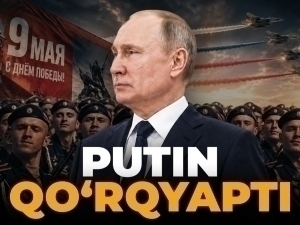
902 Uzbeks are fighting in Putin's army
The "I Want to Live" project, organized with the support of the Ukrainian Ministry of Defense and the Main Intelligence Directorate, has published the names of 902 Uzbek citizens who have signed contracts with the Russian Armed Forces to participate in the war against Ukraine.
According to the report, Russia continues to lure migrants with promises of high-paying jobs—often claiming they will work in construction or in rear-line army support.
The main incentive remains the promise of Russian citizenship. At the same time, prisoners in Russian correctional facilities are reportedly being forced to fight under threats and psychological pressure.
In some cases, the report says, new migrants are coerced into signing military contracts through “blackmail.”
“The head of the Russian Investigative Committee, Alexander Bastrykin, recently boasted that more than 5,000 raids were carried out, during which 90,000 people were ‘captured’, 30,000 of whom signed contracts and were sent to war. The word ‘captured’ accurately reflects Russia’s treatment of Central Asian migrants,” the report stated.
To date, citizens of 33 countries have been captured during military operations in Ukraine. The majority are reportedly citizens of Uzbekistan. Despite this, neither the Ministry of Foreign Affairs nor the Agency for External Labor Migration of Uzbekistan has commented on the issue.
The project also expressed concern about a visit on June 5 of this year by a delegation from Uzbekistan’s Ministry of Defense to a training ground in Russia’s Kursk region.
“The delegation, led by Colonel Alisher Norbayev, was briefed on the combat training of soldiers of the Leningrad Military District. It is hoped that this visit was purely official in nature. Otherwise, concerns will deepen that Russian military facilities are being used to prepare Uzbek mercenaries,” the report warned.
The project emphasized that the status of migrants drafted into the war has not improved in Russian society—they continue to lose their lives in service to imperial interests. It urged the Uzbek government to recognize the seriousness of the situation and take urgent measures to protect its citizens.
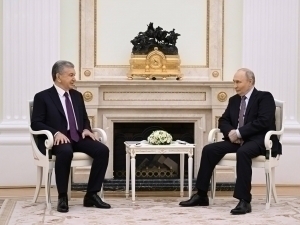
Meanwhile, restrictions, regulations, and financial burdens on migrants in Russia are increasing. On July 31, President Vladimir Putin signed a law introducing new government fees and raising existing ones.
Starting from September 1, the cost of a driver’s license will increase from 2,000 to 4,000 rubles. The fee for vehicle registration and obtaining license plates will rise from 2,000 to 3,000 rubles. The cost of obtaining a vehicle passport (PTS) will increase from 800 to 1,200 rubles. The fee for an international driver’s license will double from 1,600 to 3,200 rubles.
The law also introduces a 500-ruble fee for registering migrants at a temporary residence. The cost of issuing or renewing a migrant work patent will rise to 4,200 rubles. Registration at a permanent residence will now cost 1,000 rubles, up from 430 rubles.
In St. Petersburg, taxi companies have been prohibited from hiring foreigners working under a patent. This restriction specifically targets citizens of Uzbekistan and Tajikistan.
Under paragraph 6 of Article 18.1 of the Federal Law “On the Legal Status of Foreign Citizens in the Russian Federation,” this ban is in place until the end of the year, applying to the fields of "car taxis and rental cars with a driver."
According to a resolution issued by the city’s governor, the ban is aimed at improving service quality and safety in the taxi sector while creating more job opportunities for Russian citizens. A three-month transition period has been granted to end existing employment contracts and recruit new personnel.
In Russia, a foreign citizen's patent serves as a permit to work legally. It is required for citizens of countries that have a visa-free regime with Russia. Citizens of the Eurasian Economic Union—such as Kyrgyzstan and Kazakhstan—are exempt from this requirement. However, Uzbekistan, Tajikistan, Azerbaijan, Moldova, and Georgia are not eligible for this exemption.
Father violated his daughter’s honor in Tashkent
In one of the districts of the Tashkent region, it was revealed that a father had abused his daughter. The exact time and other details of the incident were not disclosed. The case came to light when an employee of the National Agency for Social Protection referred the family members for a medical examination as part of an assessment to determine their social status and eligibility for support. It was during this examination that the girl's previously undisclosed experience was revealed, prompting the launch of an official investigation.
To ensure the girl’s safety, she was temporarily placed in a family-type orphanage. Following a comprehensive evaluation, custody was transferred to her mother.
According to a court decision issued on July 24, the man was found guilty of committing a serious crime against his child. He was sentenced to 12 years in prison under Part 3, Subparagraphs “a”, “b”, and “e” of Article 118 (Indecent Assault) of the Criminal Code.
A significant step is now being taken in Uzbekistan to better protect children from violence. According to a new regulation approved by a Cabinet of Ministers resolution on July 14, children can now be removed from parents or guardians who commit acts of violence. The regulation is titled “On approval of the Regulation on the procedure for identifying cases of violence against children, assessing the level of risk of violence, developing a protection plan, and implementing it.”
Under this regulation, children who have experienced violence—or who are at risk—can apply directly to the “Inson” Centers, law enforcement agencies, or other responsible authorities, either on their own or through their legal representatives.
If the risk is assessed as “high,” the internal affairs bodies are authorized to:
- administratively detain the perpetrator and apply procedural coercive measures;
- issue a protection order to the child or their legal representative;
- take steps to remove the child from their parent(s) or other guardians and ensure the child’s safety.
Once the threat has been addressed, the Inson Center must carry out a comprehensive assessment of the child’s living conditions within 14 calendar days. Based on the findings, a child protection plan is to be developed within three working days.
Persons who have committed or are likely to commit violence against children may face the following measures:
- mandatory participation in a corrective program;
- removal of their children;
- restriction or termination of parental rights;
- compulsory treatment in narcological (substance abuse) institutions;
- imposition of mandatory medical supervision.
However, it is important to note that this remains a regulation—and implementation is key. It is too early to expect immediate results. Much will depend on how the National Agency for Social Protection enforces these new measures. If Uzbekistan is serious about protecting children from abusive guardians, it should start by looking at those children who are visible to everyone—those begging in shops, daycare centers, restaurants, concert halls, parks, and at traffic intersections. Authorities must not overlook children wandering the streets late at night, asking strangers for money.

Live
All