Students to begin learning Artificial Intelligence from next year
Local
−
01 December 2025 3329 3 minutes
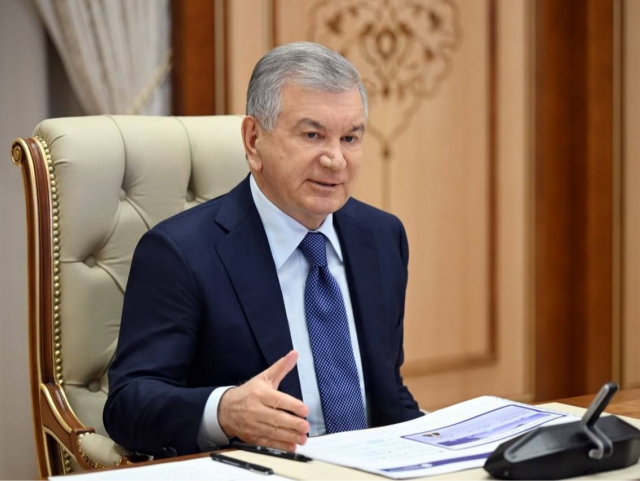
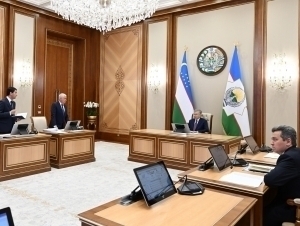
Starting from the next academic year, students in schools, colleges, and universities in Uzbekistan will begin learning artificial intelligence (AI). This was announced today, December 1, during President Shavkat Mirziyoyev’s review of ongoing initiatives to implement AI technologies in healthcare, education, transport, and space sectors.
It was noted that, according to the President’s October decree “On Additional Measures to Further Develop Artificial Intelligence Technologies” and the resolution “On Approving the Strategy for the Development of Artificial Intelligence Technologies until 2030,” the country has created the necessary infrastructure and conditions for training personnel in this field.
Specifically, the strategy until 2030 has been approved, and a dedicated center has been established under the Ministry of Digital Technologies. The required computational infrastructure for using AI technologies is being developed, including a project to launch a supercomputer cluster in cooperation with the US company Nvidia. In healthcare, five AI-based projects are being implemented. For example, using AI to detect strokes and breast cancer allows diagnostics to be completed 80% faster, enabling early identification of life-threatening conditions.
The President emphasized that this is not sufficient and stressed the need to expand the range of diseases that can be diagnosed with AI assistance. Accordingly, in collaboration with foreign partners, specialized medical centers across the country plan to implement systems to analyze medical images with AI for liver, lung, and prostate cancer, heart attacks, and complex bone fractures.
From the next academic year, AI education will be introduced for students in schools, colleges, and universities. Computer science teachers are being trained for this purpose. However, it was emphasized that the entire school staff should be trained in AI usage, not just the teachers, in order to reduce teachers’ workload and give them more time for personal development.
New approaches were discussed during the presentation, including the introduction of an AI-based platform for school education. A virtual assistant for teachers will be developed and integrated into the platform. This solution will help teachers create lecture materials, presentations, tests, lesson plans, and monitor exams.
The meeting also provided information about programs to enhance the qualifications of governors’ advisors in digital technologies and AI.
AI projects are also planned in the transport sector, including automated detection of traffic violations and monitoring of train cars to reduce the risk of railway accidents.
New initiatives in space technology were also reviewed, including the development of the “Samarkand-2028” artificial satellite. An AI module will be developed for this satellite, which will allow analysis of images for air quality assessment, monitoring of agricultural crops, and forests.
At the end of the presentation, the President gave clear instructions to accelerate the implementation of these projects and expand the use of AI technologies across economic sectors and social fields.
It is worth noting that earlier announcements included the launch of a supercomputer cluster in Uzbekistan in cooperation with Nvidia, the opening of a National Transfer Office in Silicon Valley, and the introduction of AI school programs in all “Kelajak Centers” across the country.

Live
All