Will Russia conduct military operations in Central Asia too?
Review
−
13 January 9668 6 minutes
Russia should "control" Central Asia
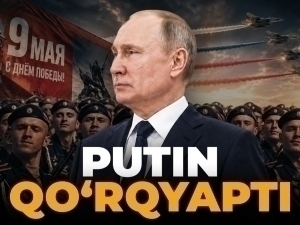
“Russia should carry out a military operation in Central Asia, just like it did in Ukraine!” Yes, you heard that correctly. A Russian individual claiming to be a journalist openly stated, including on television, that Russia needs to attack us and our neighbors.
Famous Russian television host and Kremlin-affiliated propagandist Vladimir Solovyov, during a live broadcast, emphasized that Armenia and Central Asia are far more important to Russia than Syria or Venezuela and that losing them would be a “major problem” for Moscow. Solovyov called for conducting a “special military operation” in these regions, similar to the one in Ukraine.
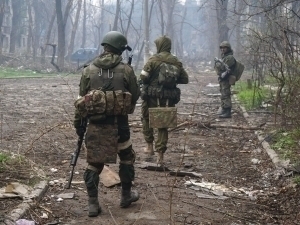
“We need to define our goals and objectives very clearly. We must say openly: the games are over. International law and international order are irrelevant to us. If it was necessary to launch a special military operation in Ukraine for our national security, then, based on the same reasoning, why can’t we launch special military operations in other areas within our sphere of influence?” he said.
Did you notice the wording? He explicitly refers to these areas as being within Russia’s “sphere of influence.” This is a serious signal. The start of a war or conflict now often begins through media plays, statements, and public remarks, even before a single shot is fired or a bomb explodes.
On his show *Solovyov LIVE*, the host also referred to Central Asia as “our Asia,” claiming that potential problems in the region could pose serious threats to Russia’s national security. In his remarks, he called on Russian leadership to disregard international law and international norms, stating that “the game is over.”
“We need to define our national doctrine clearly: how far does our sphere of influence extend? Then everything will be clear. We must stop ‘throwing pearls to the pigs’ and openly state that we do not care what they think in Europe,” Solovyov added.
Solovyov, seemingly forgetting that these are fully independent states, continued to dismiss international law throughout his widely criticized speech. He also claimed that if Russia had stopped showing mercy to Ukrainians in the first weeks of the war, harsher measures would have ended the conflict faster with fewer casualties.
Russian propaganda gains momentum again
It is not the first time that Russian media representatives, politicians, and public figures have spoken with such disrespect. In 2023, Zakhar Prilepin, a member of the “Putin Team” social movement and deputy commander of a Russian Guard regiment for military-political affairs, proposed incorporating Uzbekistan into Russia.
During a press event, participants applauded his statement, suggesting that many, not just one official, were willing to annex Central Asian states.
Russian propaganda often perpetuates similar narratives. For example, in an NTV talk show, a so-called historian named Mikhail Smolin claimed that Uzbeks did not exist as a people before the 1917 revolution. On January 21, 2024, marking the 100th anniversary of Vladimir Lenin’s death, Smolin asserted in the program *Meeting Place* that Azerbaijanis, Uzbeks, and Kazakhs had never existed before the revolution.
Russian Foreign Ministry spokeswoman Maria Zakharova has also drawn attention with one-sided accusations regarding the Russian language in Uzbekistan.
In September 2024, following an incident in a Tashkent school where a teacher allegedly hit a student during a Russian lesson, the Russian Foreign Ministry publicly reacted. A sixth-grade student at School No. 188 in Chilonzor District reportedly argued with the teacher and was involved in a scuffle. Within a day, Maria Zakharova issued a strong statement, framing the teacher’s actions as “hostility toward the Russian language” and requesting an explanation from the Uzbek government.
Russian Foreign Minister Sergey Lavrov, during a visit to Samarkand on April 23, 2025, also objected when flowers were laid at the Mother Mourner monument, claiming that inscriptions were not in Russian. Many responded that decisions regarding language in an independent country are determined domestically.
Why must we remain silent?
Many may wonder why no strong response is issued, even when Uzbek labor migrants face violence or officials ignore incidents affecting them. Occasionally, activists such as Alisher Qodirov, leader of the “National Revival” democratic party faction, or Sherzodkhon Qudrathoj, head of the National Media Association, make their voices heard. However, at the official level, there is no evidence of responses akin to Zakharova’s demands.
This may be linked to data from the Uzbek Agency for External Labor Migration in October 2025. According to the agency, over 1.3 million Uzbeks officially hold migrant status in Russia. Informal estimates suggest more than 3 million have gone abroad for work, with over 2 million in Russia. A June 2025 report from the Ministry of Foreign Affairs puts the number under one million. While numbers differ, the overall situation remains the same: every measure should consider the realities faced by Uzbek migrants.
How many Central Asian migrants are in Russia?
According to Rosstat data for 2024–2025, Russia hosts between 4 and 4.5 million Central Asian migrants.
Uzbeks form the largest group, numbering between 1.8 and 2.1 million. Tajik migrants total 1.1–1.3 million, Kyrgyz up to 700,000, Kazakhs around 400,000, and Turkmen approximately 100,000.
These figures reveal the interdependence of states and mutual needs: Central Asian countries provide labor, while Russia needs workers. Migrants carry out much of the hard and risky work that locals avoid.
In recent years, Russia’s policies toward migrants have hardened. Raids detain migrants on trivial grounds, some are sent to fight in Ukraine, and others face beatings and abuse. In one instance, Uzbek citizens were caught by OMON special forces, even during a concert organized with special permission.
Such treatment by officials has influenced public perception. Many Russian authorities and citizens still regard Central Asia as subordinate, believing that citizens of these countries must serve them. The brutal attack on a 10-year-old Uzbek boy, Qobiljon, reflects this attitude. While one person wielded the knife, the broader societal complicity is evident. The severity of the attack may indicate the spread of neo-Nazi sentiment in Russia.
What will be the official response?
Returning to the beginning, it is imperative to respond decisively to those declaring the region “their Asia” and asserting influence over us and our neighbors. History shows that our ancestors resisted such domination, even when Russia’s economy relied on minor agricultural pursuits while expanding militarily. Hopefully, Uzbekistan’s Ministry of Foreign Affairs will issue a strong, appropriate response this time.
Nurzodbek Vohidov